How to manage red-fleshed honey pomelo in spring? These technical points need to be mastered
How to manage red-fleshed honey pomelo in spring? Please advise. Spring is the early stage when red-fleshed honey pomelo puts out roots, grows spring shoots, grows flower spikes, blooms, and sets young fruit. During this period, pest and disease damage, fertilizer deficiency, and drought have a direct impact on the pomelo tree's strong shoots, strong flowers, and fruit-setting rate, and it is a key period for increasing the yield of the year. Effective measures must be taken in a timely manner...
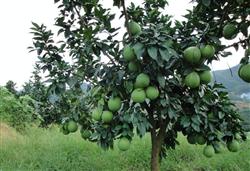
How to manage red-fleshed honey pomelo in spring? Please advise
Spring is the early stage when red-fleshed honey pomelo puts out roots, grows spring shoots, grows flower spikes, blooms, and sets young fruit. During this period, pest and disease damage, fertilizer deficiency, and drought have a direct impact on the pomelo tree's strong shoots, strong flowers, and fruit-setting rate, and it is a key period for increasing the yield of the year. Various spring management technical measures must be taken in a timely manner to promote strong shoots and strong flowers, increase the fruit-setting rate, and secure a good harvest. The following suggestions on spring management are offered for reference:
I. Apply spring shoot stage fertilizer in a timely manner.
Timely application of spring shoot fertilizer is especially important for improving the spring shoot emergence of honey pomelo, strengthening shoots, strengthening flowers, and increasing the fruit-setting rate. 1. For a tree that has begun to bear fruit and yields 100 jin of fruit, apply 2.5 jin of ternary compound fertilizer, or for a tree yielding 100 jin of fruit, apply 7 liang of urea and 2 liang of potash fertilizer, split into two applications. Apply this fertilizer from "Start of Spring" to "Spring Equinox".
II. Thin flowers, thin shoots, and pinch back.
Red-fleshed honey pomelo has a large flower quantity and a high fruit-setting amount. Thinning flowers and shoots and proper pinching help reduce ineffective consumption of nutrients, improve effective flower quality, and promote the fruit-setting rate; reduce the tree's load, promote fruit development, and improve fruit quality and commercial value.
1. Thin flower branches. Adult fruiting trees or declining trees have a large flower quantity, so some weak flower branches should be thinned out. This is generally done from mid-to-late February to early March. In principle, follow the principle of removing weak ones and keeping strong ones, keep 4-5 flowers on each fruiting mother branch, and apply the principle of a reasonable combination of early, middle, and late flowers across the whole tree. After flower thinning, concentrate the tree's nutrients to meet the development needs of the remaining flower buds, promote larger buds, better flower quality, and a higher fruit-setting rate after flowering. When thinning flowers, keep in mind that weak trees should be thinned heavily, newly fruiting trees lightly or not at all, and full-bearing trees heavily. Full-bearing trees are tall and large, which is unfavorable for flower thinning, and the flowering period often encounters continuous rainy weather, so the method of shaking the flowers can be adopted to shake off some flower buds and reduce problems such as bud rot caused by excessive density. 2. Thin shoots. Thinning shoots can improve the tree's ventilation and light penetration and reduce pest and disease damage, and is an effective measure for increasing the fruit-setting rate. For shoot thinning, generally thin the denser parts at the top and outer periphery of the canopy, and appropriately thin some of the taller vigorous water shoots. Tender spring shoots inside the canopy and short spring shoots on the outer periphery of the canopy are fruiting mother branches for the coming year and generally should not be thinned out. Spring shoot thinning can only be controlled within 5% of tender spring shoots, and too many must not be thinned. This helps increase leaf quantity, produce more chlorophyll, raise the fruit-setting rate, and achieve high yield with many fruits and good quality. 3. Pinching. Pinching can increase the fruit-setting rate, accumulate tree nutrients, reduce ineffective nutrient consumption, bear more fruit, and bear good fruit. Pinching is generally carried out on vigorous water shoots at the top of the canopy. When the young shoot reaches 5-7 cun in length, pinch it back, leaving only 4-6 leaves.
III. Protect flowers and protect fruit.
In spring, red-fleshed honey pomelo sprouts shoots, shows buds, and blooms, and is greatly affected by natural conditions. Especially during the flowering period, rain, high temperature, and drought are harmful to flowering and fruit setting. Some effective technical measures must be taken to protect flowers and fruit and achieve high yield and good quality.
1. Cultivate strong spring shoot fruiting mother branches. The main goal is to cultivate strong one-year-old and two-year-old spring shoots and two-year-old autumn shoots. During the tender leaf stage of spring shoots, tender spring shoots inside the canopy and short tender shoots on the outer periphery of the canopy are fruiting mother branches for the coming year. Having strong spring shoots creates good conditions for improving the fruit-setting rate in the coming year.
2. Spray trace elements. Timely and appropriate spraying of trace elements is an effective technique for strengthening shoots, strengthening flowers, and increasing the fruit-setting rate. Spray 1-2 times each before the tender spring shoots bloom and at the early young fruit stage after flower drop with 0.2% borax or 0.1% boric acid + 0.2% monopotassium phosphate + 0.3% urea solution, and the purpose of protecting flowers and fruit can be achieved.
3. Appropriate fertilizer, water, and temperature during the flowering and young fruit stages. The emergence of spring shoots, flower buds, and flower spikes, as well as flowering and pollination, require appropriate fertilizer, water, and suitable temperature. If fertilizer is lacking during the bud stage and flowering stage and there is prolonged high temperature and drought, it will directly affect flower strength, increase sterile flowers, and lower the fruit-setting rate. During the bud stage and flowering stage, in orchards with running water, appropriately spray water on the ground under the pomelo trees, but do not spray it on the trees. If water is sprayed on the trees, it increases the humidity of young leaves and pomelo flowers, causing tender spring leaves, pomelo flowers, and newly set small fruits to be infected by pests and diseases and causing fruit drop. Water sprayed on the ground can supplement sufficient water during the flowering period, thereby increasing the fruit-setting rate and reducing disease occurrence.
4. Second ringing. During the flowering period and early young fruit stage of pomelo trees, adverse weather frequently occurs, such as high temperature and drought, and rainy low temperature and other unfavorable climatic factors, which adversely affect flowering, pollination, and fruit setting. Effective technical measures must be taken to increase fruit setting. A second ringing is an effective measure to promote flower and fruit protection. For pomelo orchards with good fertilizer and water management, newly fruiting trees and vigorous trees should undergo a second ringing to protect fruit if adverse weather such as continuous rain occurs; full-bearing trees and declining weak trees should not use a second ringing. Ringing method: make one cut at a low position on a branch, leaving one small branch uncut. The ringing should be completed in one clean cut to protect roots and tree vigor and achieve the goal of protecting fruit and increasing yield. When carrying out ringing, it must be based on flower quantity and tree vigor. If flower quantity is large, carry out ringing when 90% of flowers have dropped; if flower quantity is small, carry out ringing when 60% of flowers have dropped. Trees with weak vigor must not be ringed, to prevent decline or death of the pomelo tree.
IV. Eliminate insects and control diseases to protect shoots and fruit.
Preventing and controlling pomelo tree pests and diseases is an important measure for ensuring increased honey pomelo yield. In spring, tender spring shoots, young flower buds, and flower spikes are tender and most susceptible to pest and disease infection. Adopting rational fertilization and scientific management to promote pomelo tree vigor can make it harder for pests and diseases to invade and infect. If effective management measures are not taken during the spring shoot stage, the yield of the year will be reduced. February to March is the overwintering period of red spiders, and timely control is required.
Diseases such as anthracnose, greasy spot, and ring rot develop and spread in the early stage and are not easily seen with the naked eye. If not taken seriously, they can cause major disease outbreaks during the young fruit expansion stage, so pest and disease control must implement the policy of "prevention first, integrated control." Control of pests and diseases at the tender spring shoot and early young fruit stages is especially important.
Chemical control:
1. For overwintering red spiders, spray once in early February before spring shoots sprout, with Kemante added with water at 2000 times; or in mid-March with Nisuolang added with water at 1000-1500 times.
2. Various diseases. From late February when young shoots are about 0.5 cm-5 cm until before flowering (do not spray during the flowering period), use copper-ammonium mixture: 1 jin of copper sulfate plus 5 jin of ammonium bicarbonate, wrap with plastic film for 24 hours, then add 1000 jin of water and spray the whole tree and the ground; or from when spring shoots are about 0.5 cm-5 cm until before flowering and at the early young fruit stage after flower drop, spray 1-2 times each with a mixture of thiophanate-methyl added with water at 500 times plus validamycin added with water at 500 times, or carbendazim added with water at 500 times plus validamycin added with water at 500 times, used alternately.
3. Other insects. For other insects, use dichlorvos added with water at 1000 times. Timely control of spring shoot pests and diseases can promote strong spring shoots, lush branches and leaves, fewer infections at the early young fruit stage after flower drop, and a higher fruit-setting rate.
Click to get more pomelo cultivation techniques
Click to get more fruit cultivation techniques