How to plant loofah in autumn? Planting methods and key technical points
How to cultivate loofah for high yield? Please give an introduction. Loofah is deeply loved by people for its crisp texture and sweet taste. Summer loofah is planted from late April to early July and comes to market from June to October. Its cultivation method is as follows: choose heat-tolerant, early-maturing, high-yielding varieties. Site selection: summer loofah has no special requirements for the soil, only...
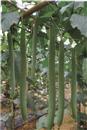 How to plant loofah in autumn? Please introduce
Autumn-planted loofah is sown from mid-to-late July to mid-to-early August, and its growth and fruiting period coincides with the season of high temperatures, temporarily scarce rain, and gradually rising autumn winds. This very easily leads to weak vine growth, few fruits, many pests and diseases, and low returns. Therefore, the following should be noted in cultivation management:
I. Cultivate strong seedlings and ensure a full stand
(1) Seed selection. Choose loofah varieties that are early-maturing, suitable for close planting, disease-resistant, high-yielding, resistant to aging, good in market quality, high in early yield, and long club-shaped.
(2) Seed treatment. Soak the seeds in 30°C warm water for 3 hours, then remove them and soak them in a 0.1% potassium permanganate solution for 30 minutes to disinfect, then rinse them clean with water, place them under ventilated conditions for natural germination, and sow after the seeds show white sprouts.
(3) Sowing and seedling-stage management. Carry out seedling raising in nutrient cups. Mix thoroughly aged soil with a small amount of high-quality chicken manure, fill the cups and arrange them, drench with water thoroughly, sow 1-2 germinated seeds per cup, cover back with a small amount of fine soil, and then spray with a 1000-fold solution of dexon. Then cover the seedbed with a covering to prevent scorching by the hot sun and damage by heavy rain. During seedling raising, keep the seedling soil moist, but do not allow excessive water, so as to avoid spindly growth. 7 days before transplanting and setting out, spray 1-2 times with 2% potassium dihydrogen phosphate to promote deep green leaf color, thick stems, and well-developed roots in the loofah seedlings.
II. Setting out and field management
(1) Land preparation and fertilization. 10 days before setting out, while preparing the land, apply 1500 kg of decomposed chicken, duck, and pig manure, 100 kg of cake fertilizer, and 50 kg of ternary compound fertilizer per mu as base fertilizer.
(2) Setting out. When the loofah seedlings reach 4-4.5 leaves, promptly set them out in the field. Use close planting cultivation, with beds 2 m wide, 2 rows per bed, spacing between plants 25-30 cm, and 2200-2500 plants per mu.
(3) Trellising and pruning. Loofah is a climbing plant, so a flat trellis must be set up before vines begin to run. If using bamboo poles to build the trellis, set up a slanted trellis about 2 m high by pairing one slanted pole per plant with one opposite pole in the bed, then at the top of the trellis connect bamboo poles, plastic woven straps, or iron wire lengthwise and crosswise into a net. After the loofah vines are released, guide them promptly, tie the vines to assist them onto the trellis, and make the vines and leaves distribute evenly on the trellis. All side vines should be removed before they climb the trellis. For side vines that have climbed the trellis, pinch the growing tips promptly when 2-3 flower buds appear; also cut off excessive male flowers. After that, keep 2 side vines at the upper end of the main vine and remove the rest. When these 2 vines grow to about 10 leaves, also pinch the growing tips and remove male flowers, and note to remove some old leaves from the lower part of the main vine to reduce nutrient consumption and ensure ventilation and light penetration in the field. In addition, frequently adjust the fruits so that heavy fruits hang inside the trellis to grow. Plant adjustment work should preferably be carried out on sunny afternoons to avoid damaging vines and leaves.
(4) Fertilizer and water management. After the seedlings recover, drench once with dilute manure water to promote seedling growth and stimulate new root growth. After the first female flower is pollinated and sets fruit, open holes about 30 cm on each side of the root zone and apply 20 kg of urea, 50 kg of cake fertilizer soaked for more than 3 days, and 25 kg of ternary compound fertilizer per mu as fruit fertilizer to promote fruit enlargement. After the first batch of loofahs is harvested, apply 15 kg of urea per mu as a relay fertilizer. You can also combine foliar spraying of nutrient solutions such as potassium dihydrogen phosphate and Yemianbao while spraying pesticides to prevent pests and diseases. During the full fruiting period, every 1-2 harvests, apply manure water about once every 7 days; in the human manure and urine water, 100 g of urea can be added per 50 kg of manure water. If deformed fruits are found, water promptly to keep the soil moist, and prevent increased deformed fruits caused by rain after drought, which affects market returns.
III. Timely harvesting in batches
Loofah is eaten as a tender gourd, so the suitable harvest window has little flexibility. From flowering to marketable gourd maturity generally takes 10 days. In production, it can be harvested when the fruit stalk is smooth, the fruit has slightly changed color, the fuzz has decreased, the fruit skin feels soft to the touch, and the surface of the tender gourd is glossy. If not harvested in time, not only will the loofah fibers age and lose edible value, but it will also affect later fruit setting. When harvesting, it is best to cut off the fruit evenly at the stalk with scissors in the morning.
IV. Pest and disease control
The main diseases of loofah include viral disease, downy mildew, and powdery mildew. When they occur, spray metalaxyl and triadimefon for control, spraying once every 7 days for 2-3 consecutive sprays. The main insect pests are aphids, melon borers, and Aulacophora beetles. For control, spray with an 800-fold solution of dimethoate and a 1000-fold solution of 5% Cascade.
Click to get more loofah planting techniques
Click to get more vegetable planting techniques