Detailed Explanation of Pineapple Cultivation Methods and Technical Key Points
How should pineapples be planted? Please explain in detail. Pineapple, also known as fengli, English name Pineapple, belongs to the Bromeliaceae family, Ananas genus. It is a perennial monocotyledonous herbaceous plant that grows on the ground. The fruit is a collective fruit formed by the aggregation of many small fruits, generally weighing 1--1.5 kg. Pineapple is a tropical fruit, native to Central and South...
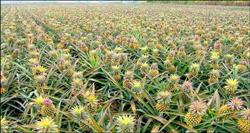
How should pineapples be planted? Please explain in detail
Pineapple, also known as fengli, English name Pineapple, belongs to the Bromeliaceae family, Ananas genus. It is a perennial monocotyledonous herbaceous plant that grows on the ground. The fruit is a collective fruit formed by the aggregation of many small fruits, generally weighing 1--1.5 kg. Pineapple is a tropical fruit, native to Central and South America. The pineapple fruit is rich in nutrients. The juice not only contains a large amount of vitamin C, but also has a unique fragrance. The flesh contains bromelain (Bromelin), which can break down protein and help human digestion. Eating it after a meal is beneficial to health. In addition, it has the effects of clearing heat, promoting diuresis, detoxifying, and promoting salivation and quenching thirst.
1. Distribution Areas
Pineapple is widely distributed between the Tropic of Cancer and the Tropic of Capricorn, and is one of the important fruits in the world. More than 80 countries and regions in the world cultivate it economically. The main producing areas are concentrated in Thailand, the Philippines, Indonesia, Vietnam, Brazil, South Africa, and the United States. China is one of the top ten major pineapple producing countries.
2. Cultivation Significance
Pineapple fruit has excellent quality and is rich in nutrients. According to analysis, every 100 grams of flesh contains 12--16 grams of total sugar, 0.6 grams of organic acids, 0.4--0.5 grams of protein, 0.3--0.5 grams of crude fiber, and various vitamins, among which the vitamin C content can reach as high as 42 mg. In addition, it is rich in calcium, iron, phosphorus, and other elements.
When eaten fresh, pineapple has a golden flesh color, a rich fragrance, a pleasant sweet and sour taste, and is crisp and juicy. The processed product, canned pineapple, is known as an "international fruit can" and can also be made into various processed products, widely welcomed by consumers.
The pineapple plant has strong adaptability, tolerates poor soil and drought, and has relatively few pests and diseases. It is an important pioneer crop for newly reclaimed mountain land. It is easy to cultivate, has high yield, and can also be intercropped. It is a good tree species for helping farmers become wealthy.
3. Cultivation Characteristics
3.1 Biological Morphology
Pineapple is about 1 m tall, with a fleshy single stem. The leaves are sword-shaped and grassy, clustered on the stem. The roots are fibrous adventitious roots. The inflorescence is a head-like spike, terminal, with complete flowers. The fleshy collective fruit is formed by many ovaries aggregated on the flower axis. The pineapple root system is shallow, with 90% concentrated in the 10--25 cm soil layer. Strong wind can break the fruit stalk and blow down the plant. Cold wind and cold rain in winter can cause pineapple heart rot.
3.2 Requirements of Pineapple Growth and Development for Meteorological Conditions
Pineapple is a tropical perennial herbaceous fruit tree. It likes warmth and humidity, avoids low temperatures and frost, and has strong drought tolerance, but good growth and development require sufficient water. If rainfall is insufficient, excessive, or uneven, it should be regulated through drainage and irrigation. Pineapple originated in tropical rainforests and tropical plateau regions, has strong shade tolerance, likes diffused light and avoids direct light, but abundant yield and high quality still require sufficient light. Pineapple has relatively wide adaptability to soil, but is not suitable for neutral or alkaline soil, clayey soil, or structureless silty sand soil. It requires pH 5--6. Pineapple plants are short and suffer relatively little wind damage, but strong winds of level 6 or above can also cause damage.
Temperature is the most important ecological factor affecting pineapple growth and development, yield, and quality. According to research, pineapple can grow at 15--40°C, with 28--32°C being most suitable. At 10°C it grows slowly or stops growing. Continuous exposure below 5°C causes cold damage. It can survive at 1--2°C for 1--2 days, but longer exposure causes severe damage. Compared with other tropical herbaceous fruit trees (such as banana and papaya), pineapple has stronger tolerance to low temperatures and brief frost.
Different pineapple varieties respond differently to temperature for flowering. When the daily average temperature is around 13°C, it does not flower. It begins to flower at 16°C. Drought and intense heat can also inhibit flower opening or lead to incomplete flowering. The length of the fruit ripening period and the quality are also closely related to temperature.
For every 1°C increase in average temperature from flower bud emergence to maturity, the number of days to maturity decreases by about 5--8 days. If the temperature is high, sunlight is strong, and water is sufficient, the ripening period is short and the quality is good. Therefore, summer and autumn fruits generally have a shorter ripening period than winter and spring fruits, and also have better flavor.
Pineapple is a relatively drought-tolerant crop. According to research, the daily evapotranspiration of pineapple is about 4.5 mm. Even if the original soil water content is relatively high, as long as there is no precipitation for 3--4 weeks, the soil water can be depleted. Therefore, during pineapple growth and development, attention should be paid to appropriately supplying water in order to ensure normal growth and development. However, pineapple is a shallow-rooted, aerophilic crop. Too much water and excessively high soil moisture will cause poor soil aeration, hinder nutrient absorption and utilization, and in severe cases cause root rot and death.
According to reports, places with annual rainfall above 1000--1500 mm and relatively even distribution of precipitation over time (monthly rainfall of 100 mm) are more suitable for pineapple growth. A groundwater level of 30--50 cm is favorable for root growth. Short-term drought in autumn and winter is favorable for flower bud differentiation and enhancing the cold resistance of the plant, but excessive drought will cause the plant to become yellow and withered, the fruit stalk to dry up, and the fruit core to crack. It will also lead to early maturity, small fruit, poor fullness, pale flesh color, low water content, poor flavor, and induce wilt disease, which can reduce yield by about 20%. If there is prolonged low-temperature drought in winter and spring, it will reduce the cold resistance of the plant, be unfavorable for flower bud differentiation, cause poor flower bud development, and even stagnation. Therefore, when monthly rainfall is less than 50 mm, irrigation is needed to supplement water.
3.3 Planting and Seedling Raising
Pineapple is planted at 3800--4000 plants per 666.67 sq m, requiring a large number of seedlings. Three methods are commonly used: morphology-regulating hormone-induced bud propagation, vegetative propagation, and tissue culture. Time and method of bud induction: from May to November, select plants with 40 cm long green leaves, usually 40 leaves for the Cayenne group and 35 leaves for Philippine varieties. For each plant, use 25 mL of a mixed solution of 250 mg/L ethephon plus 1% urea and 0.5% potassium chloride poured into the heart to induce buds. On the 5th and 12th days after treatment, respectively use 25 mL of 1200--1500 times and 600--750 times morphology-regulating hormone solution poured into the heart. For vegetative propagation, small seedlings are commonly cultivated, that is, using small crown buds, small slip buds, small suckers, and fruit tumor buds from the field, classified and temporarily planted in a nursery for cultivation before leaving the nursery. Use the small slip buds remaining on the fruit stalk after harvest to grow and cultivate into seedlings, use old stems cut into pieces for propagation, and use old stems from renewal land for propagation. For tissue culture seedling raising, use Ms medium and culture in a culture room at room temperature 30°C with 12 hours of light or natural light.
3.4 Technical Key Points for High-Quality and High-Yield Pineapple
3.4.1 Choose a Good Orchard Site
Choose a place facing south with sufficient sunlight, abundant water sources, and convenient transportation as a commercial production base.
3.4.2 Scientific Planting
Before planting, improve poor soil and apply sufficient base fertilizer; select strong seedlings for planting. Density: plant 3000--4000 plants per 666.67 sq m for the Cayenne group and 4000--5000 plants for the Queen group.
3.4.3 Strengthen Fertilizer and Water Management After Planting
3.4.3.1 Fertilizer Amount
In Guangxi, China, apply 42.2 kg of nitrogen, 26.8 kg of phosphorus, and 38.5 kg of potassium per 666.67 sq m, N:P2O5:K2O = 1:0.62:0.9;
3.4.3.2 Fertilization Periods
Usually from December to February of the following year, apply bud-promoting fertilizer before flower bud emergence, and after harvest in July to August apply bud-strengthening fertilizer; between the bud-promoting fertilizer and bud-strengthening fertilizer, apply fruit-strengthening and bud-inducing fertilizer; apply foliar fertilizer once each in April, June, July, and September every year, and apply topdressing twice each in May and August, using 1% urea plus 0.5% potassium sulfate solution; apply base fertilizer after harvest.
3.4.3.3 Water Management
Timely drainage and irrigation are needed to prevent waterlogging and resist drought.
3.4.4 Do a Good Job in Other Management Tasks
For example, in order not to affect fruit growth and development, buds should be properly removed and retained; to promote flowering, flower forcing should be carried out; to increase fruit weight and quality, fruit spraying should be carried out. After all small flowers have faded, spray the fruit with 50 mg/L gibberellin plus 0.5% urea solution, and spray a second time after 20 days with 70 mg/L gibberellin plus 0.3% urea solution. To make the fruit ripen uniformly, when the fruit has developed to 70% maturity, spray the fruit with 300 mg/L ethephon to promote ripening.
4. Pest and Disease Control
4.1 Disease Control
4.1.1 Control of Wilt Disease
After the plant becomes diseased, the leaves become soft and droop, the leaf color changes from light green to red, the base rots, and finally the whole plant dies. This disease is caused by damage from mealybugs. Control methods: first, strictly avoid using diseased seedlings for propagation. Second, promptly eliminate mealybugs. When planting, soak the head with 500 times dimethoate solution, place upside down to dry, and then plant. If mealybug damage is found after planting, promptly spray 500 times dimethoate solution, or 25% Zhongke Meiling 1500 times solution. If diseased plants are found, dig them out promptly to prevent spread.
4.1.2 Control of Black Rot
The affected fruit core turns black and gradually expands until the whole fruit rots. The pathogen mostly invades through wounds from bud removal and the fruit stalk during harvest. Control methods: be careful not to top the plants or harvest fruit on rainy days, so as to reduce opportunities for pathogen invasion. This disease is also a major disease in the storage of fresh pineapple fruit.
4.1.3 Control of Seedling Heart Rot
Seedlings rot at the heart and die. It is mainly caused by heating during stacking or water accumulation. Control methods: avoid stacking seedlings for too long, especially during long-distance transport, minimize prolonged stacking to avoid heat damage to seedlings caused by high temperature, high humidity, and poor ventilation. Once they arrive at the destination, spread them out, sun-dry them slightly for 1~2 days, and then plant. Avoid planting on rainy days, and pay attention to deep plowing and shallow planting.
4.2 Pest Control
4.2.1 Control of Pineapple Mealybugs
4.2.2 Control of White Grubs
4.2.3 Control of Crickets
When the fruit matures, it may be bitten by large-headed crickets, which makes the fruit quality poor and turns it into substandard fruit. Control method: stir-fry 5 kg of rice bran and 1 kg of cooked sweet potato, mix in a small amount of pickled vegetable juice, then add 100 g of 90% crystal trichlorfon, and make poisoned bait the size of beans. In the evening, scatter each bait around the plants to trap and kill them.
5. Types and Varieties
Generally, cultivated pineapple varieties are divided into 4 groups, namely the Cayenne group, Queen group, Spanish group, and hybrid group.
5.1 Cayenne Group
The Cayenne group is also called Sarawak and was named after the Cayenne region of Guyana in South America discovered by a French expedition. It is extremely widely cultivated, accounting for about 80% of the world's pineapple cultivation area. The plant is tall and robust, with no spines on leaf margins or a few spines at the leaf tips. The fruit is large, with an average single fruit weight of more than 1100 g, cylindrical, with flat small fruits, shallow fruit eyes, and short and wide bracts; the flesh is light yellow, juicy, and moderately sweet and sour, with soluble solids of 14%--16%, and can reach more than 20% at the highest, and acid content of 0.5%~0.6%. It is the main variety for canning.
5.2 Queen Group
The Queen group is the oldest cultivated variety group, with more than 400 years of cultivation history, and is one of the main varieties cultivated in South Africa, Vietnam, and China. The plant is medium-sized, with shorter leaves than the Cayenne group and spines on leaf margins; the fruit is cylindrical or conical, with a single fruit weight of 400--1500 g, small fruits protruding in a cone shape, deep fruit eyes, and bract tips extending beyond the small fruits; the flesh is yellow to deep yellow, crisp and tender, with high sugar content, juicy and sweet, and a rich fragrance. It is mainly for fresh consumption.
5.3 Spanish Group
The Spanish group has relatively large plants, softer leaves, yellow-green in color, with red spines on leaf margins, but there are also spineless varieties; the fruit is medium-sized, with a single fruit weight of 500--1000 g, small fruits large and flat, with the center raised or sunken; fruit eyes are deep, the flesh is orange-yellow, with a strong fragrance and much fiber, used for canning and juice.
5.4 Hybrids
Hybrids are improved varieties bred through sexual hybridization and other means. The plant is tall and upright, with spines on leaf margins, light purple flowers, and a somewhat irregular fruit shape, with a single fruit weight of 1200--1500 g. The flesh is yellow, crisp in texture, with little fiber, refreshingly sweet and tasty, with soluble solids of 11%--15% and acid content of 0.3%--0.6%. It can be eaten fresh or processed into cans.
Click to get more pineapple cultivation techniques
Click to get more fruit cultivation techniques