Key Technical Points for Pest and Disease Control in Mulberry Trees After Summer Pruning
Mulberry dwarf disease is a whole-plant disease of mulberry trees. It can be divided into three types: yellowing, dwarfing, and mosaic. 1. Symptoms ① Yellowing-type dwarf disease: In the early stage of the disease, it mostly starts from the top of the branches, with small yellow leaves that curl toward the underside. As the disease worsens, the lower leaves become thin and small, yellowed, curled, and with scorched spots. The internodes of the branches are short, and side branches cluster densely, forming a broom-like...
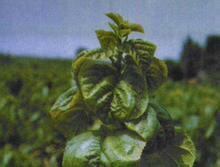 1. Disease: Mulberry rust disease. The symptom is that after the young buds are damaged, they swell, become deformed and curved, and the surface is covered with small yellow slightly raised spots (aeciospores). When the leaves are damaged, at first circular, shiny, slightly raised, slightly yellow lesions are scattered on both the upper and lower surfaces, and later they gradually thicken and become orange-yellow spots. In the late stage of the disease, the epidermis of the lesions ruptures and releases orange-yellow powder (rust spores) that covers the entire leaf, and the leaves easily fall off. It is commonly known as iron rust disease. Control method: In late July and early August, spray with 80% zineb wettable powder at 250-300 times dilution, etc., applying once every 7-10 days for 2-3 consecutive times.
Mulberry bacterial wilt. After the mulberry roots are damaged, the plant loses water, and the leaves wilt and droop, showing a green wilt appearance. In plants affected for a long time, the lateral main roots and lateral roots show wet rot, and some become black and decayed, and the whole plant dies. Control method: At present, there is no specific effective pesticide for this disease. It is necessary to strengthen prevention as the main approach. According to the author's practical experience, 10 to 15 days after summer pruning of mulberry trees, use agricultural streptomycin, etc., for control.
Mulberry violet root rot. When the disease occurs, the root bark first turns yellow-brown and loses its luster, then gradually becomes dark brown, leaving only detached cork layer and xylem. The surface of the damaged roots is entwined with silk-cotton-like purplish-red root-like hyphae and purplish-drug-colored sclerotia. After the mulberry roots are damaged, the branches and leaves grow slowly, and finally the whole plant dies. Control method: For 667 sq m, use 5 kg of 50% carbendazim mixed with soil and apply it into the soil together with intertillage.
2. Pests. From July to September, the more seriously damaging pests include mulberry thrips, mulberry whitefly, spider mites, mulberry geometrid, and mulberry pyralid, etc. Corresponding measures should be taken for control according to different pests.