-
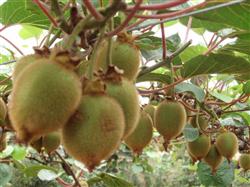
Key Technical Points for Kiwifruit Planting and Management in June
How to manage kiwifruit in June? Here is an introduction to the methods. June is the fruit swelling period for kiwifruit, and also the second peak period of fertilizer demand and the period when pests and diseases are most severe. Making the most of management during this month is crucial. 1. Continue four-season pruning: for the fruiting trees positioned and pruned in May, thin out overly dense branches and overlapping branches, diseased and pest-damaged branches, and thin weak branches. Pinching of fruiting branches: when two fruiting branches are side by side, for one of them leave only one leaf above the foremost fruit and pinch; when the other fruiting branch is being trained as next year's fruiting mother branch, leave 3-4 leaves above the foremost fruit and pinch, with a leaf-to-fruit ratio of 6-8:1. For vegetative branches that are good fruiting mother branches for next year, those already pinched should continue to be trained; those not yet pinched should be pinched after leaving 10-12 leaves. For water sprouts, leave 3-4 leaves and pinch; those with no space should be thinned from the base. They must not be left to grow freely, otherwise useless water sprouts will form.
-
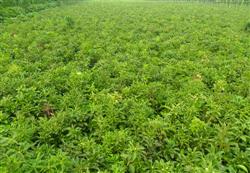
Five key technical points for successful Atractylodes macrocephala cultivation
Atractylodes macrocephala, also known as Yuzhu, Dongzhu, Zhezhu, etc., is a plant of the Asteraceae family. Its rhizome can be used as medicine and has effects such as strengthening the spleen, drying dampness, and preventing miscarriage, making it a valuable Chinese medicinal herb. Growing Atractylodes macrocephala in rural areas is a path to wealth with low investment, a short production cycle, smooth sales, and high economic returns. 1. Site selection and land preparation. Atractylodes macrocephala prefers a cool climate...
-
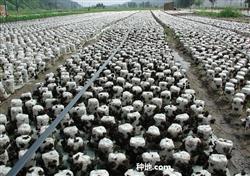
What are the key technical points for cultivating black fungus (wood ear mushroom)?
How to cultivate black fungus (wood ear mushroom) well? Please introduce: I. Cultivation season and material preparation. 1. Cultivation time: The choice of cultivation time is the key to the success or failure of black fungus cultivation, and is closely related to yield and quality. Bag-making should be chosen from early October to November, and can be appropriately earlier in high mountain areas. This period is relatively ideal, when the room...
-
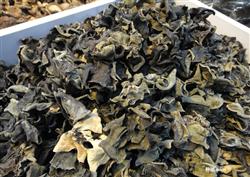
How to grow black fungus (wood ear mushroom) by intercropping? Key technical points explained
How to store wood ear mushrooms properly? Please advise: the optimal storage temperature for wood ear mushrooms is 0°C, relative humidity: above 95%RH. Wood ear mushrooms can be sold fresh or dried. Dried ones store better, but fresh ones have a more delicious flavor, so the choice depends on personal preference. Fresh ones are harder to store; after harvest, store them at low temperature immediately, which can still maintain a...
-
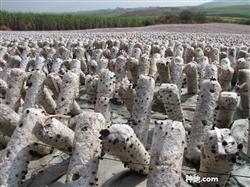
Methods and Technical Key Points for Cultivating Wood Ear Mushroom (Black Fungus) with Rice Straw
How to cultivate wood ear mushroom with rice straw? Please explain. After the autumn harvest, rural areas have large amounts of leftover rice straw, and throwing it away is a great pity. Cultivating wood ear mushroom with rice straw works very well and is also a path to wealth for farmer friends. Practice has shown that generally every 100 kg of rice straw can yield more than 10 kg of dried wood ear mushroom,...
-
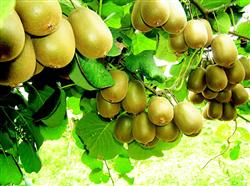
Key Technical Points and Precautions for Kiwifruit Cultivation in Summer
What should be paid attention to for kiwifruit in summer? Please introduce the following three points that need attention for kiwifruit in summer: Preventing wilting. Kiwifruit leaves wilt during the high-temperature period in summer, mainly for two reasons: First, high temperature and drought, mostly occurring from 12 noon to 4 pm on sunny days, recovering in the morning and evening, usually occurring over large areas. When this occurs...
-
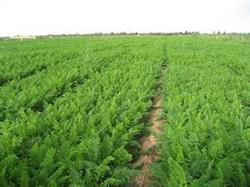
Detailed Explanation of Licorice Seedling Raising and Transplanting Methods and Technical Key Points
The glycyrrhizic acid contained in licorice is 200 to 300 times sweeter than sucrose, making it the best natural sweetener discovered to date. China exports large quantities of licorice and its extracts to European, American and Southeast Asian countries, and it has become a major foreign-exchange-earning medicinal herb. Due to increasing demand at home and abroad, wild licorice resources are becoming increasingly depleted. Therefore, it is necessary to...
-
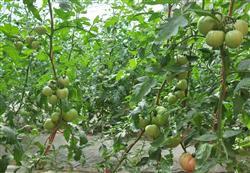
How to Grow Over-Summer Tomatoes? Key Technical Points Explained
How are over-summer tomatoes grown? Please introduce the cultivation methods. Over-summer tomatoes can be grown by referring to the following methods: 1. Variety selection: summers are hot and rainy, so choose varieties that are heat-tolerant, moisture-resistant and virus-resistant. Through trials, varieties suitable for over-summer cultivation include Zhongza No. 9, L-402, L-412, etc. 2. Raising seedlings: ...
-
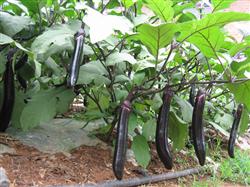
Key Technical Points for Summer Management of Open-Field Eggplant Cultivation
How to manage open-field eggplants in summer? Please explain. For summer open-field eggplants, you can refer to the following management methods: Eggplants like water but are not tolerant of waterlogging, yet shortly after transplanting they encounter the rainy-and-hot season of July and August, and this kind of weather poses a great threat to the normal growth of eggplants and also makes manual management more difficult. The most...
-
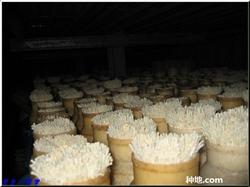
Summer Cultivation Methods and Key Technical Points for Enoki Mushroom
What are the requirements for cultivating enoki mushroom? Please note the following points when cultivating enoki mushroom: 1. Temperature The temperature requirements of enoki mushroom differ at each growth stage. The temperature range for mycelium growth is 3-34°C, with an optimum of around 23°C; the temperature required for fruiting body differentiation is 10-15°C, with an optimum of 12-13...
条件筛选