What are the key technical points for cultivating black fungus (wood ear mushroom)?
How to cultivate black fungus (wood ear mushroom) well? Please introduce: I. Cultivation season and material preparation. 1. Cultivation time: The choice of cultivation time is the key to the success or failure of black fungus cultivation, and is closely related to yield and quality. Bag-making should be chosen from early October to November, and can be appropriately earlier in high mountain areas. This period is relatively ideal, when the room...
How to cultivate black fungus (wood ear mushroom) well? Please introduce
I. Cultivation season and material preparation
1. Cultivation time: The choice of cultivation time is the key to the success or failure of black fungus cultivation, and is closely related to yield and quality. Bag-making should be chosen from early October to November, and can be appropriately earlier in high mountain areas. This period is relatively ideal, when the room temperature is 28-15°C, the relative air humidity is about 65%, and the temperature gradually drops, with the activity of contaminating bacteria at a low ebb. This is conducive to the colonization of black fungus mycelium to absorb nutrients, and also conducive to early spring fruiting.
2. Raw material ratio: Black fungus is a wood-rotting fungus. Using sawdust as the culture material, its nutrients can meet the needs of black fungus growth and development. Tree species suitable for cultivating shiitake and wood ear mushroom are all suitable for cultivating bagged black fungus. Pine, fir, cypress, etc. contain oils, alcohols, ethers and other substances, and tree species of the Lauraceae family and stable aromatic spices also contain aromatic substances. The sawdust of these tree species must be treated before cultivating black fungus, otherwise they should not be selected.
Sawdust is best crushed into granular form in one pass with an 8 mm sieve. Cottonseed hulls and rice husk powder are also ideal cultivation materials. Auxiliary materials such as wheat bran and rice bran make up the culture medium. Raw materials are required to be fresh and free of mold. The formulas are as follows:
(1) Mixed wood sawdust 80%, wheat bran 18%, gypsum powder 1%, sucrose 1%, appropriate amount of water.
(2) Mixed wood sawdust 68%, rice husk powder 15%, wheat bran 16%, lime 0.5%, sugar 0.5%, appropriate amount of water.
(3) Mixed wood sawdust 65%, cottonseed hulls 24%, wheat bran 15.5%, lime 0.5%, appropriate amount of water.
II. Production process flow
When mixing materials for bag-cultivated black fungus, the water content is slightly drier than for bag-cultivated shiitake, and 50%-55% is appropriate. Because black fungus mycelium is fine and slow to grow, a slightly dry culture material with large gaps and sufficient oxygen content can significantly accelerate the wood ear mycelium, which is beneficial for the later stage (field management). Bagging, sterilization are similar to bagged shiitake (15×15 tube material). Inoculation should be operated under sterile conditions in an inoculation box, with four holes inoculated per bag, appropriately increasing the inoculation amount, using whole blocks of spawn for inoculation, so that the black fungus mycelium quickly resumes growth and occupies the inoculation holes. After inoculation, tie the bag opening with a sleeve bag and transfer to the culture room for cultivation. The culture room should be cleaned in advance, fumigated and disinfected with sulfur, or sprayed with 5% phenol or peracetic acid on the walls, space and floor. After the smell of the chemicals has dissipated, move in the inoculated fungus bags and stack them in parallel piles or in a "#" shape.
Suitable temperature cultivation: Temperature has a great influence on the growth of black fungus mycelium. In order for the black fungus mycelium to grow normally, the room temperature must be controlled differently according to different growth stages. The mycelium growth stage is divided into:
Germination stage: That is, within 15 days after inoculation. For the first 10 days, the indoor temperature should preferably be 26-28°C, so that the mycelium can absorb nutrients faster in the most suitable environment, colonize and spread, occupy the culture material, become dominant, and reduce contamination by stray bacteria. However, it should not exceed 30°C. After 10 days, as the mycelium grows and develops, the temperature inside the bag gradually rises. Generally, the bag temperature is 2-3°C higher than the room temperature, so the room temperature should be adjusted to 22-24°C.
Vigorous stage: After 20 days, the mycelium reaches the stage with the strongest ability to decompose and absorb nutrients. The mycelium is vigorous and strong, metabolism accelerates, and the bag temperature continues to rise. The room temperature should preferably be about 22°C. At this time, special attention should be paid to turning the piles to prevent abnormal temperatures, and ventilation frequency should be increased.
Maturation stage: That is, after 40 days, the mycelium enters the physiological maturation stage and is about to transition from vegetative growth to reproductive growth. The bag temperature gradually decreases and should be kept at about 20°C. Temperature changes should be observed, and the timing of opening and closing doors and windows should be controlled well. When closing doors to raise temperature, be sure to ventilate in time according to the temperature. After closing the doors, the temperature can still rise, so attention should be paid to promptly spreading out the fungus logs to avoid "burning the fungus." When the mycelium has fully grown through the bag, it can be moved to the cultivation site for fruiting management.
III. Selection of the fruiting site
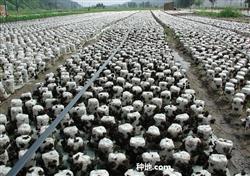
Choose a field or lawn with good ventilation, sufficient sunlight, convenient water source, no pollution sources, and flood prevention as the fruiting site. Form it into a turtle-back-shaped bed, 120 cm wide, with unlimited length, and the side ditches serving as walkways. Use small wooden poles or wire to build the frame, with rows slightly sparser than shiitake logs. Cover the bed with dry grass to help retain moisture (or cover with perforated plastic film) to prevent mud and sand from eroding the fungus logs, so that the fungus pieces are clean and free of impurities and pollution, and have top quality after drying. The fungus logs do not need to be covered with film, and no shade shed is built. They are placed in the open air so that the air flows smoothly.
IV. Log placement and fruiting management
In early February, transfer the well-grown fungus logs to the fruiting site. Choose a sunny or cloudy day for placement. Poke about 180 fruiting holes in each fungus log (using a hole-poking tool made from a 0.5 mm thick nail head). Use the method of not removing the bag. One week after poking holes in the fungus logs, only after seeing the mycelium at the holes recover can fine water spraying management begin, spraying once in the morning and once in the evening, half an hour each time. Increase the amount of water spraying according to the growth of the fruiting bodies. Spray when the temperature is low, do not spray when the temperature is high (during the day), and spray more on sunny and windy days (morning and evening). Water management is the key in the black fungus cultivation process. When the primordia form, the relative air humidity of the cultivation site should be 90%-95%. In an environment of alternating dry and wet, when the temperature is high, spray water in the morning and evening; when the air is dry, increase the number of water sprays. Stop spraying water 1 day before harvesting. After harvesting, rest the fungus for 7 days, then spray fine water once on the 8th day to moisten the culture material. After new ear buds form, continue spraying water. The fungus pieces can be picked when they are 80%-90% mature. Harvest two batches of wood ear, then turn the fungus logs once so that both ends fruit evenly, promoting the mycelium to form fruiting bodies, for a total of 4 to 5 batches harvested. Processing and drying black fungus is relatively simple; just air-dry it in the sunlight. Storage is also very simple; put it into plastic bags or woven bags and stack it in a dry, dark place.
V. Points to note
The main existing problem in sawdust bag cultivation of black fungus is mold contamination. This is because the fungus logs lack a protective layer like the bark of log wood, or the mycelial skin layer of shiitake logs, which is why disease infection occurs. In addition, black fungus mycelium is fine and lacks the strength and stress resistance of shiitake mycelium. Also, because black fungus is a gelatinous fungus, during the stage of ear bud formation and fruiting, if temperature and humidity management is poor and ventilation is insufficient, it is easy to attract pathogenic insects and diseases. Therefore, we adopt the open-field cultivation method without building a shade shed and without film covering, which is an effective measure to solve ventilation and reduce humidity, and can also avoid the breeding of stray bacteria and insect pests.
Properly arrange the fruiting time. The superior conditions of early spring temperature, humidity, air, etc. are all favorable for the growth of black fungus, ensuring high yield and high quality of wood ear, achieving breakthrough progress in bagged black fungus cultivation, and stabilizing yield. Use scientific methods to poke fruiting holes, so that the fungus logs are stimulated without being damaged, fruit uniformly and neatly, and the harvested wood ear carries no impurities. In early spring, the rain is well distributed, fruiting is early, flush turnover is fast, there are no diseases or insect pests, no need to spray pesticides, and management is simple and easy. The wood ear quality is good, dark in color and thick in flesh, and the fruit body shape is comparable to log-cultivated wood ear, reaching export standards for foreign trade.
Click to get more wood ear cultivation techniques
Click to get more edible mushroom cultivation techniques