How to Grow Over-Summer Tomatoes? Key Technical Points Explained
How are over-summer tomatoes grown? Please introduce the cultivation methods. Over-summer tomatoes can be grown by referring to the following methods: 1. Variety selection: summers are hot and rainy, so choose varieties that are heat-tolerant, moisture-resistant and virus-resistant. Through trials, varieties suitable for over-summer cultivation include Zhongza No. 9, L-402, L-412, etc. 2. Raising seedlings: ...
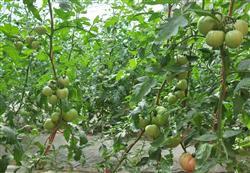
How are over-summer tomatoes grown? Please introduce the cultivation methods
Over-summer tomatoes can be grown by referring to the following methods:
1. Variety selection: summers are hot and rainy, so choose varieties that are heat-tolerant, moisture-resistant and virus-resistant. Through trials, varieties suitable for over-summer cultivation include Zhongza No. 9, L-402, L-412, etc.
2. Raising seedlings:
(1) Seedbed preparation: to plant 667 sq m of tomatoes, a seedbed area of 22 sq m is needed (calculated without separate pricking-out beds). The seedbed fertilizer-to-soil ratio is 3:7 or 4:6. To prevent pests and diseases, 50% carbendazim, 70% thiophanate-methyl or dexon, etc. can be used at 8 g/sq m for soil disinfection; 50% phoxim or 20% isofenphos-methyl, etc. mixed with soybean cake and broadcast into the seedbed to control soil-dwelling pests.
(2) Seed treatment: first soak the seeds in 55°C warm water for 20 minutes while stirring constantly; when the water temperature drops to 30°C, continue soaking for 6-8 hours. To control tomato damping-off, early blight and other diseases, soak the seeds in 100-fold 40% formaldehyde solution or 1% potassium permanganate for 15-20 minutes, then rinse thoroughly with clean water, place at 30°C to promote germination, and sow when the seeds show white sprouts.
(3) Sowing: planting 667 sq m of tomatoes generally requires 50 g of seed. Mid-to-late May is the best sowing time. Before sowing, water the seedbed thoroughly, and broadcast the seeds after the seedbed soil has crumbled. After sowing, cover with 1-1.5 cm of soil, rake level, and set up a shade net or cover with weeds over the seedbed. After emergence, weed and thin promptly, with a plant-to-row spacing of 10 cm x 10 cm, and promptly control aphids to prevent the occurrence of viral diseases. The standard for strong seedlings is: thick stems, short internodes, 6-8 true leaves, a seedling height of about 15 cm, thick and plump leaves, deep green leaf color, beginning to show flower buds, and many fibrous roots. The seedling age is 35-40 d (days).
3. Planting out: before planting out, first apply fertilizer and prepare the soil. Generally, per 667 sq m, apply 5000 kg of high-quality barnyard manure, 50 kg of superphosphate, 15 kg of urea, and 20 kg of potassium sulfate. Plow deeply, break up the soil finely and rake level. Single-ridge single-row or single-ridge double-row planting can be adopted. For single-row planting, the row-to-plant spacing is 60 x 35 cm; for double-row planting, the large row spacing is 70 cm. The small row spacing is 45 cm, and generally 3000-3500 plants are set out per 667 sq m.
4. Management after planting out:
(1) Cultivation, fertilization, watering: after planting out, cultivate 2-3 times at the appropriate time. Water at the appropriate time when the young fruits are swelling, and apply 15 kg of urea per 667 sq m as a top dressing. In late July, during the swelling stage of the middle truss fruits, to prevent premature aging, combine with watering and apply 25 kg of diammonium phosphate and 15 kg of potassium sulfate per 667 sq m as a top dressing. After the Beginning of Autumn, tomatoes enter the second production peak; to ensure later yield, generally apply 10 kg of urea, 20 kg of diammonium phosphate and 15 kg of potassium sulfate per 667 sq m as a top dressing.
(2) Pruning: adopt single-stem pruning, leaving about 7 trusses of fruit per plant. For the 2nd to 4th trusses, leave 2-3 fruits per truss; after the 5th truss, leave 3-4 fruits per truss. Remove side shoots and thin flowers and fruits at the appropriate time. Use Fengchanji No. 2 for flower dotting, and set up supports with bamboo poles 1.5 m or longer.
(3) Pest and disease control: the main diseases are early blight, leaf mold, gray mold, canker, etc. In the early stage of disease, 1:2:200 Bordeaux mixture can be used for control; in the later stage, spray 500-fold 64% oxadixyl-mancozeb, 800-1000-fold 70% thiophanate-methyl, 600-fold 75% chlorothalonil or 1000-1500-fold 50% procymidone for control. The main pests are cotton bollworm, cabbage caterpillar, aphids, American leafminer, etc., which damage leaves and fruits; they can be controlled with 5% fenvalerate EC or 2000-fold 20% fenpropathrin. American leafminer can be controlled with 1000-1500-fold 40% lücaibao EC or 2000-fold 1.5% high-penetration imidacloprid EC.
5. Timely harvesting: harvest the early fruits when they show a red line, and place them in a cool place for sale; when pulling up the vines in the later stage, place the green-white fruits at 10-15°C to ripen. Over-summer tomatoes generally yield about 7500 kg per 667 sq m, with an income of 3000-5000 yuan.
Click to get more tomato cultivation techniques
Click to get more vegetable cultivation techniques