Five key technical points for successful Atractylodes macrocephala cultivation
Atractylodes macrocephala, also known as Yuzhu, Dongzhu, Zhezhu, etc., is a plant of the Asteraceae family. Its rhizome can be used as medicine and has effects such as strengthening the spleen, drying dampness, and preventing miscarriage, making it a valuable Chinese medicinal herb. Growing Atractylodes macrocephala in rural areas is a path to wealth with low investment, a short production cycle, smooth sales, and high economic returns. 1. Site selection and land preparation. Atractylodes macrocephala prefers a cool climate...
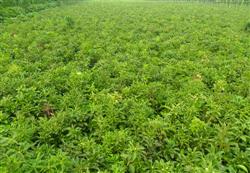
Atractylodes macrocephala, also known as Yuzhu, Dongzhu, Zhezhu, etc., is a plant of the Asteraceae family. Its rhizome can be used as medicine and has effects such as strengthening the spleen, drying dampness, and preventing miscarriage, making it a valuable Chinese medicinal herb. Growing Atractylodes macrocephala in rural areas is a path to wealth with low investment, a short production cycle, smooth sales, and high economic returns.
1. Site selection and land preparation. Atractylodes macrocephala prefers a cool climate and fears high-temperature, high-humidity environments. It is not strict about soil requirements, but well-drained, deep slightly acidic, alkaline, and light clay soils are best. In plain areas, choose plots with loose soil and moderate fertility. If the soil is too fertile, seedlings grow too vigorously and are prone to bolting and flowering in the same year, affecting medicinal quality. In mountainous areas, land with thicker soil and a certain slope can be selected for planting. The previous crop is best a grass-family crop; it is not advisable to choose fields previously planted with tobacco, peanuts, rapeseed, or similar crops, otherwise diseases are likely to occur. For seedling beds, generally apply 4000-5000 kg of farmyard manure per mu, or 75-100 kg of cake fertilizer; for transplanting fields, apply 2500-4000 kg of farmyard manure per mu.
2. Seedling raising and transplanting. Choose large-leaf, short-stem varieties. In North China, sowing and seedling raising generally take place in mid-to-late April. Before sowing, make flat beds in the seedling field and open furrows 16-17 cm apart and 3-4 cm deep for drilling, with a sowing rate of 4-5 kg per mu. After sowing, keep the soil constantly moist. After seedlings emerge, weeds should be pulled promptly, and crowded seedlings as well as diseased and weak seedlings should be thinned out. When seedlings are 3-5 cm tall, thin them to a spacing of 7-10 cm between rows and plants. Apply 1-2 topdressings during the seedling stage; generally 500 kg of human excrement and urine per mu is suitable. Too much will cause excessive seedling growth, overly tender branches and leaves, and reduced disease resistance. From mid-to-late October to early November, before the ground freezes, begin digging up the seedlings for storage. Choose a shady spot and dig a pit about 1 m deep and 1 m wide, place the seedlings in the pit to a depth of about 0.5 m, and cover with 4-6 cm of dry soil. In cloudy weather when the temperature drops, gradually add thicker soil cover; the thickness of added soil should be just enough not to freeze the seedlings. If the winter weather is relatively warm, covering with soil may not be necessary. In early April of the following year, begin transplanting the seedlings, generally with row spacing of 50-60 cm and plant spacing of 7-10 cm, planted in single or double rows. A transplanting density of 12,000-15,000 plants per mu is suitable. Generally, about 60 kg of seedlings are used per mu.
3. Field management. After sowing or transplanting Atractylodes macrocephala, weeds should be removed and the soil loosened frequently, ensuring the soil surface is loose and free of weeds. In the rainy season, take care to prevent waterlogging. Fertilization should follow the principle of "apply sufficient base fertilizer, apply seedling fertilizer early, and apply bud fertilizer heavily." After the seedlings have basically emerged or after transplanted seedlings have recovered, apply the first topdressing; the amount should not be too large. For transplanted seedlings, the second fertilization is generally applied 5-7 days after flowering (before flowering for seed-producing plants), with 75-100 kg of cake fertilizer per mu, or 1000-1500 kg of human and livestock excrement and urine plus 25-30 kg of superphosphate, or 25 kg of diammonium phosphate. Before the inflorescence opens, remove buds promptly to promote nutrient supply to the rhizome.
4. Pest and disease control. Atractylodes macrocephala has many diseases, mainly rust, iron leaf disease, root rot, and damping-off. For iron leaf disease, spray 0.3-degree Baume lime-sulfur mixture at the early stage of the disease, once every 8-10 days, for 2-3 consecutive sprays; for root rot, damping-off, and similar diseases, at the early stage of the disease, drench diseased plants with 50% carbendazim 600-fold solution, or 50% thiophanate-methyl 1000-fold solution. To control the Atractylodes macrocephala borer pest, spray 50% dichlorvos 800-fold solution, or 40% dimethoate 1500-2000-fold solution before adults lay eggs at the early flowering stage, once every 7-10 days, for 2-3 consecutive sprays.
5. Harvesting and processing. Atractylodes macrocephala is generally harvested from late October to early November of the planting year, when the stems turn from green to withered yellow. The method is: dig on a sunny day, then sun-dry or oven-dry. Sun-dry for 15-20 days until dry. When oven-drying, the heat should not be too strong; the temperature should be one that is not too hot to the touch. After drying over fire for 4-6 hours, turn the material over once from top to bottom so it is heated evenly, and at the same time the fine roots fall off naturally. Then continue drying until 80% dry, remove and pile for 5-6 days so internal moisture seeps out and the surface becomes soft, then dry again. When drying, do not use oily fuels such as pine or cypress, so as not to smoke the Atractylodes macrocephala black and affect quality. It is generally considered that Atractylodes macrocephala with large size, no hollow center, and a white cross-section is the best.