-
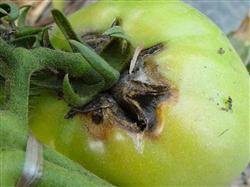
Key Technical Points for Preventing Physiological Diseases of Autumn Tomatoes
Early blight: After onset, concentric ring-patterned lesions appear on the leaf surface, dark brown, water-soaked. Before and after onset, spray with a 500-fold dilution of 70% mancozeb wettable powder, or a 400-fold dilution of 75% chlorothalonil wettable powder, once every 7 days, for 3 to 4 consecutive sprays.
-
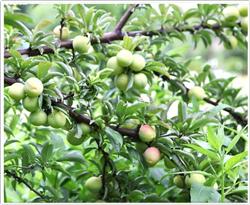
Key Technical Points for Plum Cultivation and Management in Greenhouses
In order to explore early-fruiting and early-high-yield techniques for cultivating plums in greenhouses, our station conducted experimental research from 1997 to 2000. The greenhouse was covered in the winter of the second year after planting, and in 2000, a 4-fen plot greenhouse produced 1000 kg of plums. The output value was over 10,000 yuan, and the maturity period was about 60 days earlier than open-field cultivation. Through the experiments, we summarized the techniques for cultivating plums in greenhouses...
-
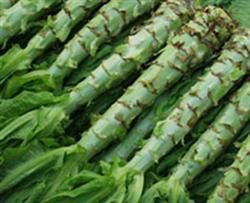
How to Grow Lettuce Seedlings in Summer? Key Technical Points Explained
Seed treatment: Because the seedling emergence rate is low when growing seedlings in summer, the seeds should be given low-temperature treatment. The method is to first soak the seeds for 12 hours, then wrap them well in gauze and place them in the refrigerator (2°C-5°C) for 2 days, then spread them out in a cool, shady place, and sow only after the seeds crack and sprout. Sowing: When sowing, avoid uneven spacing; before sowing, water thoroughly once as a base watering...
-
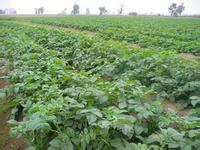
Control Methods and Technical Key Points for Excessive Growth of Greenhouse Potatoes
Mepiquat chloride: During the bud stage to flowering stage of potatoes, foliar spraying of 60-120 mg/L mepiquat chloride (use the lower concentration limit at the bud stage) can inhibit the growth of the aboveground part of the plant, increase yield, and increase the proportion of large and medium tubers. Chlormequat chloride: During the plant bud stage to early flowering stage, use 2000-2500 mg/L chlormequat...
-
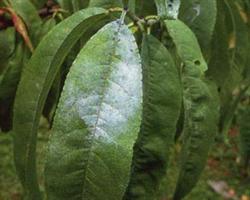
Peach Tree Powdery Mildew: Control Methods and Key Technical Points
Control methods for peach tree powdery mildew: 1. After leaf fall, remove diseased leaves to reduce the source of infection. 2. Spray fungicides for protection during the growing season: in the early stage of the disease, spray 0.2 to 0.3 degrees Baume lime sulfur mixture, or a 2000 to 3000 times dilution of 15% wettable powder triadimefon, or a 1500 to 2000 times dilution of thiophanate-methyl. 3. Improve ventilation and light penetration...
-
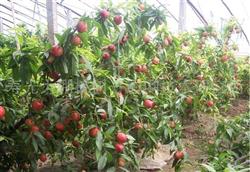
Peach Tree Pest and Disease Control Methods and Technical Key Points
1. Note that peach trees are chlorine-sensitive crops. Applying chlorine-containing fertilizer easily causes root rot and yellowing leaves; in mild cases the tree vigor weakens, and in severe cases the plant dies. Therefore, do not apply chlorine-containing fertilizers. 2. Be careful about watering during the flowering period. Watering during flowering can easily lower soil temperature and reduce soil air content, affecting root growth and absorption, leading to...
-
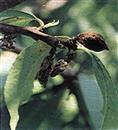
Detailed Explanation of Key Technical Points for Summer Management of Nectarines
Pest and Disease Control The main pests and diseases of nectarines include: peach anthracnose, brown rot, little leaf disease, peach aphid, spider mite, leaf miner, etc. For such pests and diseases, spray 5-degree lime sulfur mixture once before bud break, spray once with 10% pirimicarb-plus wettable powder at 2000 times dilution after petal fall, and in early May and mid-to-late June respectively spray 72% agricultural streptomycin at 3000 times dilution...
-
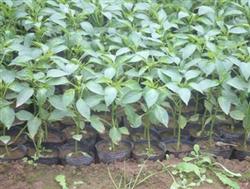
How to raise seedlings for spring-planted peppers? Key technical points explained
(1) Preparing the cold frame Select a plot with fertile soil, sheltered from the wind and facing the sun, where eggplants and tomatoes have not previously been grown, and build a cold frame. For each mu to be planted, raise seedlings using 150 grams of seed, and the cold frame should be more than 10 sq m. Apply plenty of base fertilizer, water heavily to build up soil moisture, and use a small amount of urea, phosphate fertilizer and active potassium fertilizer. Because the cold frame is sealed...
-
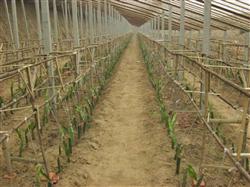
Key Technical Points for Greenhouse Cultivation and Management of Dragon Fruit
Dragon fruit is also known as red dragon fruit, green dragon fruit, fairy honey fruit, etc. Currently cultivated varieties mainly include white dragon fruit, red dragon fruit, and yellow dragon fruit. Dragon fruit is very rich in nutrients, mainly containing vitamins, cellulose, glucose, carotene, fat, amino acids, and minerals needed by the human body such as phosphorus and iron. It has detoxifying...
-
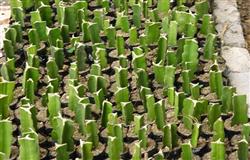
Detailed Explanation of Dragon Fruit Propagation Methods and Key Technical Points
1. Cuttings are best taken in spring and summer. Select plump, well-grown stem segments about 15 cm long as cuttings. After the wound has air-dried, insert them into a sand bed; roots will form in about 15-30 days, and once the roots reach 3-4 cm, they can be transplanted to the seedling bed. 2. For grafted seedlings, select healthy, pest-free, vigorously growing "Liangtianchi" (a wild cactus genus plant) with plump stems as rootstock...
条件筛选