-
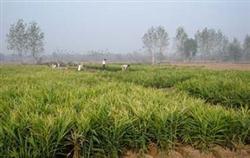
Key Technical Points and Precautions for Ginger Management After Autumn
After the Beginning of Autumn, the weather turns cool and the ginger rhizomes enter a period of rapid expansion. During this period, the demand for water and fertilizer is relatively high, and pests and diseases occur more frequently, making it a critical time for control. Strengthening mid-to-late stage management of ginger is very important. The relevant technical points are introduced below. 1. Watering: Ginger prefers moist conditions and is not drought-tolerant...
-
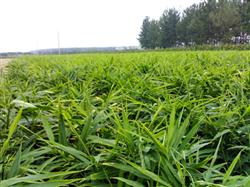
Detailed Explanation of Key Technical Points for High-Yield Ginger Cultivation and Management
I. Pre-planting Preparation 1. Fine land preparation and adequate base fertilizer. It is advisable to choose plots with fertile soil, good irrigation conditions, and no ginger blast disease, and to avoid continuous cropping as much as possible. On the basis of winter plowing, carry out fine land preparation early in spring, so that the soil has no visible or hidden clods and is loose on top and firm below. Increase the application of organic fertilizer, using high-quality chicken manure, disease-free residue-free barnyard manure, cake fertilizer, and plant ash in combination, and broadcast 4 cubic meters of high-quality decomposed chicken manure or 5,000-10,000 kg of high-quality barnyard manure as base fertilizer in combination with land preparation. In high-fertility and high-water plots, open furrows at a row spacing of 60-65 cm for sowing, and apply 100 kg of soybean cake, 50 kg of ternary compound fertilizer, 50 kg of potassium sulfate, 2 kg of zinc fertilizer, and 1 kg of boron fertilizer in the furrows as seed fertilizer.
-
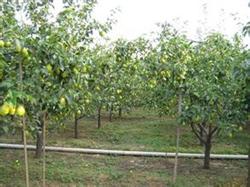
Key Technical Points for High-Yield Fertilization Management of Pear Trees
About one month before pear fruit ripens, the growth rate accelerates, which is called the fruit expansion stage. Topdressing at this time can improve photosynthetic efficiency, promote nutrient accumulation, and benefit fruit expansion and flower bud differentiation. This topdressing can both increase the yield of the current year and lay the foundation for fruiting in the following year. 525 Shandong Fruit Network The fertilization period is generally at the fruit...
-
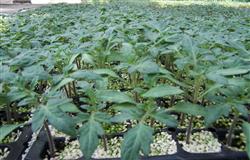
How to raise seedlings for autumn-winter tomatoes? Key technical points explained
1. Seedbed preparation: The seedling-raising period for autumn-winter tomatoes in a solar greenhouse coincides with the hot, rainy season. The seedbed should be capable of preventing rain and waterlogging, providing ventilation, and lowering temperature. Seedlings must be raised under film-covered conditions so they can adapt to greenhouse conditions. It is best to choose a dry site with good ventilation and set up a 1.5-2 m high arched...
-
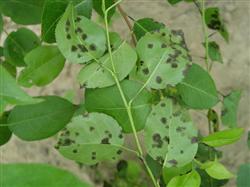
Detailed Explanation of Control Methods and Technical Key Points for Pear Scab
In the early stage of fruit infection, pale yellow spots appear; after the lesions expand, they become slightly sunken and develop black mold, after which the lesions become corky and cracking appears. Control measures: in the early stage of fruit infection by pear scab, the pesticides to spray include 1:2:200 Bordeaux mixture; 70% thiophanate-methyl wettable powder at 800-1000 times dilution; 50% carbendazim wettable...
-
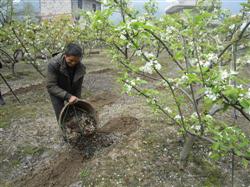
Correct Fertilization Methods and Technical Key Points for Pear Trees
I. Fertilizer amount. Generally speaking, producing 100 kg of pear fruit requires 0.47 kg of pure nitrogen, 0.23 kg of pure phosphorus, and 0.48 kg of pure potassium, with a nitrogen, phosphorus, and potassium ratio of 1:0.5:1. If calculated at a yield of 2500 kg of pears per mu, then each mu requires 11.75 kg of nitrogen, 5.75 kg of phosphorus, and 12 kg of potassium. In actual production, it can be based on...
-
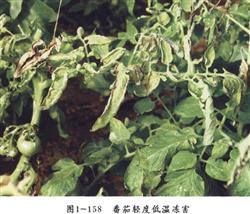
How to manage greenhouse tomatoes after frost damage? Practical technical points
In greenhouse tomato cultivation, abnormal weather changes often cause frost damage of varying degrees. In lightly frozen plants, growth stalls, the plants turn yellow, and some, after resuming growth, become short with small leaves and short internodes, showing the flower-topped phenomenon, with low yield and reduced quality. For severely frozen plants, if remedial measures are not taken in time, they cannot resume growth and will wither...
-
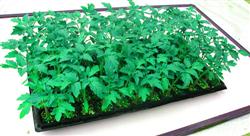
Key Technical Points for Temperature and Light Control in Winter Tomato Production
Spring tomato seedling raising: because there are many low-temperature and overcast-rainy days, the seedbed temperature is low and the humidity is high, which often leads to seedling-stage diseases such as damping-off and causes seedling raising to fail. Therefore, a place with loose soil texture, fertile soil, a sunny aspect, no water accumulation, and where no solanaceous crops have been planted within 2 years should be chosen as the seedbed. Generally choose an overcast or sunny day...
-
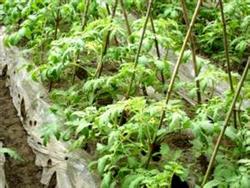
Key Technical Points for Preventing Spindly Growth in Greenhouse Tomatoes
The main causes of spindly seedlings and stunted seedlings in greenhouse tomato cultivation are insufficient light, excessively high temperatures and excessive moisture. Once spindly or stunted seedlings appear, the harm is considerable. Spindly seedlings differentiate flower buds late, drop many flowers, have a low survival rate, and suffer large yield reductions, while also failing to achieve early maturity. The measures to prevent spindly seedlings mainly...
-
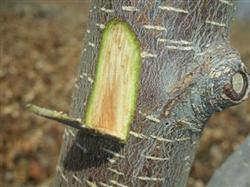
Pear Tree Early Spring Frost Damage Protection Methods and Technical Key Points
I. Frost Prevention 1. Spray salt water: Before the late frost arrives, spray the tree with 10-20% salt water. This can increase the concentration of cell sap in the tree, lower the freezing point, and also increase air humidity. When water condenses in the cold, it releases latent heat, thereby protecting against frost damage. 2. Spray hormones: In early spring, spray 0.1-0.2% maleic hydrazide solution to inhibit budding and delay flowering,...
条件筛选