Detailed Explanation of Dragon Fruit Propagation Methods and Key Technical Points
1. Cuttings are best taken in spring and summer. Select plump, well-grown stem segments about 15 cm long as cuttings. After the wound has air-dried, insert them into a sand bed; roots will form in about 15-30 days, and once the roots reach 3-4 cm, they can be transplanted to the seedling bed. 2. For grafted seedlings, select healthy, pest-free, vigorously growing "Liangtianchi" (a wild cactus genus plant) with plump stems as rootstock...
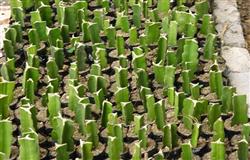
1. Cuttings: Spring and summer are most suitable. Select plump, well-grown stem segments as cuttings, about 15 cm long. After the wound has air-dried, insert them into a sand bed; roots will form in about 15-30 days, and once the roots reach 3-4 cm, they can be transplanted to the seedling bed.
2. Grafted seedlings: Choose pest-free, healthy, vigorously growing "Liangtianchi" (a wild cactus genus plant) with plump stems as rootstock. Graft on a sunny day. Cut the dragon fruit plant horizontally into 3-4 cm stem segments and let the wounds air-dry. At a point 10 cm up the rootstock stem, make a horizontal cut to create a flat surface, insert the scion, align the cambium layers, bind firmly with cotton thread, and place indoors to cultivate. At 28-30°C, after 4-5 days a large amount of callus tissue will form at the graft junction. When the scion and rootstock colors are similar, it indicates the vascular bundles have healed and the graft is successful. Then it can be moved to a temporary planting bed to continue growing. 3. Seedling stage management: The nursery bed should be in a ventilated, sunny field with fertile soil and convenient drainage and irrigation. Till finely and make beds with a bed width plus trench of 90 cm. Apply 1500-2000 kg of decomposed chicken manure or cow manure per mu, mix in 1000 kg of rice husks, stir thoroughly, and apply to the surface soil layer 10-30 cm below the bed surface during land preparation; then apply 100-150 kg of calcium magnesium phosphate fertilizer per mu, stir thoroughly with a hoe, and apply to the surface soil layer at a depth of 4-5 cm. Then plant the small seedlings in the seedling bed at a spacing of 3 cm between plants and rows, water thoroughly, and spray 500-fold carbendazim once. On sunny days, when the surface soil turns white, water as appropriate (about once every 7-10 days). Apply 5-7 kg of compound fertilizer per mu every 10-15 days. Once one plump stem segment has grown, they can be taken out of the nursery. Since this variety has just entered our country, cultivation techniques still need improvement. Please explore your own experience and investigate better cultivation methods.