-
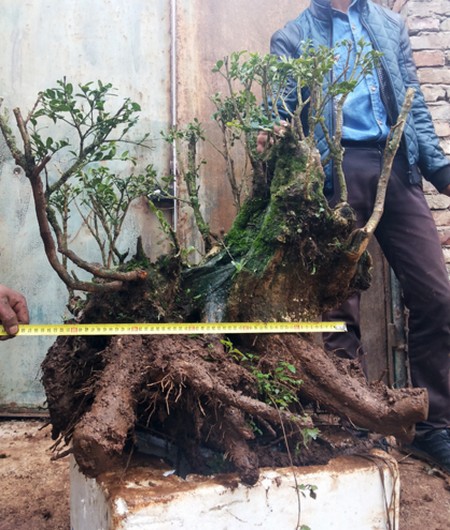
What are the precautions for making bonsai from mountain-collected stumps?
What does "mountain-collected stump" mean? It refers to a plant that originally grew on a mountain being transplanted by humans into a similar artificial environment. So what should be noted during the process of making bonsai from mountain-collected stumps? Precautions for making bonsai from mountain-collected stumps: 1. Do not collect stumps blindly. Many people always want to own many bonsai so they can enjoy them at any time,
-

Which tree stumps on the mountain can be used to make bonsai?
Bonsai is one of the traditional arts originating in our country. It generally uses plants and rocks as basic materials, and is an art work applied in flower pots as a natural landscape for people to appreciate. Because different bonsai often have different modeling effects, their expression techniques and artistic presentation forms are also different.
-
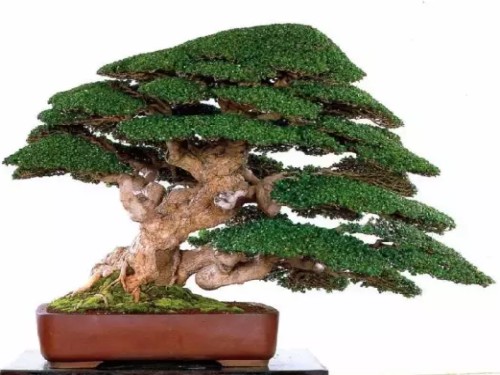
Detailed Explanation of Key Techniques for Bare-Root Cultivation of Bonsai Tree Stumps
With the further development of urban landscaping and home courtyard beautification, the shaping and landscaping of tree stumps has become increasingly popular. Besides the bonsai that people can often move around, they always linger over the shaped landscapes featuring tree stumps in public green spaces and home courtyards, which shows people's mentality of revering nature.
-
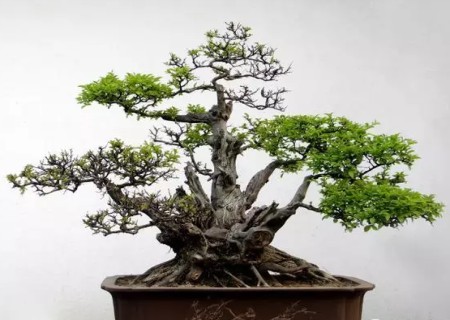
How do you seal the cuts on tree bonsai stumps? A detailed guide to practical techniques
After a new tree stump has been trimmed and shaped, it has quite a few wounds from knives, saws, and chisels. These wounds are easily invaded by bacteria, which at worst damage only a local area but at worst affect the whole plant, so sealing the wounds is necessary. The simplest method is to smear the wounds with beeswax, paraffin wax, or white glue, or to wrap the wounds with strips of cloth. What to note is
-
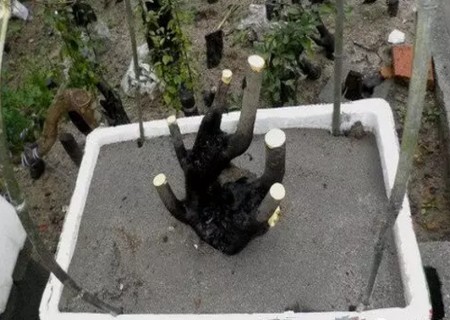
Planting Methods and Technical Key Points for Collected Bonsai Stumps
Opinions have always differed on determining the transplanting time for bonsai stump material. Based on my own experience in planting stumps, I believe it generally varies with time and place, and should not be treated rigidly. In our southwestern region, the transplanting time should generally be chosen when there is no rain, snow, or frosty weather. Deciduous tree species and pines and cypresses can be transplanted from early winter to before Jingzhe (Awakening of Insects) the following year.
-
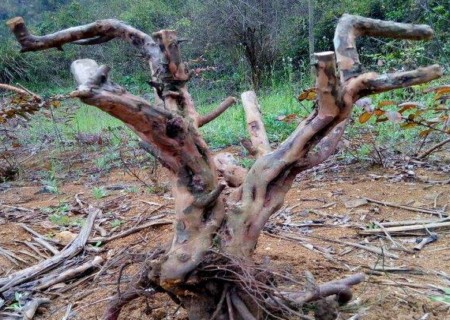
A Detailed Guide to the Cultivation and Care of Wild-Dug Sageretia Stumps
Sageretia (Sageretia thea) belongs to the buckthorn family (Rhamnaceae). Its roots and trunk are naturally striking, and its tree form is rugged and elegantly ancient. It is one of the main species for Chinese stump bonsai, one of the five famous trees of Lingnan bonsai, and one of the bonsai plants exported to the United States after China's entry into the WTO. The fruit of sageretia is edible, with a sweet-and-sour taste, hence the name "sour plum fruit"; the young leaves can be used as a substitute for tea.
-
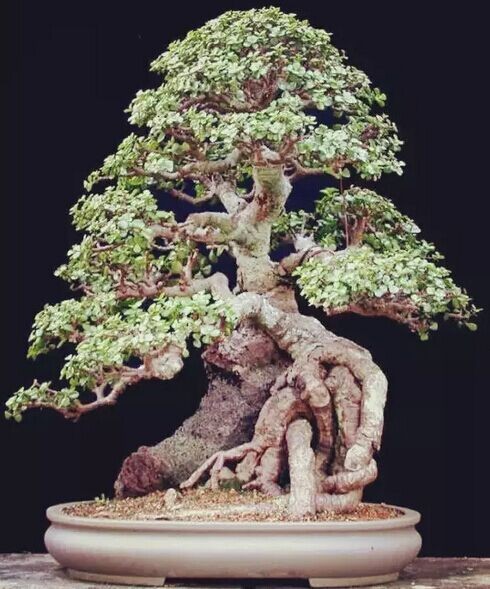
A collection of tree-stump and rock-clinging bonsai: admire the sculptural art of mountain stones and tree stumps
Generally, stump bonsai are made by planting the tree stump directly into the potting soil, which makes them relatively easy to create and maintain. But if the tree stump looks as though it were born and grown on rock, that is the uniquely charming rock-clinging style of stump bonsai. There are many kinds of ornamental stones, but mountain stones that are hard in texture and do not absorb water are generally not used, otherwise they are not only difficult to work with
-
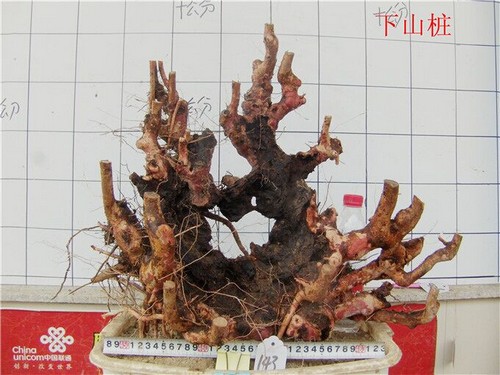
Cultivation Methods and Techniques for Syzygium buxifolium Bonsai Stumps
The Syzygium buxifolium plant is relatively short and small, with dense, tough and pliable branches, small leaves that are deep green and glossy, and verdant foliage throughout the four seasons. In early summer it blooms with small pink pom-pom-like flowers, set off by melon-seed-shaped green leaves, giving it an extremely graceful tree form. Wild old stumps, after cultivation and processing, can have their horizontal branches spread out flat with distinct layers, like piled-up layers of clouds, elegant and rustic.
-
Branch selection and shaping methods for Chinese ash (Fraxinus hupehensis) bonsai stumps
Fraxinus hupehensis belongs to the Oleaceae family, genus Fraxinus. Native to Jingshan in western Hubei, it is a deciduous tree reaching over 30 m in height. Young and middle-aged trees have smooth, pale grayish-green bark, while middle-aged and old trees have vertical dark gray furrows. The new shoots that sprout in the first year should be handled according to the vigor of sprouting and branch growth of each stump. For vigorous trees
-
条件筛选