Detailed Explanation of Key Techniques for Bare-Root Cultivation of Bonsai Tree Stumps
With the further development of urban landscaping and home courtyard beautification, the shaping and landscaping of tree stumps has become increasingly popular. Besides the bonsai that people can often move around, they always linger over the shaped landscapes featuring tree stumps in public green spaces and home courtyards, which shows people's mentality of revering nature, and their pursuit of beauty full of living art has been deepening day by day.
For tree stumps that have been collected, choose a spot with ample sunlight, loose and fertile soil, and convenient drainage for planting. Another method is to plant the dug-up tree stumps into clay pots and place them in a greenhouse to force budding and greening. Pay attention to watering and spraying to prevent dehydration and death, but do not let them become waterlogged, lest the roots rot.
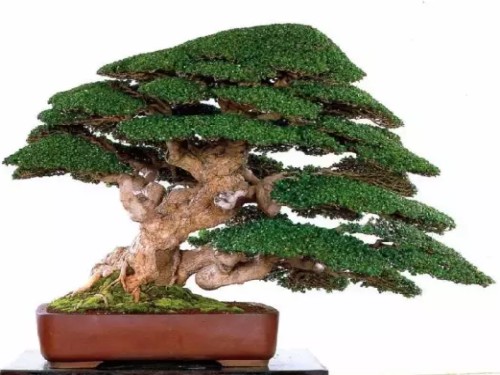
Besides planting in the ground, the dug-up tree stumps can also be cultivated in clay pots, wooden boxes, baskets, and the like. The size of the container depends on the size of the tree stump. Keep drainage holes at the bottom, and to ensure good air permeability, a layer of coarse sand can be placed at the bottom. Pot cultivation facilitates shaping and processing as well as meticulous management. To increase the survival rate of pot cultivation, the pot and tree can be buried together in the soil, which keeps the potting soil moist and promotes rooting and the sprouting of branches and leaves.
When planting the tree stump deeply, it is best that the roots do not show above the pot surface; after planting, the root system of the plant keeps extending deeper. After a period of maintenance, with each watering, raise the watering can so that the water rushes onto the roots, gradually washing away the soil around the roots and exposing them. Then, in combination with repotting, raise the cultivation position of the roots so that the exposed portion of the roots gradually increases, making their shape progressively more perfect for viewing.
When planting bare-root trees, they can be set 3 cm to 5 cm above the tree's original soil line, while trees with soil balls should be level with the upper surface of the soil ball or about 2 cm above the soil ball. To reduce settling after watering and prevent the tree from sinking too much after planting, backfill the planting soil in layers, and tamp each layer firmly.
Once the tree has been planted, it can be watered. The first watering must be thorough. After watering, place it in a windless, semi-shaded spot, and take care to water and spray frequently. After about half a month, when the tree has grown new roots, it can be managed normally.
Warm tips:
When a tree stump has just been planted, it is generally mounded high with soil. After it survives and during the vigorous growth period, new roots tend to sprout at the base of the stump. If the mounded soil around it is not removed in time, the new roots will grow stronger and stronger over time, while the original main root will gradually be replaced by the new roots and die. Therefore, after the planting has survived and growth is normal, remove the mounded soil in time and gradually expose the main root, promoting the original roots to grow more fibrous roots.