Cultivation Methods and Techniques for Syzygium buxifolium Bonsai Stumps
The Syzygium buxifolium plant is relatively short and small, with dense, tough and pliable branches, small leaves that are deep green and glossy, and verdant foliage throughout the four seasons. In early summer it blooms with small pink pom-pom-like flowers, set off by melon-seed-shaped green leaves, giving it an extremely graceful tree form. Wild old stumps, after cultivation and processing, can have their horizontal branches spread out flat with distinct layers, like piled-up layers of clouds, elegant and rustic, making it truly an excellent choice among bonsai materials.
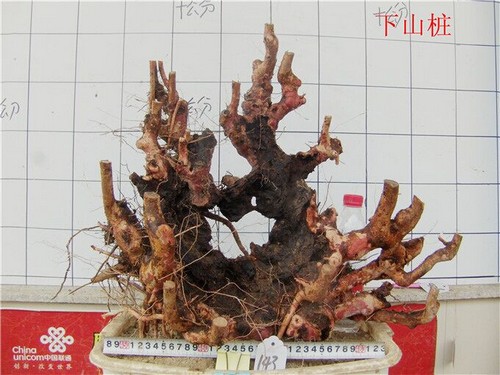
(1) Because the bark of Syzygium buxifolium stumps is thin and prone to losing water and drying out, making survival after cultivation rather difficult, the cultivation method of "one step in place, potting directly" is generally adopted to speed up the time to shaping and increase the survival rate, avoiding excessive root damage when potting.
1. Root pruning. Both the needs for the survival of the Syzygium buxifolium stump and the requirement of being favorable for immediate potting and planting must be taken into consideration.
2. Branch and trunk pruning. Generally, branches are required to be both clustered and scattered, both sparse and dense, with pauses and rises, striving for variation. Trim the Syzygium buxifolium stump clean of branches and leaves, leaving only the trunk; some leaves may also be kept, but not too many: because the root system has been severely cut and damaged, and especially since some old stumps have a low rate of root sprouting, even more so too many branches and leaves should not be kept, lest the water and nutrients absorbed be insufficient in supply, affecting the sprouting rate and survival rate.
3. Post-pruning treatment. After pruning a soil-bearing Syzygium buxifolium stump, apply a solution of thiophanate-methyl, carbendazim, chlorothalonil or the like to the root wounds, and it can then be potted. If a Syzygium buxifolium stump without soil is pruned and then placed in clean water to soak for one day before potting and planting, it can be made to take root and sprout earlier (it can sprout in 40-50 days), increasing the survival rate of the Syzygium buxifolium stump.
4. Potting. When planting newly dug or newly purchased Syzygium buxifolium stumps, soil that is loose in texture, well-draining and well-aerated, and moderate in fertility should be chosen, such as alluvial soil (tidal mud sand), leaf mold, etc. When potting, first place a tile or broken pot shard over the drainage hole at the bottom of the pot, then spread a layer of coarse sand (about 1/4 of the pot's height), then put the potting soil into the pot and press it lightly with the hand. When placing the Syzygium buxifolium stump into the pot, attention must be paid to putting it in with soil and positioning it properly. After adjusting the position of the stump, fill in fine soil and press it firm, spread on moss, water thoroughly, and wrap the old stump and branches and trunk with moss or wet rice straw to keep them moist; apply white latex to the branch and trunk wounds, and seal and bind large wounds with plastic film (to prevent wound infection by pathogens and water evaporation), then place in a shady, wind-sheltered spot for cultivation. Afterward, keep the potting soil moist and frequently spray water on the stump, branches and leaves to promote the sprouting of new roots and new leaves.
(2) In addition to the "one step in place, potting directly" cultivation, methods such as cultivation in wooden boxes, wooden barrels, wooden basins, plastic buckets, plastic basins, or field cultivation for stock training may also be used; these methods are generally used when no pot is prepared.
1. The method of cultivation in wooden boxes for stock training is basically the same as the method of potting directly. Before planting the stump, 1-3 drainage holes should be made in the bottom of the wooden box (or wooden barrel) (depending on the size of the box), tiles placed as padding, leaf mold put in, and the dug-up or bought Syzygium buxifolium stump trimmed of its roots, branches and leaves and its wounds treated, then planted in the box, filled with soil, pressed firm, and watered thoroughly. Post-planting management is the same as for direct potting, but the wooden box should be placed more than 5cm above the ground to enhance the drainage and aeration performance of the box bottom and prevent termite damage.
2. There are three methods of field cultivation for stock training. 1) After the Syzygium buxifolium stump is collected or purchased, plant it directly into the nursery field (this method causes great root damage when the stump is taken for potting, with little or no soil carried, and is generally less used); 2) First dig holes in the nursery field in advance the same size as the pot, line the bottom and sides of the holes with a layer of plastic soft trays or window screen used for rice seedling throwing cultivation, then put in cultivation soil and plant the Syzygium buxifolium stump; 3) On a cement floor, use wooden boards (pine boards are best, coated with white latex or tung oil before use) or bricks to build a basket the size of the intended pot, put in humus soil, and plant the Syzygium buxifolium stump. Afterward, pay attention to shading and frequently spraying water on the stump, branches and leaves.
3. After one year of field cultivation or wooden box stock training, the Syzygium buxifolium stump can be potted. Before potting, select a good pot and prepare well-draining, slightly acidic, humus-rich mountain soil as the cultivation soil. When potting, first pad the drainage hole at the bottom of the pot, then put in cultivation soil to a thickness of 2cm-5cm, take the Syzygium buxifolium stump with soil out of the wooden box or nursery field (stop watering and fertilizing some time before taking out the stump), remove some excess soil, cut off rotten roots and dead roots, plant it into the prepared pot, fill cultivation soil into the gaps around the pot and press firm, spread on moss, water thoroughly, and then carry out normal maintenance.