-

What are the propagation methods for peonies? Beginners can understand at a glance
The herbaceous peony counts as a rather precious flower, somewhat similar to the tree peony but also different. The tree peony is called the king of flowers, while the herbaceous peony is called the prime minister of flowers, and the herbaceous peony is also more commonly grown than the tree peony. The herbaceous peony is a perennial herbaceous plant with fleshy roots, native to northern China. Wild species are currently distributed in areas such as the Qinling Mountains and the Dabie Mountains
-

How to propagate and grow roses from bud cuttings? The method is easy to understand with illustrations
Roses are heavily pruned before winter, and the following spring a large number of new buds sprout up and down the branches. To make the plant shape symmetrical, concentrate nutrients, and produce abundant flowers, some of these new buds must be thinned out. These thinned spring buds, used as cutting material, have strong vitality and root easily, and after rooting they grow vigorously. It is a simple and easy propagation method
-
What standard principles should be followed in the shaping and pruning of fruit tree bonsai?
Fruit tree bonsai has ornamental value throughout all four seasons: delicate flowers in spring, lush foliage in summer, abundant fruit in autumn, and upright, vigorous form in winter, making it full of the joy of life. China is extremely rich in fruit tree resources. Various wild fruit trees and their rootstock resources in the mountains and wilds can all be utilized.
-
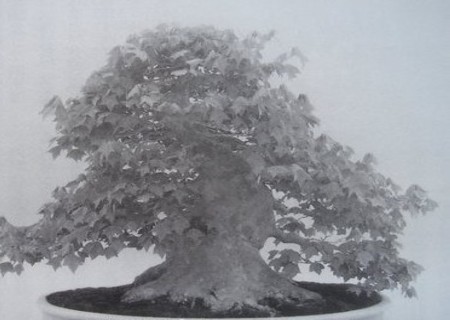
How to prune a maple bonsai? The whole process explained with illustrations so you understand at a glance
The best viewing period for maples is when the new leaves have just unfurled. If all the leaves are removed in late summer and a thin, diluted application of decomposed liquid fertilizer is given, new leaves will grow in about 20 days, adding another best viewing period. Maples have strong sprouting vigor and often produce new buds on the trunk. Any buds not needed for the design and any overly dense branches
-
Illustrated guide to the cleft grafting technique for bonsai, with detailed steps that are easy to understand at a glance
Grafting is the artificial joining of tissues such as a branch or bud from one plant onto a suitable part of another plant, such as a branch, trunk or root, so that they heal and grow together to form a new plant. This branch or bud is called the scion, and the plant that receives the scion is called the rootstock. Grafting flowers and trees places great emphasis on technique
-
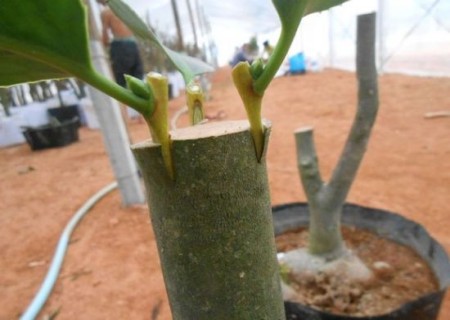
Illustrated guide to the bark grafting technique for bonsai: the steps are easy to understand at a glance
Bark grafting is carried out when the phloem of the rootstock peels easily; the rootstock should preferably be somewhat thicker than the scion. The scion should be cut longer to increase the contact surface. Its advantages are a high survival rate; its disadvantages are that grafting is slow, and after the graft takes, the new shoots need to be supported and tied to prevent breakage. Mulberry
-
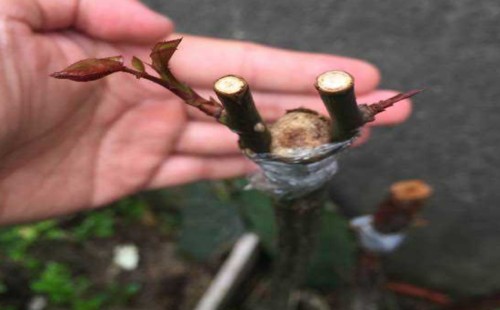
How to graft a tree-standard rose? Detailed methods and steps
The rose is a clumping shrub that does not grow an obvious main trunk, and to cultivate a rose bonsai with tree-standard characteristics, grafting is often the means used to achieve it. The tree stock used for grafting roses is mostly rose rootstock (Rosa multiflora), and the rootstock is required to grow vigorously, have a well-developed root system, and be free of pests and diseases.
-
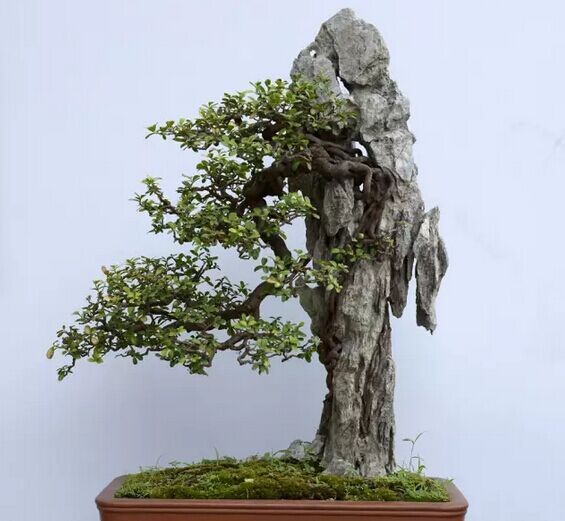
Appreciation of Outstanding Works from the Lingnan Bonsai Masters Exhibition
Bringing together the three bonsai masters Wu Chengfa, Chen Chang and Huang Jiuwei, leading figures in today's Lingnan and even Chinese bonsai circles, the "Lingnan Bonsai Masters Exhibition", themed "Scenery Beyond Scenery, Image Beyond Image", opened at Chanfu Temple in Beihai Park. The bonsai in all their varied forms offered the people of the capital a feast of art
-
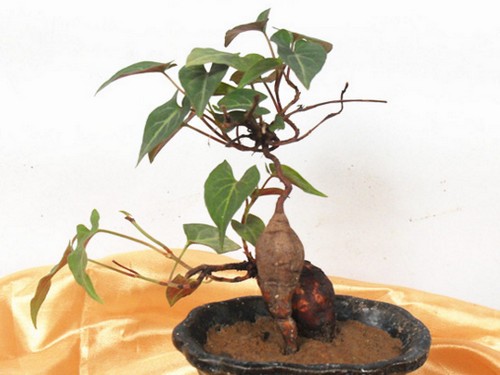
How to grow a Polygonum multiflorum bonsai? Understand the cultivation method in one article
Polygonum multiflorum is used in both raw and prepared forms. Raw Heshouwu can detoxify, reduce abscesses, and lubricate the intestines to relieve constipation. It mainly treats scrofula, sores and abscesses, rubella with itching, and dry-intestine constipation. Prepared Heshouwu tonifies the liver and kidneys, replenishes essence and blood, darkens the beard and hair, and strengthens the bones and muscles. It mainly treats blood-deficiency sallow complexion, dizziness and tinnitus, premature graying of the beard and hair, soreness and weakness of the waist and knees, numbness of the limbs, and abnormal uterine bleeding and leukorrhea
-

Can you keep fish in a hydroponic pothos? Read this and you will understand
Pothos is an evergreen vine plant with a powerful root system, so its stems and branches can grow very long, and its leaves are large and emerald green, giving it extremely high ornamental value. It is a very good indoor foliage plant, and it also does a good job of purifying the air. Besides the common soil culture form, pothos
条件筛选