-
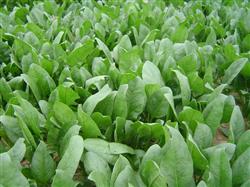
A detailed guide to four-season spinach cultivation techniques: master the key points for growing year-round
1. Sowing time and varieties. Autumn spinach is the main crop in spinach production, generally sown from August to September, but sowing can also be advanced to July or delayed to early October; after sowing, it can be harvested in batches in 30-40 d (days). Variety selection requirements are not strict, but for early-autumn spinach it is best to choose early-maturing varieties that are more heat-tolerant and fast-growing, such as Litou spinach, Huabo...
-
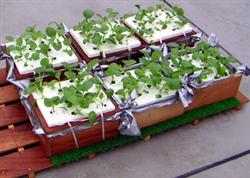
Detailed Explanation of Key Techniques for Hydroponic Spinach Cultivation in Summer
Spinach is one of the important vegetables in spring in northern China. It prefers cool conditions and cannot tolerate heat, with an optimum growth temperature of 15°C--20°C. Cultivation in summer is relatively difficult due to high temperatures and frequent rain. In recent years, some vegetable growers in Shouguang have successfully cultivated summer spinach using hydroponic techniques in greenhouses. The key cultivation techniques are introduced as follows:...
-
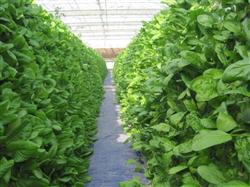
How to apply wintering fertilizer properly to spinach before overwintering
1. Sowing. Spinach is mainly broadcast-sown, though drilling is also possible. Under high-temperature conditions, germination is slow, so for early-autumn sowing it is best to soak the seeds to promote germination: soak the seeds for 12 hours, then treat them in a refrigerator at 4°C for 24 hours, and then keep them at 15-25°C to promote germination for several days; once most have germinated, they can be broadcast-sown. Sowing rate per mu...
-
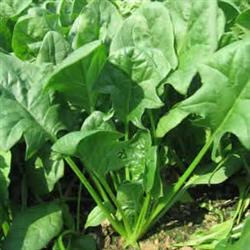
The three-part spinach cultivation guide: master the key growing steps
Sowing: Spinach is mainly broadcast-sown, though it can also be sown in rows. Because germination is slow under high temperatures, seeds sown in early autumn should be soaked and pre-germinated: soak the seeds for 12 hours, then place them in a refrigerator at 4°C for 24 hours, then keep them at 15-25°C to sprout for several days, and once most have germinated, broadcast-sow them. Sowing rate per mu: 10...
-
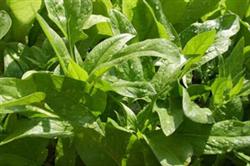
Detailed Explanation of the Key Points of Pollution-Free Cultivation Techniques for Spring Spinach
Spring spinach has a short growing period, and can generally be harvested and brought to market 30 to 50 days after sowing. Planting spring spinach plays an important role in quickly easing the spring shortage. 1. Select suitable varieties. After spring spinach is sown and emerges, the temperature is low and the daylight hours gradually lengthen, making it very easy to bolt after passing through phase development. Therefore, choose varieties that bolt late, have thick and large leaves...
-
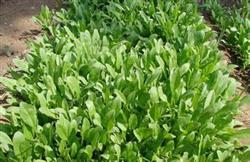
How to efficiently cultivate greenhouse cucumbers, rice, and spinach?
Spring spinach has a relatively short growing period, and can generally be harvested and sold 30 to 50 days after sowing. Planting spring spinach plays an important role in quickly alleviating the spring vegetable shortage. Choose suitable varieties. After spring spinach is sown and emerges, temperatures are low and daylight gradually lengthens, making it very easy for bolting to occur once it passes through phase development. Therefore, choose varieties that bolt late, have thick and broad leaves...
-
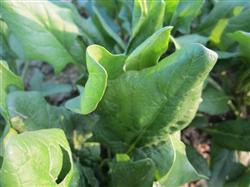
How to overwinter and preserve autumn spinach seedlings? A full analysis of the key technical points
Autumn spinach is an overwintering vegetable sown in autumn and harvested in spring. It begins overwintering at the end of November and turns green again in early March of the following year, a period lasting more than 100 days. Therefore, under long-term low-temperature and dry conditions, how to ensure safe overwintering is the key to achieving a bumper harvest. 1. Water the freezing water well. Watering the freezing water must achieve "one determination" and "two suitability...
-
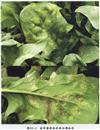
Comprehensive Management and Control Methods for Spinach Downy Mildew
Comprehensive management of spinach downy mildew means integrated management of spinach downy mildew. 1. Fertilizer and water management. Spinach prefers fertile, moist, cool conditions and dislikes drought and waterlogging; it is a fast-growing vegetable. Therefore, during the growing period, sufficient fertilizer and water must be supplied in a timely manner. From sowing to full emergence, the soil must be kept moist to ensure full emergence. At the 3-leaf stage, cultivate and weed, ...
-
Detailed Explanation of High-Yield Cultivation Techniques for Two Crops per Season of Spinach and Welsh Onion
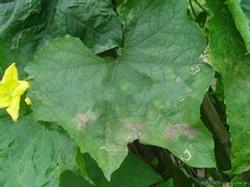
I. Disease Symptoms (I) Luffa Downy Mildew mainly affects the leaves. Diseased leaves first show irregular pale yellow to bright yellow spots, which later expand into angular yellowish-brown lesions. In humid conditions, a purple-black mold layer appears on the underside of the lesions. In the later stages, the lesions merge into patches, the leaves wither and die, causing severe yield loss. The pathogen is Pseudoperonospora cubensis...
-
What to Do About Spindly Overgrowth in Greenhouse Beans? Detailed Analysis of Causes and Control Methods
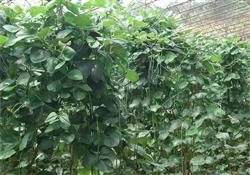
The causes of spindly overgrowth in summer vegetables differ at each stage. Practice has proven that greenhouse beans are most prone to spindly overgrowth during the summer, and the main causes can be grouped into two major categories: 1. Seedling-stage overgrowth. The main cause of spindly overgrowth in seedlings is excessively high temperature, especially when nighttime temperatures are too high and respiration consumes too much...
条件筛选