Detailed Explanation of High-Yield Cultivation Techniques for Two Crops per Season of Spinach and Welsh Onion
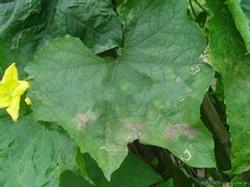
I. Disease Symptoms (I) Luffa Downy Mildew mainly affects the leaves. Diseased leaves first show irregular pale yellow to bright yellow spots, which later expand into angular yellowish-brown lesions. In humid conditions, a purple-black mold layer appears on the underside of the lesions. In the later stages, the lesions merge into patches, the leaves wither and die, causing severe yield loss. The pathogen is Pseudoperonospora cubensis...
 I. Spinach Cultivation
1. Varieties
Choose winter-hardy buried spinach.
2. Sowing
Sow at the appropriate time. If sown too early, the seeds will germinate and emerge before winter; due to low temperatures, the seedlings grow extremely slowly, and during the overwintering period, small seedlings with shallow roots are susceptible to frost damage. If sown too late, the soil has already begun to freeze, resulting in poor land preparation and sowing quality, inadequate soil coverage, and poor seed-soil contact, leading to uneven emergence and many gaps in the following spring. Sowing can be done when the average daily temperature drops to 2-4°C.
3. Land Preparation
After the previous crop is harvested, promptly broadcast decomposed barnyard manure as base fertilizer, then shallow plow and harrow to thoroughly mix the fertilizer with the soil. After leveling the ground, build flat beds 1.4 m wide, ready for sowing. For buried spinach, the dry seed sowing rate is 6-7 kg per 667 sq m. If pre-germinated seeds are sown, they are susceptible to freezing during the overwintering period. Open furrows at a row spacing of about 10 cm, with a furrow depth of about 3-4 cm. After drilling, cover with soil. If the soil is dry at sowing, press down after covering to ensure close seed-soil contact; if the soil is moist, wait until the surface dries slightly before pressing, to avoid surface crusting. Then let it overwinter without special management; the winter snow moisture is sufficient to meet the seeds' water requirements for germination.
4. Field Management
After the soil thaws in early spring, lightly rake the spinach bed once to preserve moisture and increase temperature, promoting emergence. In early March, the buried spinach seeds begin to germinate; do not use flood irrigation, as this lowers soil temperature and causes soil crusting, hindering emergence. After the seedlings grow two true leaves, their growth rate accelerates; irrigate and apply topdressing to promote rapid leaf growth. If no base fertilizer was applied, apply 10 kg of urea with the first irrigation, and apply topdressing again half a month later; if base fertilizer was applied, the amount and frequency of topdressing can be appropriately reduced based on the spinach growth condition. After the first irrigation, the soil should be kept consistently moist.
5. Harvest Time
Harvest and market successively according to market supply conditions, completing the harvest before Welsh onion transplanting in late May.
II. Welsh Onion Cultivation
1. Varieties
Choose varieties such as Zhangqiu Welsh Onion, Zhangza series, and Century Onion King.
2. Seedling Raising
Welsh onions have a long seedling stage, so seedling raising and transplanting are always adopted in cultivation.
3. Transplanting
Welsh onion transplanting is generally done in early June. The later the transplanting, the shorter the blanching period and the lower the yield; also, late transplanting tends to cause seedling legginess, and the hot weather after planting makes it difficult for seedlings to recover. Before transplanting, apply 2.5 tonnes of decomposed pig manure and 20 kg of diammonium phosphate per 667 sq m, and deeply plow the land to thoroughly mix soil and fertilizer. Open furrows at a row spacing of 60-70 cm, with a furrow depth of 30 cm and a furrow width of 15 cm. Apply decomposed dried manure and superphosphate in a concentrated band in the furrow, then loosen the furrow bottom and transplant. Wide rows with large ridges are mostly adopted to facilitate earthing up for blanching. Plant spacing is 2-3 cm, with 20,000-30,000 plants per 667 sq m, using 250-300 kg of onion seedlings. At transplanting, select and grade seedlings, planting them separately; larger seedlings slightly sparser, smaller seedlings slightly denser. The transplanting depth should be such that the growing point is not buried; too deep and the plant will not grow vigorously, too shallow and the blanched pseudostem length will be reduced. At transplanting, orient the leaves perpendicular to the row direction.
4. Field Management
① Topdressing and Irrigation After transplanting, the management focus is root promotion; do not irrigate unless dry, and drain after rain to prevent waterlogging, which can cause root rot, yellow leaves, and seedling death. Strengthen intertillage to preserve moisture, promote root development, and help plants recover quickly. Between the Beginning of Autumn and White Dew, irrigation should follow the principle of light watering and watering in the morning or evening. After White Dew, the weather becomes cool with large day-night temperature differences, and Welsh onions begin vigorous growth, entering the pseudostem blanching period. Two topdressings are needed, mainly with quick-acting nitrogen fertilizer, applying 15-20 kg of ammonium sulfate each time; irrigation should follow the principle of small amounts and frequent watering. Stop watering 7-8 days before harvest to improve storability.
② Earthing Up for Blanching The deeper the earthing up, the longer the blanched pseudostem. Earthing up must be done in stages during the pseudostem blanching period. Do not earth up during hot and humid seasons, as this easily causes rot of roots and the false stem.
5. Pest and Disease Control
Welsh onion Phytophthora blight control: Do not plant onion and garlic vegetables in affected fields for 2-3 years. After harvest, remove diseased plant residues and bury them deeply or burn them. Adopt ridge cultivation and timely intertillage and earthing up. Apply compost fermented with enzyme bacteria, reduce quick-acting nitrogen topdressing, to enhance plant disease resistance. In the early stage of disease, spray 20% Lvdebao suspension concentrate at 400-500 times dilution, or 77% Keshade wettable micro-particle powder at 500 times dilution, 60% phosethyl-Al wettable powder at 500 times dilution, 72% Kelu wettable powder or 72% cymoxanil-mancozeb wettable powder, 72% Keshuangqing wettable powder at 800 times dilution, once every 10 days or so, for 2 consecutive applications. When the above fungicides develop resistance, switch to 69% Anke-mancozeb wettable powder or water-dispersible granules at 1000 times dilution.
Welsh onion pest control: First, strict quarantine to prevent pest spread. Second, in areas with severe pest damage, interplant Welsh onions with unaffected legumes or other crops. Third, appropriately reduce planting density to increase field ventilation and light penetration. Fourth, promptly clean the field, collecting diseased plant residues from affected crops for deep burial, composting, or burning. Fifth, use fly-killing paper to trap and kill adults; from the beginning to the peak of adult emergence, set up 15 trapping points per 667 sq m, placing 1 fly-killing paper at each point to trap adults, replacing every 3-4 days. Sixth, use pesticides scientifically. When there are 5 larvae on the leaves of affected crops, spray before the larvae reach the 2nd instar with 1.8% Avermectin emulsifiable concentrate at 3000-4000 times dilution, or 48% Lesiben emulsifiable concentrate at 800-1000 times dilution, or 50% fly maggot-killing powder at 2000 times dilution.