-
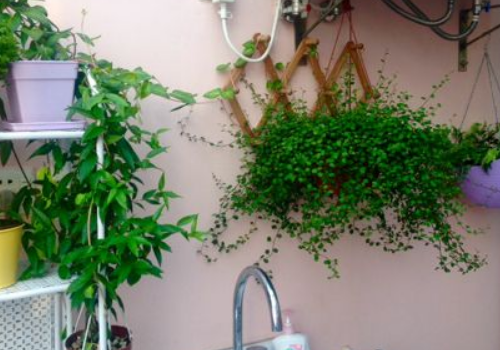
How to grow Chlorophytum capense? Solutions for wilted plants
Chlorophytum capense is a highly ornamental plant, and its main ornamental feature is its leaves. How do you grow Chlorophytum capense? What should you do if the plant wilts: How to grow Chlorophytum capense: 1. Light. Chlorophytum capense prefers a semi-shaded environment and needs plenty of sunlight during growth. But note that if the light is too strong or insufficient,
-
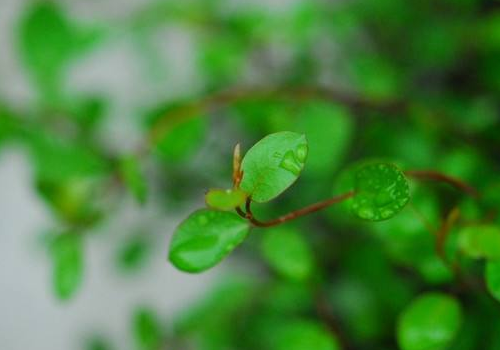
How to Grow Thousand-Leaf Spider Plant in Water and Solutions for Leaf Drop
Thousand-leaf spider plant leaf drop is generally caused by watering and ventilation. How do you grow thousand-leaf spider plant in water? What to do about leaf drop: How to grow thousand-leaf spider plant in water: Choosing a hydroponic container. When growing thousand-leaf spider plant in water, you should choose a suitable container, preferably a transparent glass vessel, as this makes it easier to observe the growth condition of the thousand-leaf spider plant.
-
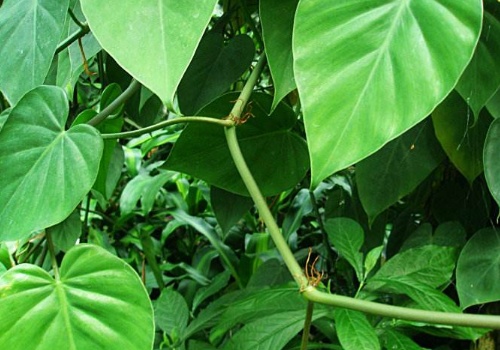
Heartleaf Philodendron Support and Climbing Methods and Solutions for Leaf Drop
Heartleaf philodendron is a plant grown in many homes and public spaces. How to support a heartleaf philodendron for climbing? What to do about leaf drop: How to support a heartleaf philodendron for climbing: First choose a moss pole, though other cylindrical poles can be used as a substitute, wrap it with a layer of brown outer covering, then insert the pole in the center of the flower pot
-
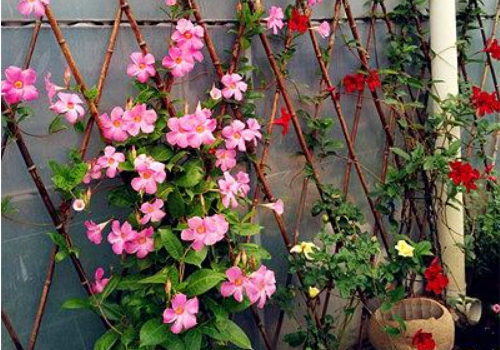
Solutions for Mandevilla Losing Leaves and How It Differs from Double Happiness Vine
There is also a plant in daily life called Double Happiness Vine, and the two look very similar in appearance. What should you do when Mandevilla loses leaves? And how does it differ from Double Happiness Vine: 1. Lack of water: when the water shortage is severe, leaf drop will occur, but before the leaves fall, their edges will gradually turn yellow
-
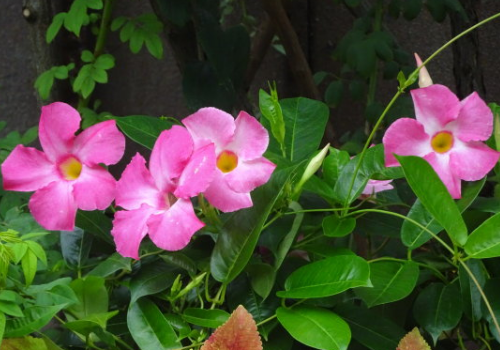
Can Dipladenia be placed indoors in a bedroom? Causes of yellowing leaves and solutions
Dipladenia is currently very popular among consumers on the market in our country. This is mainly because it has extremely high ornamental value. Can Dipladenia be placed indoors in a bedroom? Causes of yellowing leaves and solutions: Can Dipladenia be placed indoors in a bedroom: It is best not to place it indoors in a bedroom; it can be placed on a balcony or in a living room
-

What to Do If Silkworms Don't Spin Cocoons? Causes and Solutions
I. Main Causes 1. Pathological factors. For example, with pébrine or flacherie, infection and onset before mounting for spinning destroys the secretory function of the silkworm's silk glands; or the pathogen produces large amounts of toxic metabolites in the silkworm's body, paralyzing the silkworm's nerves so it cannot spin silk or form a cocoon. 2. Physiological factors. Abnormal middle silk glands, mainly caused by excessively high rearing temperatures, overly tender leaves, disordered secretory glands, etc., leading to abnormal silk glands and inability to spin. Next is abnormal anterior silk glands, mainly caused by exposure to large amounts of coal gas, fishy odors,
-
What to Do About Tulip Variety Degeneration? Detailed Solutions
Imported tulips often perform well in the first year of bulb growth, with large flowers and vivid colors. Starting from the second year, the flowers become smaller, the colors turn dull, the leaves and petals show color-breaking patterns, and the plants grow poorly. This is mainly due to virus damage, commonly mosaic virus and color-breaking virus, which cause yellow and white stripes and irregular spots on the leaves. In severe cases, the leaves rot and the flower colors become mottled. Control methods: 1. Use virus-free plants obtained through shoot-tip culture when planting, or choose varieties with strong virus resistance; 2. Promptly
-
How to use drugs to prevent swine respiratory diseases? Sharing practical solutions
A variety of drugs can be used in production to prevent swine respiratory diseases. The main drugs include tiamulin (Tailijia), chlortetracycline (doxycycline), oxytetracycline, amoxicillin, tiamulin, kitasamycin, thiamphenicol, florphenicol, Ailihutaisu, Taihuangfeisu, etc. New drugs and drug combinations are also constantly emerging. Pig farms (households) can flexibly choose according to actual conditions, and combining with drug sensitivity tests will be more targeted. For sows, add 100 grams of tiamulin, 300 grams of chlortetracycline, and amoxicillin per ton of feed
-
How to cultivate green-haired turtles? Cultivation method with Angelica and Pine Needle Solution
When using the yellow-margined box turtle (Mauremys mutica) or other aquatic turtles to cultivate green-haired turtles, whether using the green water method, direct method, grafting method, or spore water method, it takes at least 40-50 days before the sprouting tips of Basicladia chelonum (turtle-shell basicladia algae) can be seen emerging on the turtle shell. Only the Angelica and Pine Needle Solution method achieves the fastest sprouting of Basicladia chelonum and the best results. The formula for Angelica and Pine Needle Solution (calculated for cultivating 100 green-haired turtles): Angelica 200 g, fresh pine needles 200 g, brown sugar 100 g, calcium tablets 40 tablets, vitamin B12 20 vials. First
-
Analysis of Common Problems in Potato Cultivation and Solutions
Yutian County has a perennial potato planting area of 70,000 mu, with yields generally around 2,500-3,500 kg per mu. Most potato growers have some experience and good methods in cultivation management, but overall, there are still many problems in potato cultivation management, which are summarized as follows. 1. Variety degeneration phenomenon: After continuous planting for several years, potatoes often show stunted plants, clustering, weak growth, wrinkled, smaller, and brittle leaves, or ring spots and streak spots, leaf veins turning dark brown, leaves easily falling off, and in severe cases the entire plant dies. Variety degeneration
条件筛选