-

What to do about acute gastric dilation in raccoon dogs? Practical solutions shared
Acute gastric dilation occurs mostly in silver-black foxes, Arctic foxes, sables, mink, nutria and raccoon dogs. It is caused by poor feed quality or overeating, which weakens the stomach's contraction and secretion functions, allowing microorganisms to multiply in large numbers and produce gas, leading to enlargement of the gastric volume and extreme dilation of the stomach wall. According to the cause, it can be divided into primary gastric dilation and secondary gastric dilation. The former is mostly caused by eating excessive amounts of palatable, dry, difficult-to-digest or easily fermentable food, followed by strenuous exercise or drinking a large amount of cold water, thereby causing acute gastric
-
The role and method of use of molting hormone solution for silkworms
Hormone drugs regulate the growth and development of silkworms, and are mainly used to promote uniform maturity of silkworms and neat mounting on the cocooning frames. This product is specified as 2ml x 10 vials/box (2ml:45mg). Usage and dosage: when 5% mature silkworms are seen, add 2ml to 2000ml of ordinary water and spray on the leaves, for 20,000 silkworms to consume in one feeding.
-
A Detailed Explanation of the Difficulties in Artificial Cultivation of Schisandra chinensis and the Solutions
Northern Schisandra (Liaoning Schisandra) is a genuine northern medicinal herb. Modern research has proven that Schisandra can regulate the cardiovascular system, improve blood circulation, excite the central nervous system, and also has a good effect on treating hepatitis. Schisandra is also used for brewing wine, seasoning, extracting essences and pigments, and making food preservatives. At present, with the continuous harvesting of Schisandra, wild resources are constantly decreasing, and the cost and difficulty of harvesting are gradually increasing. Moreover, the environmental damage caused by harvesting wild resources has attracted great attention. Therefore, artificially cultivated Schisandra will
-
Technical Problems and Solutions for the "Two No" Cotton Cultivation Technique
The "Two No" cotton cultivation technique refers to cotton seedling raising in soilless substrate and transplanting of bare-root seedlings without carrier. From 2004 to 2005, after demonstrations at more than 80 county sites across the country, some technical problems were found, and the following solutions are proposed: 1. Excessive seedbed density Main causes: First, rows were not marked out at 10 cm row spacing and 3 cm plant spacing; second, the sowing rate was too high with too many seeds; third, after emergence, seedlings were not thinned in time, resulting in leggy or spindly seedlings. Solutions: First, mark out rows at 10 cm row spacing and 3 cm plant spacing; second, sow according to plant spacing,
-
What to Do If Edible Mushrooms Do Not Form Primordia? Causes and Solutions
In edible mushroom cultivation, it is common to see mycelium growing too vigorously, neither forming primordia nor producing mushrooms. Moreover, the mycelium keeps increasing and forms a thick layer of mycelial film, seriously affecting edible mushroom production. Once this happens, you can use a bamboo strip to tap lightly on the growing mycelium to break up the overgrown mycelium and press it firmly against the substrate. In this way, after 2 to 3 days, the mycelium will form primordia and produce mushrooms, without affecting the yield.
-
What to Do About Root Rot in Golden Privet? Detailed Solutions
How should root rot in golden privet be dealt with? Root rot in golden privet is generally caused by the following reasons: 1. Overwatering, where the soil water content is too high, causing the roots to be unable to breathe and die. 2. Overfertilizing, or applying organic fertilizer that has not fermented thoroughly, which continues to ferment in the soil and produces heat, injuring and killing the roots. 3. Underground pests or diseases. 4. The presence of toxic substances such as industrial waste residue in the soil underground, causing the roots to rot. First, identify the cause of root death, remove the dead plants, and use needles
-
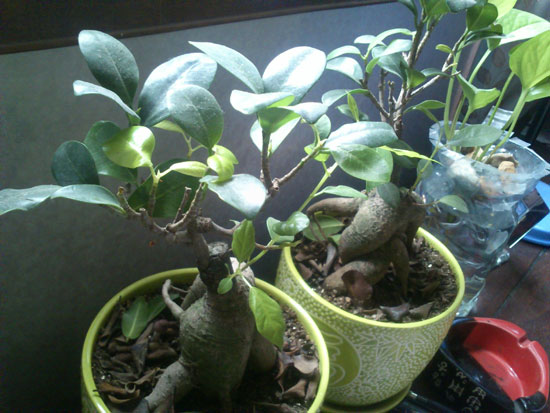
What to Do When a Banyan Tree Loses Its Leaves? Cause Analysis and Solutions
Currently, the banyan trees grown by plant enthusiasts are mainly of two types: one is the ginseng ficus (Ficus microcarpa 'Ginseng'), and the other is the golden coin ficus (Ficus microcarpa 'Golden Coin'); both can be called banyan trees. Some enthusiasts have noticed that their banyan tree is dropping leaves and don't know what to do. In fact, when a banyan tree drops leaves, the situation must be clearly identified, and you should not blindly follow methods found online to try to save it.
-
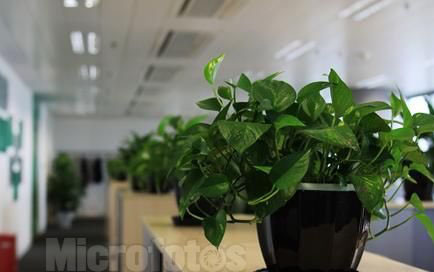
Reasons and Solutions for Yellowing Leaves on Office Plants
Some companies buy green plants for the office and need to care for them themselves, and often find that the office green plants turn yellow for no apparent reason. This is mainly because the office environment differs from that of a home, which causes the green plants to turn yellow. To solve the problem of office green plants turning yellow
-
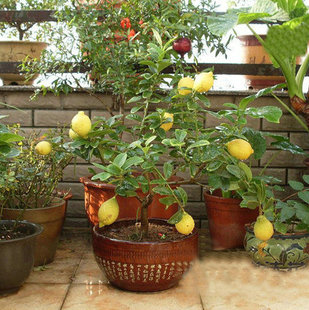
What to Do When Potted Lemons Drop Their Fruit? Causes and Solutions
Many gardeners love potted lemon trees. Not only can they serve as foliage plants, but gardeners also hope to see them covered with lemons. However, some gardeners have found that although their lemons set fruit, the fruit then drops off, and they do not know what to do. A gardener asks: The lemon I bought 3 years ago drops its fruit every year when the fruit reaches the size of a fingernail.
-
Causes of Leaf Drop in Golden Privet During the Growing Season and Solutions
Golden privet (Ligustrum × vicaryi) is an excellent colorful shrub. In practical cultivation in some places, during the growing season its leaves, especially new leaves, successively develop spots, which then progress to drying up, leaf drop, and the branches gradually die back from top to bottom, with a small portion dying. According to surveys, the deaths mostly occur in the middle of the planting plots, while the plants around the edges grow well. The causes are mainly the following two aspects. 1. Caused by disease. The cause of this condition is golden privet leaf spot disease. Leaf spot disease is caused by pathogenic fungi. In the early stage of the disease, brown
条件筛选