-

Detailed Explanation of Key Technical Points for Disease Prevention and Control in Soft-Shelled Turtles
In zoological classification, the soft-shelled turtle belongs to the phylum Vertebrata, class Reptilia, order Testudines, family Trionychidae, genus Pelodiscus. It has strong adaptability to the external environment and great vitality, and is distributed across temperate and subtropical regions worldwide, as well as commonly found throughout China. The soft-shelled turtle is an amphibian that breathes with its lungs, mainly living in water, occasionally coming ashore to rest, or swimming to the water's surface with its head extended above the water to breathe. The ecological habits of the soft-shelled turtle are characterized by three likes and three fears. First, it likes quiet and fears disturbance; second, it likes sunlight and fears wind; third, it likes cleanliness and fears dirt. The soft-shelled turtle is naturally timid,
-
What practical cold-proof measures are there for fish and soft-shelled turtle farming
1. Pond selection Choose a deep-water (over 2 m) pond sheltered from the wind and facing the sun for natural overwintering. The water in the overwintering pond should not remain stagnant for long periods; usually replace part of the pond water every 20 to 30 days, each time replacing 1/4 to 1/5 of the total pond water, to prevent pond water contamination. 2. Set up windbreak walls and cold-shelter holes On the north side of the pond, a 2 m high windbreak barrier can be built with straw or earth, and on the east and west sides build earthen walls sloping toward the south, forming a winnowing-basket shape, to reduce attacks by the north wind, so that when a cold wave strikes the water temperature will not drop noticeably. Around the pond, drainage
-
Construction Methods and Technical Points for Soft-Shelled Turtle Ponds
1. Hatchling turtle pond: Those from just hatched to under 10 grams are called hatchlings. The pond area is 2 sq m to 8 sq m, rectangular, with a depth of 0.3 m to 0.4 m. The water depth is maintained at 0.1 m to 0.15 m, the pond bottom is covered with fine sand, and a shade shed 1 to 1.5 m above the top of the pond is built over it. Resting platforms about 20 cm wide need to be built at both ends. At the junction of the resting platform and the water surface, build a 30° slope so they can climb up and down. 2. Juvenile turtle pond: Those weighing about 10 grams to 100 grams are called juveniles. The pond area is 20 sq m to
-
Methods for determining drug dosage in soft-shelled turtle (Pelodiscus sinensis) farming
1. Determination of dosage for external-use drugs (1) Determine the drug concentration to be used (ppm) based on the safe concentration of a certain drug for soft-shelled turtles and the lethal concentration of the drug against pathogens. (2) Accurately measure the volume of the turtle pond or determine the volume of water for immersion bathing. Calculation method for water volume: water volume (m^3) = area (m^2) x average water depth (m). (3) Calculate the drug dosage: dosage (g) = concentration of the drug to be used (ppm, i.e., g/m^3) x water volume (m^3). 2. Internal
-
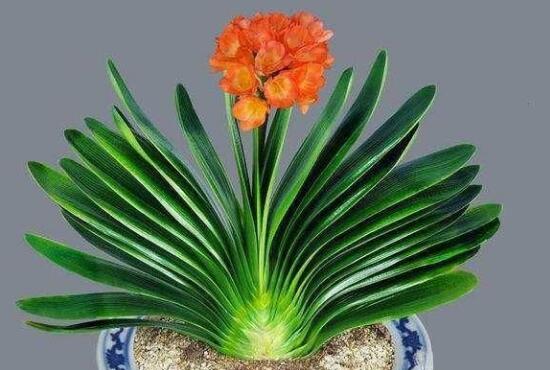
How to fertilize a clivia? Eggshells plus vinegar promote rapid growth
As the saying goes, "For a crop to flower, fertilizer rules the hour," and if you want your clivia to grow well, fertilizing is key. In everyday life, there are many clivia growers, and many of them, in order to make their clivia grow better, pour all sorts of things on it, including eggs! It is said that fertilizing clivia with eggs makes it grow quickly.
-
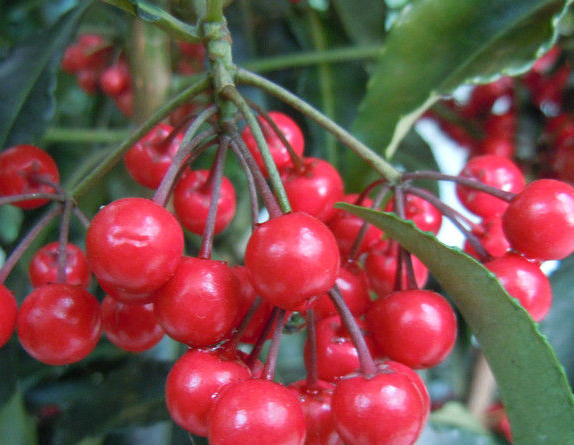
How do you treat insects with waxy hard shells on the leaves of coral ardisia (Ardisia crenata)?
This is an infestation by scale insects. The main control measure should be chemical treatment; you can use specific insecticides such as methidathion, chlorpyrifos, Guoguang Jie Bisi, etc., which are highly effective, as ordinary insecticides struggle to penetrate their waxy layer to take effect. If the infestation is heavy, spray 2 times to completely eliminate them. You can also scrape or brush them off manually.
-
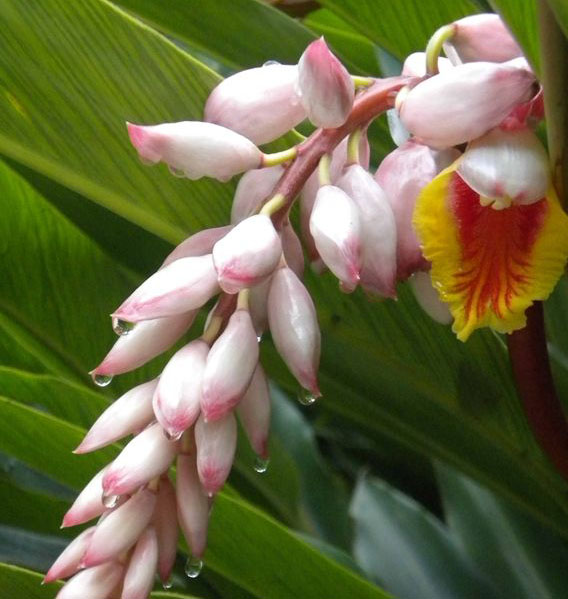
What are the common diseases of variegated shell ginger?
Variegated shell ginger is commonly affected by leaf blight and brown spot. In the early stage of leaf blight, spray 200-times Bordeaux mixture 2-3 times at intervals of 7-10 days. For brown spot, spray 1000-times thiophanate-methyl solution.
-
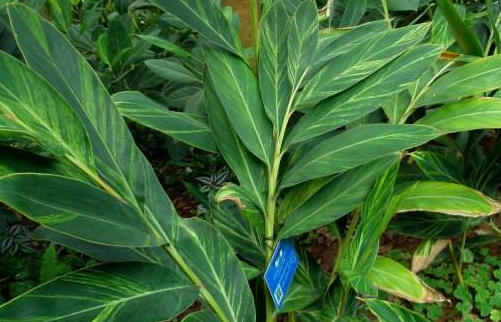
Sowing Methods and Key Technical Points for Shell Ginger
Sowing time: Shell ginger can generally be sown at any time except summer, but the best seasons are autumn and winter. However, winter temperatures are low, so warmth must be provided; for example, the shell ginger can be placed in a greenhouse.
-
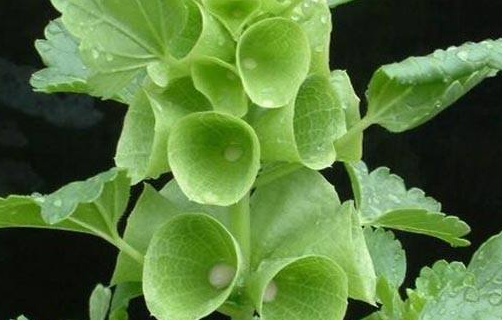
What are the cultivation methods and precautions for Moluccella laevis (shell flower)
Soil Moluccella laevis cultivation has relatively high soil requirements: it needs loose, airy, fertile and well-drained soil. The soil should not be heavily clayey, otherwise it will be detrimental to the plant's growth. We can mix the soil ourselves, or buy special soil for Moluccella laevis at a flower shop. Light Moluccella laevis is very fond of sunlight
-
条件筛选