What are the cultivation methods and precautions for Moluccella laevis (shell flower)
Soil
Moluccella laevis cultivation has relatively high soil requirements: it needs loose, airy, fertile and well-drained soil. The soil should not be heavily clayey, otherwise it will be detrimental to the plant's growth. We can mix the soil ourselves, or buy special soil for Moluccella laevis at a flower shop.
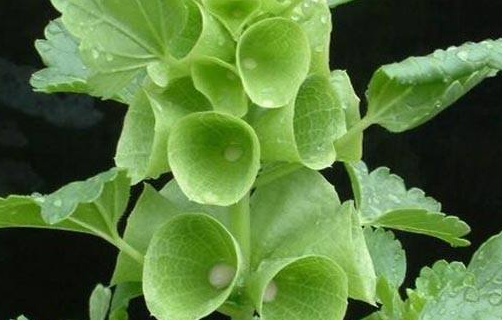
Light
Moluccella laevis is very fond of sunlight. During its growing period, make sure the plant receives sufficient light, which is very beneficial to its growth. However, note that in summer, because the light is too strong, the plant should be given appropriate shade, otherwise the leaves may be scorched.
Temperature
The most suitable sowing temperature for Moluccella laevis is between 15 and 25°C. At this temperature, the seeds of Moluccella laevis will sprout very quickly, generally taking one week to half a month. After it grows into a plant, the most suitable temperature is between 15 and 30°C.
Fertilizing
After the seeds of Moluccella laevis sprout, transplant them into a prepared flower pot, and after that you can fertilize the plant, generally applying fertilizer 1-2 times a month, but do not fertilize after it blooms. Also, if you want the plant to have more branches, you need to pinch off the growing tips.
Watering
During the seed germination period, Moluccella laevis can be watered once a day. After the seeds sprout, watering should be based on the moisture level of the soil in the flower pot. Generally, do not water if the soil is not dry; wait until the soil has dried out completely, then water again, and water thoroughly in one go.
The above is an introduction to how to grow Moluccella laevis. Now let's look at what else needs attention when growing Moluccella laevis.
Moluccella laevis Molucella laevis Moluccella laevis illustrated guide: how to grow Moluccella laevis / how to propagate Moluccella laevis
Moluccella laevis profileMoluccella laevis Molucella laevis
Cultivation methods and precautions for Moluccella laevis Introduction to Moluccella laevis
Moluccella laevis, also known as shell flower, collar flower or elephant's ear, is an annual or biennial herbaceous plant of the genus Molucella in the Lamiaceae family. The plant height is 35-100 cm, the stem is four-angled and unbranched. The leaves are opposite, heart-shaped and round, with sparse teeth along the edges; the petiole is nearly as long as the leaf. The flowers are white, with a lip-shaped corolla; the nutlets are smooth. The flowering period is July-August. Moluccella laevis has a strange flower shape and is plain, elegant and beautiful. It is an important cut-flower filler popular worldwide, and can also be used as a dried flower or grown in pots for ornamental viewing. It is native to western Asia and Syria. It gets its name because its leaves resemble shells. It is an excellent foliage and flowering ornamental plant.
Scientific name: Molucella laevis
Family: Lamiaceae, genus Molucella
Aliases: collar flower, elephant's ear
Place of origin: western Asia
Morphological characteristics of Moluccella laevis
Moluccella laevis is an annual or biennial herbaceous plant with a plant height of 50-60 cm. The stem is upright and usually unbranched, the small leaves are opposite and heart-shaped and round, and the flowers are white. The flowering period is June-July. It gets its name because its leaves resemble shells. It is an excellent foliage and flowering ornamental plant, preferring sunlight and well-drained soil.
Moluccella laevis is 40-100 cm tall, with opposite heart-shaped leaves bearing blunt teeth. It produces small white flowers in whorls of six, with fragrant calyxes resembling shells, and the green color is very attractive. The corolla is lip-shaped, and the green calyx resembles a shell, hence the name. The stem is four-angled and has weak branching ability.
Plant height 40-70 cm, leaves opposite, nearly round or ovate, with serrated margins.
Flowering period: blooms from spring to autumn, small white flowers, axillary, with a very large calyx, emerald green and shell-shaped.
Ecological habits of Moluccella laevis
Moluccella laevis prefers sunlight and well-drained soil, with fertile, loose, well-drained loam being best. The suitable sowing temperature is 15-25°C. It prefers sunlight and well-drained soil.
Distribution area of Moluccella laevis
Native to western Asia and Syria.
Cultivation techniques for Moluccella laevis
Sunlight: good sunlight is required.
Temperature: Moluccella laevis likes warmth, and the suitable growing temperature is 15-25 degrees.
Management: For Moluccella laevis cultivation, use fertile loam, and drainage must be good. When the seedlings of Moluccella laevis are 10-15 cm tall, pinch off the growing tips once to encourage branching.
Fertilizing: apply topdressing once a month.
Propagate by sowing, which can be done in spring, summer or autumn. The suitable sowing temperature is 15-25°C, and germination takes about one week. Transplant when there are 5-6 true leaves. For cultivation soil, fertile, loose, well-drained loam is best. The soil should not be too clayey, otherwise the plant will not grow vigorously and will grow slowly. After transplanting and surviving, begin fertilizing once every half month, and stop fertilizing after flowering. To encourage branching, pinch off the growing tips.
It grows vigorously and rarely suffers from pests or diseases, but beware of damage from leaf miners. For ornamental needs, it can be sown in batches at different times.
Propagation methods of Moluccella laevis
Propagation: by sowing, which can be done in autumn, winter or early spring.
Propagate by sowing, which can be done in spring, summer or autumn. The suitable sowing temperature is 15-25°C, and germination takes about one week. Transplant when there are 5-6 true leaves. For cultivation soil, fertile, loose, well-drained loam is best. The soil should not be too clayey, otherwise the plant will not grow vigorously and will grow slowly. After transplanting and surviving, begin fertilizing once every half month, and stop fertilizing after flowering. To encourage branching, pinch off the growing tips. Moluccella laevis grows vigorously and rarely suffers from pests or diseases, but beware of damage from leaf miners. For ornamental needs, it can be sown in batches at different times.
Growth process
Happiness is like a seed taking root and sprouting, slowly growing stronger.........
At first, the seed is triangular-pyramidal
Then, sown on February 11, it emerged 7 days later, and the cotyledons were very beautiful
Finally, true leaves began to grow in early March
Cultivation methods for Moluccella laevis
The land should be fertile and well drained. Transplant with soil when there are 5-6 leaves. After surviving, fertilize and water. To encourage more branching, top and pinch the growing tips in the early stage. This flower is relatively easy to manage.
Moluccella laevis cultivation requires fertile, well-drained soil. Transplant with soil when there are 5-6 leaves. After surviving, fertilize and water. To encourage more branching, top and pinch the growing tips in the early stage. This flower is relatively easy to manage.
Disease control of Moluccella laevis
The land should be fertile and well drained. Transplant with soil when there are 5-6 leaves. After surviving, fertilize and water. To encourage more branching, top and pinch the growing tips in the early stage. This flower is relatively easy to manage and grows robustly with very few diseases, but leaf miners sometimes appear, so attention should be paid to control.
Uses and purposes of Moluccella laevis Ornamental uses
Moluccella laevis has a peculiar flower shape and is plain, elegant and beautiful. It is an important cut-flower filler popular worldwide, and can also be used as a dried flower or grown in pots for ornamental viewing.
The seeds of Moluccella laevis are triangular. After sowing, they emerge in about 1 week. The seedlings grow very slowly, and only produce true leaves after 20 days. After more than 1 month they are still small seedlings. Only after about more than 2 months do they begin to take some shape.
After about 3 months, the flowers can be seen. The small trumpet-like parts are its sepals. The small flowers are white and borne in whorls of six, resembling a collar, so it is also called collar flower.
It is an important cut-flower filler popular worldwide, and can also be used as a dried flower or grown in pots for ornamental viewing.
The flower shape is peculiar and it is plain, elegant and beautiful. It is an important cut-flower filler popular worldwide. After drying it turns white, making it a good material for dried and fresh flowers, and it can also be grown in pots for ornamental viewing.
There are now various horticultural varieties, but most have green calyxes, with white, yellow and other types as well.
Landscape uses of Moluccella laevis
Moluccella laevis has a peculiar flower shape and is plain, elegant and beautiful. It is an important cut-flower filler popular worldwide. After drying it turns white, making it a good material for dried and fresh flowers, and it can also be grown in pots for ornamental viewing.
Moluccella laevis pictures
How to grow Moluccella laevis? Home cultivation methods for Moluccella laevis
Moluccella laevis, also known as collar flower or elephant's ear, is a plant with a very peculiar flower shape. If you can grow a pot of Moluccella laevis at home, I believe it will surely bring you a very unusual ornamental experience. So, how should Moluccella laevis be grown? Below is an introduction to the home cultivation methods for Moluccella laevis.
Image: home cultivation methods for Moluccella laevis
1. Pot and soil selection
To grow Moluccella laevis, the size of the flower pot needs to be determined according to the condition of the plant. Generally, for sowing, 10 to 15 seeds can be planted in a flower pot with a diameter of 15 cm. The soil needs to be fertile, well-drained potting soil, and not too clayey, otherwise it will affect the plant's growth. Garden soil with good drainage is sufficient.
2. Light and temperature
Moluccella laevis likes sunlight and prefers a relatively warm living environment. During care, sufficient light must be maintained, but do not expose it to blazing sun in summer to avoid scorching. The suitable growing temperature is 15°C——30°C.
3. Watering and fertilizing
In terms of water and fertilizer management, Moluccella laevis needs reasonable operation. During seed germination, it can be watered frequently. After the seedlings emerge and survive, normal watering and fertilizing can be carried out. Watering should depend on how dehydrated Moluccella laevis is; if the soil is relatively moist, there is no need to water, and when watering, water thoroughly. Fertilizer can be applied once or twice a month, and fertilization should stop after flowering.
Image: home cultivation methods for Moluccella laevis
4. Propagation method
Moluccella laevis is mostly propagated by sowing, which can be done in spring, summer or autumn. Ensure a suitable temperature and germination will be relatively fast. When it grows to 6 leaves, it can be transplanted. When transplanting, it is best to transplant with soil. To achieve a good ornamental effect, planting can be done in batches.
5. Pinching
During the growth process of Moluccella laevis, pinching is needed, with the purpose of encouraging more branching and shaping a certain form.
6. Pests and diseases
Moluccella laevis is relatively robust by nature and has relatively few pests and diseases, but sometimes there can be damage from leaf miners. The plant's growth should be observed frequently so that symptoms are discovered in time and controlled.
The above is an introduction to the home cultivation methods for Moluccella laevis. Moluccella laevis relatively likes light and requires relatively warm temperatures, so everyone should pay attention during the growing process.