How do you treat insects with waxy hard shells on the leaves of coral ardisia (Ardisia crenata)?
This is an infestation by scale insects. The main control measure should be chemical treatment; you can use specific insecticides such as methidathion, chlorpyrifos, Guoguang Jie Bisi, etc., which are highly effective, as ordinary insecticides struggle to penetrate their waxy layer to take effect.
If the infestation is heavy, spray 2 times to completely eliminate them. You can also scrape or brush them off manually; once they leave the plant body, these insects cannot survive. However, coral ardisia is difficult to scrape, and it easily damages the plant's epidermis, so you can brush them off with an old toothbrush, though this is less effective than chemical treatment.
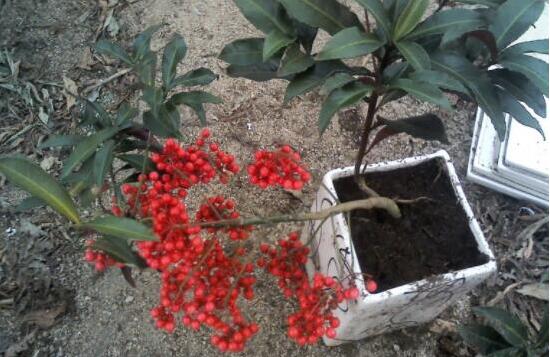
During the care of coral ardisia, you need to watch out for pests and diseases to prevent the plant from being harmed. It is understood that the main pests and diseases of coral ardisia are: aphids, beet armyworm/tobacco cutworm, root-knot nematode disease, stem rot, and root rot, all of which can lead to serious consequences. As for what to do when coral ardisia gets insects, once you have identified the specific pest or disease, just spray the corresponding pesticide.
II. Pest and disease control for coral ardisia
1. Aphids
Aphids are the most common pest of indoor potted plants, and they also harm the health of coral ardisia. These insects generally appear in poorly ventilated and dimly lit environments, mainly harming leaves and buds, sucking large amounts of sap, and causing leaves to turn yellow, curl up, and even drop off.
Control method: When there are few aphids, you can take manual control by brushing the aphids off with a writing brush or bristle brush and burying them in the potting soil; when there are many scale insects, you can spray 40% omethoate 1000x solution or 50% dichlorvos 1000x solution for control, spraying once every 7—10 days, and spraying continuously 2—3 times will be effective.
2. Beet armyworm/tobacco cutworm
Besides aphids, under conditions of high temperature and high humidity with poor ventilation, coral ardisia can also be attacked by moth pests, among which beet armyworm and tobacco cutworm appear most often. They feed on the plant's leaves, and when the damage is severe, they can eat all the leaf flesh, leaving only the veins, and even strip and eat the cortex of the stems.
Control method: First, promptly remove egg masses and infested leaves and destroy them together to reduce the source of infestation; then spray Cascade (flufenoxuron), Yitaibao, Nongdile, Kuai Shaling 1000x, etc. for timely control, because this insect has a thick body wall and strong pesticide resistance, so in control you must grasp the principle of early treatment.
3. Root-knot nematode disease
Besides getting insects, under improper care coral ardisia can also get diseases, such as root-knot nematode disease, which is a root disease caused by root-knot nematodes. After contracting this disease, the fibrous roots and lateral roots of coral ardisia develop tumor-like root knots of varying sizes. In addition, this disease can also cause the plant to be stunted and poorly developed.
Control method: This disease is mainly prevented. Before planting, evenly apply 15 grams of 3% carbofuran granules into the potting soil, then cover with 10 cm of soil, and then water thoroughly; generally this can eliminate many kinds of pests.
4. Stem rot
Coral ardisia is not cold-tolerant. In winter, watering must be controlled. Once watered too much, or if the potting soil drains poorly, plus a dark indoor environment, stem rot can very easily occur. It is understood that coral ardisia mostly suffers from stem rot at the seedling stage; when the disease strikes, the plant's stem turns black and rots.
Control method: After discovering the above symptoms, cut off the rotten parts of the plant, apply sulfur powder, then replace with fresh culture soil and replant. After that, move the potted plant to a ventilated, sunny spot, and before long the plant will recover its health.
5. Root rot
If kept in a high-temperature, high-humidity environment for a long time, coral ardisia is also prone to outbreaks of root rot. This disease mainly harms the roots of coral ardisia, causing root rot and, in severe cases, the death of the whole plant. Note that underground pests can worsen the condition.
Control method: Root rot of coral ardisia is mainly prevented. In daily care, strictly follow the watering method for coral ardisia and do not overwater; in the early stage of the disease, you can spray pesticides such as Cascade (flufenoxuron), Yitaibao, Nongdile, etc. for control.
That is all the editor has to introduce about pest and disease control for coral ardisia. I believe everyone now knows what to do when coral ardisia gets insects or falls ill! Overall, growing coral ardisia is not difficult; as long as everyone is a bit more careful, insects will not come calling. Finally, may everyone's coral ardisia grow beautifully~
Coral ardisia
Other names for coral ardisia
Coral ardisia, also called zhusha gen, Da Luo San, Hong Tong Pan, Ping Di Mu, Ba Jiao Jin Long, Huang Jin Wan Liang, Jin Yu Man Tang, and Fu Gui Zi.
Growth habits of coral ardisia
Coral ardisia likes a warm and humid growing environment; it can tolerate shade and likes good ventilation. The suitable temperature for growth is between 16°C and 30°C; when the temperature is too high, growth stalls, and in winter when the temperature is low, insulation measures should be taken.
Coral ardisia is not tolerant of poor soil, nor of waterlogging. It has low requirements for soil, and loose, well-drained sandy soil is best.
Distribution of coral ardisia
Coral ardisia is distributed in many places in China, including the middle and lower reaches of the Yangtze River and South China. In addition, it is also found in Japan, Ryukyu, India and Java.