-

What are the natural enemies of soft-shelled turtles? Detailed explanation of prevention and control methods
The main natural enemies of soft-shelled turtles are rats, snakes, birds, ants, mosquitoes, etc. They mainly harm turtle eggs and juvenile and young turtles under 1 year old; they rarely harm robust turtles over 1 year old. Among them, rats cause the greatest harm to turtle eggs. In the dead of night, which is the good time for soft-shelled turtles to lay eggs, rats also take the opportunity to come out of their holes and move frequently around the egg-laying site. On one hand, they interfere with the turtles' normal egg laying; on the other hand, rats dig holes all over the sand bed, causing the turtle eggs to vibrate and leading to embryo death. Juvenile and young turtles are also easily surrounded and preyed upon by rats. Some adult turtles with poor constitution and
-
What are the prevention and treatment methods for rotten foot disease in soft-shelled turtles?
Rotten foot disease in soft-shelled turtles is a turtle disease with a relatively high mortality rate in factory-style turtle farming in recent years. It not only has a long course and is difficult to cure, but even if cured, it easily leaves scars that affect its @#@136@#@ appearance. It is one of the turtle diseases that currently gives turtle farming enterprises the most headaches. Based on many years of practice combined with relevant research, the author introduces the causes and prevention and treatment methods of rotten foot disease in soft-shelled turtles for reference and application by farming units. I. Symptoms of rotten foot disease in soft-shelled turtles At the beginning of the disease, the sick turtle eats normally. As the disease progresses, activity decreases, reactions become sluggish, appetite declines, and it may even stop eating.
-
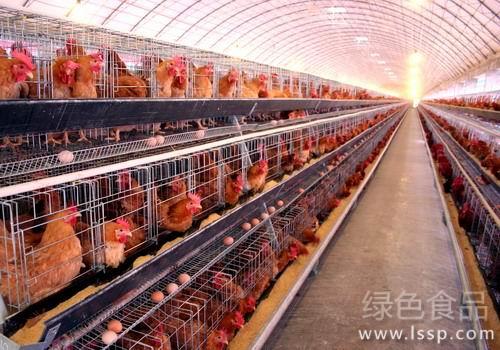
Calcium Supplementation Methods for Caged Laying Hens Producing Soft-Shelled and Thin-Shelled Eggs
Laying Hens Producing Soft and Thin Eggs Need Calcium Supplementation: Calcium Supplementation Methods for Caged Laying Hens
-
Identification of Symptoms and Prevention and Treatment Methods for Soft-Shelled Turtle Hemorrhagic Disease
Cause: Currently unknown. Symptoms: The diseased turtle's body turns black, the oral cavity turns red, and the plastron may or may not be red; it moves slowly and stops feeding, and in severe cases blood-tinged fluid seeps from the mouth and nose. Dissection shows: all internal organs and muscles are congested; the pharynx, neck, and intestines are blood-red; the liver is reddish-brown, sometimes accompanied by blood spots. The gallbladder is enlarged, the spleen and kidneys are red-black, and the lungs are black. Prevention and treatment: There are no effective treatment measures yet, so prevention can only be strengthened. 1) Thoroughly disinfect the breeding pond before disinfection, using "Yujunqing" at 7 jin per mu; 2) Before the turtles enter the pond
-
What are the basic functions of drugs used for soft-shelled turtles?
There are many functions and effects of drugs used for soft-shelled turtles, but to summarise, they mainly act in the following three ways: 1. Inhibiting or killing pathogens. At present, most drugs used for soft-shelled turtles have the effect of killing and inhibiting pathogens, such as antibacterial drugs like sulfonamides, furans, antibiotics and garlic, antifungal drugs like table salt, formalin, the Chinese herbal medicines gallnut and sweet flag, and antiparasitic drugs like copper sulfate, ammonia water and potassium permanganate. These drugs achieve the effect of killing pathogens through indirect means (
-
Detailed Explanation of the Key Technical Points for Cleaning and Disinfecting Soft-shelled Turtle Ponds
After 8 to 10 months of greenhouse culture of soft-shelled turtles, the indoor turtle ponds have accumulated various pathogenic organisms as well as organic residues such as leftover bait and feces, so cleaning and disinfecting the turtle ponds is extremely important. The sand in the ponds is best replaced; ponds where it cannot be replaced, or ponds without sand, should also be repeatedly rinsed and disinfected. About 10 days before use, release water to a depth of about 10 cm, and broadcast quicklime, strong chlorine powder, or chlorine dioxide over the entire pond to kill pathogens. For old greenhouses that have been used for many years of culture, it is best to also carry out spatial disinfection to prevent pathogens from spreading through the air. Specifically, solid formaldehyde (4 to 5 grams per cubic meter) can be used, placed
-
Scientific feeding is essential in soft-shelled turtle hatchling rearing, and mastering the method is key
affects the farming of adult soft-shelled turtles. Whether scientific feeding can be carried out is the technical key affecting the growth and quality of soft-shelled turtle hatchlings. For this reason, here is an introduction to scientific feeding in soft-shelled turtle hatchling rearing, for reference and application. As with farming other aquatic animals, feeding can follow the four-fixed principle, namely fixed quality, fixed quantity, fixed time and fixed location. However, the four-fixed contents of feeding in soft-shelled turtle hatchling rearing have their own characteristics. Because soft-shelled turtle hatchlings, during their growth process, not only need to accumulate energy and increase body weight, but also need to provide various nutrients and
-
What are the prevention and treatment methods for white plastron disease in soft-shelled turtles?
Cause: unknown, possibly caused by viruses, bacteria or feed-related factors. Symptoms: the body surface of the sick soft-shelled turtle is intact, the plastron is pale, showing a state of extreme anemia, most of the body is edematous, the liver is mostly earth-yellow and earth-gray, the muscles are pale and bloodless, and there is generally fluid accumulation in the abdominal cavity. Prevention and treatment: 1) The cause is unknown, so prevention is the main approach; 2) In the early stage of the disease, feed "Qiangke 103" or "Biebikang" for 3 to 6 consecutive days; 3) When the disease occurs, use "Mieduling" or "Yuyong Bomie" and
-
What are the signs of illness in softshell turtles? An introduction to common symptoms
Softshell turtles are timid, afraid of people, afraid of cold, like to burrow into mud, and like to bask in the sun. Once they get sick, their behavior becomes abnormal: they no longer burrow into mud or bask on their backs, and instead prefer to hide in shady, dry places, moving slowly and not fearing people. Based on these characteristics, problems can be discovered as quickly as possible, which is beneficial for the prevention and treatment of softshell turtle diseases. In ponds where there are no habitats for sick softshell turtles, once a softshell turtle gets sick it is difficult to detect, often delaying treatment; once it surfaces, the disease is already incurable and beyond saving. Healthy softshell turtles move nimbly; as soon as they detect
-
Control Methods and Technical Key Points for Soft-shelled Turtle Diseases
Soft-shelled turtles have strong adaptability and resistance, and diseases rarely occur in farming production; however, improper feeding and management can also lead to disease. Common soft-shelled turtle diseases include: Red Neck Disease, caused by Aeromonas bacteria. The main symptoms are loss of appetite, sluggish movement, red and swollen congested neck that extends and cannot retract, red spots appearing on the abdomen, sometimes floating on the water surface, sometimes crouching on sandy ground. In severe cases, bleeding from the mouth and nose, intestinal inflammation and putrefaction, generalized redness and swelling, cloudy white eyes with blindness, enlarged liver and spleen, and
条件筛选