How to fertilize a clivia? Eggshells plus vinegar promote rapid growth
As the saying goes, “For a crop to flower, fertilizer rules the hour,” and if you want your clivia to grow well, fertilizing is key. In everyday life, there are many clivia growers, and many of them, in order to make their clivia grow better, pour all sorts of things on it, including eggs! It is said that fertilizing clivia with eggs makes it grow quickly, but is that true? How should you fertilize a clivia? Let the editor clear up your doubts below.
1. How to fertilize a clivia: the method matters
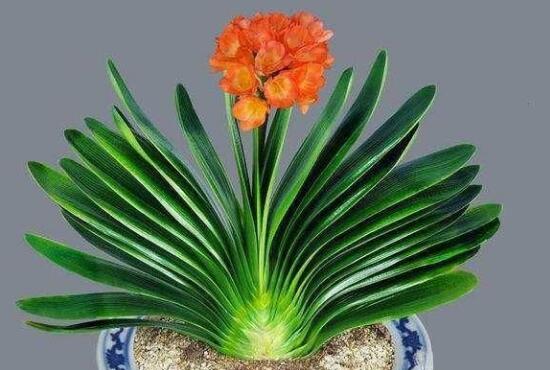
Everyone who has grown a clivia knows what it does: not only does it look good, it can also improve the feng shui of a home. But if you want your clivia to look good, fertilizing is key. As for how to fertilize a clivia? Generally, liquid fertilizer is best applied in spring, autumn and winter, but in the right amount; in summer, no fertilizer at all should be applied. Besides this, you can also use eggs to fertilize a clivia.
2. Fertilizing clivia with eggs makes it grow quickly
There are many things to watch out for when fertilizing a clivia, for example the concentration must not be too high, otherwise it easily burns the roots. Because of this, many growers take a shortcut and use eggs as fertilizer; it is said that fertilizing clivia with eggs can make it grow quickly! So how do you use eggs to fertilize a clivia? The editor has summarized three methods, as follows:
(1) Egg white
You can fertilize a clivia with egg white: crack an egg, discard the shell and keep the egg white, dilute the white of one egg with 1 liter of water, then use it to water the clivia. If you have two clivias, you can use egg white on one and not on the other, and after a while the difference will be very obvious, because fertilizing clivia with eggs makes it grow quickly.
Note: The editor has only tried this method on clivia, so use it with caution and do not use it on other flowers; secondly, it is best to use it when the temperature is low, so that insufficient dilution does not cause the potting soil to smell.
(2) Eggshells
Besides using egg white to fertilize a clivia, you can also use eggshells: collect the eggshells you would normally throw away and dry them and crush them; then put the crushed eggshells in a bowl and pour in white vinegar, just enough to cover the eggshells. The vinegar reacts with the eggshells and releases calcium ions, supplementing the plant's growth.
Note: When using eggshells, do not water the flowers directly with the eggshell liquid, because the concentration is too high and it easily causes seedling burn, so it must be diluted before use. Besides this, you can also directly grind the eggshells into powder and put it in the flower pot, which can improve the condition of the soil and make the clivia's root system grow more robustly.
(3) Burying an egg at the bottom of the pot
Fertilizing clivia with eggs makes it grow quickly; besides using egg white and eggshells, you can also use a whole egg: poke a small hole in the eggshell with a toothpick, then bury it at the bottom of the flower pot, then plant the clivia, and the egg will slowly ferment inside the shell and produce nutrients to supply the plant's growth needs.
Fertilizing a clivia is a skilled job: too much or too strong is bad, but with eggs these problems do not exist. After reading the above, I believe you now know how to use eggs! That fertilizing clivia with eggs makes it grow quickly has already been confirmed by many people, so if you grow clivia, why not give it a try~
How should a clivia be fertilized?
Clivia is a flowering plant that loves fertilizer, and fertilizer is crucial to its growth, so it is best to use organic fertilizer. Every year in autumn and the following spring is the time to repot clivia and change the soil. In this season, the clivia is moving from its weak period in summer or winter to its vigorous period in autumn or spring. Before changing the soil, prepare the soil, then mix in a certain amount of base fertilizer (such as hemp seeds, castor beans, bone meal, etc.) as bottom fertilizer. If the root system is poor, do not add bottom fertilizer, so as not to harm the plant.Generally, liquid fertilizer is best applied in spring, autumn and winter, but in the right amount; too high a concentration easily burns the roots, and bean cake fertilizer water is usually at a ratio of 1:30. When the bottom fertilizer is light, you can regularly use liquid fertilizer along with water, that is, whenever you water, bring in a light liquid fertilizer with the water. After the start of the dog days, in principle no fertilizer at all should be applied. The reason is simple: because summer temperatures are too high, top dressing will make the clivia's leaves grow leggy, and since summer temperatures are high and ventilation is poor, top dressing will make the root system rot.
Fertilizer and water complement each other, and neither can be missing. Even if fertilizer is applied properly, if the water cannot keep up, the fertilizer cannot produce the effect it should. At the same time, light conditions, temperature, humidity and ventilation must also work closely together, so that good results can be achieved.
Although clivia loves fertilizer, too much or too little fertilizer will affect its growth and flowering. With excessive fertilizer, new leaves easily turn yellow, and in serious cases the fleshy roots rot; when fertilizer is lacking, the leaves are narrow and thin, pale in color and lusterless, and the flowers are small and dull in color. A clivia that is fertilized reasonably has upright, emerald-green leaves with good luster, wide and thick leaves, and large, brightly colored flowers.
When fertilizing clivia, it is best to use the method of light fertilizer applied frequently, and never apply strong fertilizer or raw fertilizer. Spring is the peak growing season for clivia, when it needs more nutrients; besides applying base fertilizer when repotting, during the growing period generally apply a light fertilizer based mainly on nitrogen fertilizer about every 10 days to promote the growth of branches and leaves. In summer, when the weather is hot, generally do not fertilize, to avoid root rot. In autumn, apply a light fertilizer based mainly on phosphorus fertilizer every 7 to 10 days, to help the flower spike emerge and make the flowers large and brightly colored. The fertilizer used can be fully fermented dilute bean cake fertilizer water, etc., and you can also crush roasted castor beans, sesame and other oilseed seeds and bury them in the potting soil.
Clivia loves fertilizer, but it should not be fertilized too much, otherwise it will affect its growth and flowering. Fertilizing clivia is best done on the principle of "light fertilizer applied frequently," and the following points should be mastered:
1. Spring is the vigorous growing period of clivia, and it requires more nutrients. Besides applying base fertilizer when repotting (that is, bottom fertilizer, described in detail in item 9), apply a light fertilizer based mainly on nitrogen fertilizer (liquid fertilizer from oil-bearing crops such as bean cake, castor beans, soybeans, hemp seeds, etc.) about every 10 days, to promote lush growth of branches and leaves.
2. In summer, when the weather is hot and the temperature is above 25 degrees, do not fertilize, to avoid root rot. If the temperature can be lowered below 25 degrees, apply an extremely dilute liquid fertilizer every 15-20 days to promote growth and shorten the dormant period.
3. In autumn, because the weather is cool, apply a light fertilizer based mainly on phosphorus fertilizer (bone meal, fish scales, rice bran, livestock manure, etc.) every 7-10 days; use fully rotted dilute cake fertilizer water or bury other cake fertilizer powder into the soil, to help the flower spike emerge and make the flowers large and brightly colored.
4. Only with reasonable fertilization will clivia have upright, emerald-green leaves with good luster, wide and thick leaves, and large, bright flowers. With excessive fertilizer, new leaves easily turn yellow, and in serious cases the fleshy roots rot; when fertilizer is lacking, the leaves are narrow and thin, pale in color and lusterless, and the flowers are small and dull in color.
5. There are many reasons why clivia does not bloom, the most important of which is a lack of nutrients. Because a plant that has already flowered has consumed a large amount of nutrients, the nutrients in the potting soil are already quite depleted; if fertilizing cannot keep up or no new culture soil is added, it will be difficult to bloom, and even if it does bloom, the flowers will be small and thin with pale color and low ornamental value.
6. Sometimes when clivia blooms, the "spike stuck" phenomenon occurs. To prevent this from happening, for clivia that has been grown for a full 3 years, the number of fertilizer applications and fertilizers containing more phosphorus need to be increased in autumn, and when the flower spike stalk shows its head, spray a 0.3% monopotassium phosphate solution on the leaves to prompt it to quickly produce the spike and bloom earlier.
7. Fertilizers with relatively high potassium content (plant ash, charcoal) can be mixed in sparingly when changing the soil in spring and autumn.
8. Trace elements (furnace slag, river sand, eggshells) can be added when mixing the soil.
9. Bottom fertilizer has a long-lasting effect. When changing the soil in spring and autumn, add solid fertilizers such as roasted or boiled hemp seeds, perilla seeds, sunflower seeds, castor beans, etc. The method is to first put a layer of soil, then sprinkle on a layer of the raw material, then cover with a layer of soil, and then plant the flower on top. Never let the raw material come into direct contact with the roots, as that will burn the roots; oil-bearing crops with shells should not have their shells removed, also for fear of burning the roots.
As the saying goes, "For a crop to flower, fertilizer rules the hour," and clivia is no exception. Clivia is a plant with many roots and many leaves, and during growth, flowering and fruiting it needs sufficient nutrients. If fertilizer is lacking, the leaves will turn yellow, lose their luster, and even the growing leaves will become narrower and thinner. When flowering, if fertilizer is insufficient, the number of flowers will be small and the petals small. Therefore, applying various fertilizers at the right time is an indispensable and important condition for growing clivia well.
Commonly used fertilizers include:
1. Solid fertilizers
The seeds of various oil-bearing crops, oil cake, horse hooves and bone meal all belong to solid fertilizers. Such as hemp seeds, perilla seeds, castor beans, peanuts, sunflower seeds, pine nuts, soybeans, sesame, etc.
2. Liquid fertilizers
These include various fermented cakes, blood meal and fresh fish fermentation water, all of which are liquid fertilizers. For example, soybeans, bean cake, sesame residue, horse hooves, fish, etc. fermented well in water are all excellent liquid fertilizers.
Nowadays there are many raw materials and many methods for composting fertilizer. Here are two briefly introduced: one is mixed composting, putting raw materials containing nitrogen, phosphorus and potassium together to compost. The other is composting by category, composting raw materials containing nitrogen, phosphorus and potassium separately, and mixing them on the spot according to the nutritional needs of the clivia at its age when using them.
There are tricks to fertilizing clivia
How to fertilize a clivia? Do you know all the methods of fertilizing clivia? Next, the editor will introduce the methods of fertilizing clivia in detail to help everyone grow clivia better.
Methods of fertilizing clivia:
Clivia is a flowering plant that loves fertilizer, and fertilizer is crucial to its growth, so it is best to use organic fertilizer. Organic fertilizer is made by composting and fermenting raw materials and applying them after they are rotted, such as those with relatively high nitrogen content including bean cake, castor beans, soybeans, hemp seeds and other oil-bearing crops. Those with relatively high phosphorus content include bone meal, fish scales, rice bran and poultry manure, etc., and those with relatively high potassium content include plant ash, charcoal, straw ash, etc. The growth of clivia cannot do without the three elements nitrogen, phosphorus and potassium, and you can also mix some fine furnace slag, river sand, eggshells, etc. into the soil to increase the content of trace elements. At the same time, spray New High-Fat Film during the growing period of clivia to preserve moisture and fertilizer, protect the healthy growth of the plant, and spray Flower Bud Strengthening Spirit before the clivia buds to make the buds strong, the petals plump, the flower color bright, the fragrance rich, and the flowering period longer.