What are the common diseases of variegated shell ginger?
Variegated shell ginger is commonly affected by leaf blight and brown spot. In the early stage of leaf blight, spray 200-times Bordeaux mixture 2-3 times at intervals of 7-10 days. For brown spot, spray 1000-times thiophanate-methyl solution.
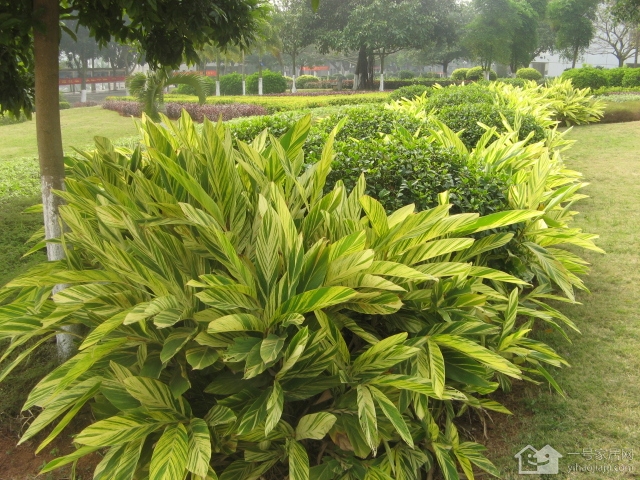
Introduction to variegated shell ginger
Morphology: The Latin name of variegated shell ginger is Alpinia zerumbet, also known as variegated galangal, variegated shell ginger, painted-leaf ginger, striped shell ginger, etc. The plant grows about 1 m tall, with dark green leathery leaves that are long-elliptic to lanceolate, 50-60 cm long and 10-15 cm wide. The leaf surface bears irregular golden-yellow longitudinal stripes and is bright in color; with proper care, the golden stripes merge into large patches, making it even more dazzling. It blooms in June-July, with elegant flowers and an alluring fragrance; the panicle is racemose and drooping.
Uses: Potted variegated shell ginger is suitable for display in halls, while outdoor plantings accent courtyards, poolside areas or wall corners with a distinctive look. Beside landscape rocks, at the edges of green spaces and in courtyards, variegated shell ginger creates an excellent ornamental effect.
How to grow variegated shell ginger
Habits: It prefers high temperatures and humid environments, is not cold-tolerant, and fears frost and snow. It likes sunlight but also tolerates slight shade. It grows well in fertile loam.
Soil: When growing variegated shell ginger, choose loose soil with good drainage.
Propagation: Division and sowing are commonly used. For division, in spring and summer dig out plants with underground rhizomes and cut off the above-ground stems and leaves, keeping one third of the stem length; cut the rhizome into 4-5 cm sections, each with 2-3 stems, and plant them directly in pots or in the open ground. After dividing, place them in a semi-shaded spot for a while, and resume normal care once new shoots sprout. For sowing, the temperature should be 25-30°C, and germination occurs 15-20 days after sowing.
Temperature: The optimum growing temperature for variegated shell ginger is 18°C-30°C. It dislikes cold and frost, and the overwintering temperature must be kept above 10°C. When the winter temperature drops below 4°C, it enters dormancy; if the ambient temperature approaches 0°C, it will die from frost damage.
Light: Variegated shell ginger fears direct strong light, so it needs to be kept in a semi-shaded spot or given 70% shade. If it is too shaded, the leaves will not be bright enough. For indoor care, place it in as bright a spot as possible and move it outdoors to a semi-shaded or shaded spot for one month every one to two months so it can accumulate nutrients and recover its vigor. In midsummer, placing variegated shell ginger in semi-shade makes the leaf markings more pronounced.
Water: Variegated shell ginger likes a moist climate and requires an air humidity of 60-75%. When growing it, keep the soil moist and avoid excessive dryness. In summer and autumn, frequently mist the leaves to increase air humidity; in winter, when variegated shell ginger is dormant, water less and follow the principle of keeping it dry rather than wet.
Fertilizing: Variegated shell ginger has high fertilizer and water demands, but it is most harmed by careless fertilizing, concentrated fertilizer and one-sided applications of nitrogen, phosphorus or potassium. Follow the fertilizing principle of "light fertilizer applied frequently, small amounts more often, complete nutrition." During the growing season, fertilize once a month, mainly with phosphorus and potassium fertilizer.
Pruning: For open-ground cultivation, regularly thin out overly dense stems and leaves and cut off broken stems and leaves to keep the plant shape attractive. After 3-4 years of cultivation, dig out the underground rhizomes again, remove the old rhizomes, and replant for renewal.
Repotting: Because variegated shell ginger tillers strongly and grows quickly, repot potted plants every 1-2 years, cutting off dull-colored and overly tall stems and leaves, then replant.
Pests and diseases: The main diseases are leaf blight and brown spot, which should be treated promptly. In the early stage of leaf spot, spray Bordeaux mixture 2-3 times at intervals of 7-10 days; for brown spot, spray 70% thiophanate-methyl wettable powder at 1000-times dilution for control.
That is the relevant introduction in this article. I believe that after reading it you now have a basic understanding of this plant. If needed, you can continue to follow No.1 Home Network for more information.
How to grow variegated shell ginger: growing methods and precautions for variegated shell ginger
Variegated shell ginger is a perennial herbaceous plant with showy and varied leaf colors. Its flowering period is June-July, with elegant form and fresh, pleasant fragrance. For home pot cultivation, it is best placed in halls or used as a courtyard accent, offering a distinctive charm. This article shares the growing methods and precautions for variegated shell ginger.
How to grow variegated shell ginger
Variegated shell ginger likes a high-temperature, high-humidity growing environment and tolerates semi-shade. Its optimum growing temperature is 15-30°C, and it is best planted in fertile, loose, well-aerated soil. It is native to tropical regions of Asia.
Propagation of variegated shell ginger is mostly carried out in spring and summer. Dig out the underground rhizomes, cut off the above-ground parts, and plant them separately. Newly transplanted plants should be kept in a semi-shaded spot, and after the plants sprout, move them to a bright spot for normal care.
During the vigorous growing period, fertilize variegated shell ginger once a month, mainly with phosphorus and potassium fertilizer, keeping the potting soil consistent. In the hot summer, frequently mist the leaves to cool them and move the plant to a semi-shaded spot to avoid strong light scorching the leaves and reducing its ornamental value.
Variegated shell ginger is relatively easy to cultivate. In late spring and early summer, give it more sun; reasonable light makes the leaf patterns brightly colored. Variegated shell ginger is not cold-tolerant. When the temperature drops to 10°C, wrap the plant in paper to prevent frost damage. Potted variegated shell ginger should be moved indoors; as long as the temperature is not too low, it can overwinter safely.
Precautions for variegated shell ginger
If variegated shell ginger is not managed properly, it is prone to some diseases, such as leaf blight and brown spot, which should be prevented and treated early. For leaf blight, spray 200-times Bordeaux mixture once a week in the early stage, and results can be seen after two or three applications. For brown spot, spray 70% thiophanate-methyl at 1000-times dilution for control.
The leaves of variegated shell ginger are one of the foods snails like to eat. Usually pay attention to controlling snails; they can be caught by hand or killed by spraying 80% dichlorvos at 1000-times dilution.
Variegated shell ginger is a typical foliage plant with brilliant colors. It can be used for viewing flowers and also as a garden accent, fitting the occasion and scene, and is a relatively good choice either way. The above are the growing methods and precautions for variegated shell ginger. For more flower-growing information, please follow the China Agricultural Chemical Investment Network Planting Encyclopedia.