How to fertilize heart-shaped wampee? Detailed scientific fertilization methods
How to fertilize heart-shaped wampee properly? We ask netizens with wampee growing experience to help introduce it. Heart-shaped wampee is waxy yellow or brownish yellow, glossy, with large fruit; a single fruit weighs 9-14 grams; the flesh is yellow-white, sweet with a honey aroma or sweet with slight sourness, crisp and juicy; the edible rate is 47%-62%, and the soluble solids content is 14.5%, thereby...
⟧3⟧How to fertilize heart-shaped wampee properly? We ask netizens with wampee growing experience to help introduce it
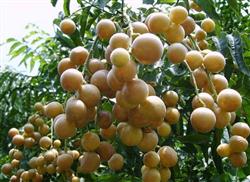 How should wampee (chicken-heart wampee) be fertilized? I'd also like netizens with wampee growing experience to help explain.
Heart-shaped wampee is waxy yellow or brownish yellow, glossy, with large fruit; a single fruit weighs 9-14 grams; the flesh is yellow-white, sweet with a honey aroma or sweet with slight sourness, crisp and juicy; the edible rate is 47%-62%, and the soluble solids content is 14.5%, thus making it popular with consumers. Therefore, Zhongdiwang has compiled the fertilization methods for heart-shaped wampee, listed in detail below for netizens' reference.
I. Management of young heart-shaped wampee trees:
1. Fertilization methods for young heart-shaped wampee trees:
The root system of young heart-shaped wampee trees is not yet well developed, is distributed relatively shallowly, and has weak absorption capacity. Fertilization should follow the principle of frequent light applications, mainly with nitrogen fertilizer, combined with phosphorus fertilizer, potassium fertilizer, calcium fertilizer, magnesium fertilizer, foliar micronutrient fertilizer, etc. Fertilization can begin 1 month after the plants survive transplanting, and thereafter before each new flush sprouts and after the new flush turns green. In addition, organic fertilizer should be applied deeply every winter.
2. Water management for young heart-shaped wampee trees:
Because young heart-shaped wampee trees grow vigorously and have shallow and few roots, they are easily affected by changes in soil moisture. Soil moisture management should be strengthened: irrigate during drought and drain during waterlogging, keeping the soil moist to facilitate normal plant growth.
3. Soil management for young heart-shaped wampee trees:
Loosening the soil: A young wampee orchard should have the soil loosened multiple times a year, generally in combination with weeding and intercropping. In summer and autumn, loosen the soil after rain to prevent soil compaction. Around the root zone, a loosening depth of 5-10 cm is best.
Soil improvement: Generally starting from the second year after planting, open a ring-shaped trench outside the original planting hole, or dig one strip trench between rows (between plants), 40-50 cm deep and 30 cm wide. Apply grass material, crop stalks, garbage and an appropriate amount of lime, etc., in layers, rotating the position each year, and within 2-3 years, deeply plow and improve the soil of the whole orchard once.
4. Pruning of young heart-shaped wampee trees:
After young heart-shaped wampee seedlings survive transplanting, pinch or cut back the trunk at a height of 40-50 cm to set the trunk, promoting buds below the cut to sprout. After the main branches mature, pinch or cut back at 15-20 cm to promote buds below the cut to sprout, then select and keep 2-3 robust, reasonably distributed branches on each main branch to train as secondary main branches, and use the same method to train tertiary branches and quaternary branches.
II. Fertilization of fruiting heart-shaped wampee trees:
1st fertilization:Carried out after fruit harvest, with a relatively large fertilization amount; the specific amount depends on the age of the fruiting tree, the fruit yield, and the soil conditions. For water fertilizer, use 10-fold diluted decomposed bran water, applying 15 kg per tree, poured into shallow trenches opened near the drip line around the canopy or applied directly on the tree basin. If using dry fertilizer, choose a three-element compound fertilizer (nitrogen, phosphorus, potassium ratio of 15:15:15) at 200-300 grams per tree, or apply 200 grams of urea.
2nd fertilization:After the autumn flush sprouts, the purpose is to promote the autumn flush to mature and promptly stimulate a second autumn flush, cultivating fruiting mother branches. Apply a three-element compound fertilizer (nitrogen, phosphorus, potassium ratio of 15:15:15) at 200-300 grams per tree.
3rd fertilization:Around Major Cold, the purpose is to promote flower bud differentiation and benefit the development of flower organs and fruiting branches. Apply 10 kg of poultry and livestock manure, 500 grams of bran cake, 10 kg of mushroom residue, 15 kg of grass material, and 250 grams of lime per tree, burying them in the hole in layers of one layer of fertilizer and one layer of soil, then backfill with topsoil.
4th fertilization:After the full bloom stage, the purpose is to promptly replenish the nutrients heavily consumed by flowering, promote flowering and strengthen fruit, and maintain emerald green leaf color. Apply 150-200 grams of compound fertilizer per tree.
5th fertilization:During the fruit expansion stage, that is, after physiological fruit drop. The purpose is to promote fruit expansion, normal fruit development, and increased yield. Apply 150-200 grams of compound fertilizer per tree.
Methods to solve wampee flowering heavily but setting little fruit
What varieties of wampee are there?