Never abuse plant growth regulators; scientific use is key
The main types of plant growth regulators allowed for the production of pollution-free, Grade A green food citrus are benzyladenine, 6-benzyladenine, gibberellin, ethephon, chlormequat, and others. The technical requirements are to use them strictly according to the specified concentration and period, with use permitted once a year, and a safety interval of more than 20 days. For the production of A...
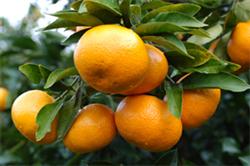 Plant growth regulators are high-tech agricultural input products that have been widely used in agricultural production in recent years. In actual production, if plant growth regulators are used scientifically and according to the target problem, they can become a "good medicine" for increasing yield and income; if used blindly, they can cause economic losses that are difficult to make up for.
At present, the plant growth regulators in use can be divided into three major categories - growth promoters, growth inhibitors, and growth retardants - with about 100 series of varieties, and they are harmless to humans and livestock. As chemical agents that can regulate and stimulate plant growth, because of differences in their properties and dosage, they can be used for plant rooting, bud forcing, early ripening, preventing flower and fruit drop, and forming seedless fruit; they can also inhibit sprouting, prune and thin branches, and eliminate weed damage, etc. Therefore, when using them, one must be thoroughly familiar with the effects and scope of use of plant growth regulators, and it is best to use them according to the target problem under the specific guidance of agricultural technical personnel. Never abuse them blindly, so as to avoid losses.
It should also be pointed out that whether the concentration of a plant growth regulator is appropriate makes an obvious difference to crop growth and development. For example, when applying chlormequat, if the concentration is infinitely high, it easily produces stunted old seedlings, while if the concentration is too low, it cannot achieve the inhibitory effect. In addition, crops absorb nutrients mainly through the stomata of the leaves, and the stomata on the underside of the leaves are more numerous than on the upper side, so when spraying, both sides should be covered and sprayed until thoroughly wet, especially the functional leaves. Before spraying, it must be fully and evenly stirred to improve the effectiveness. The time for spraying plant growth regulators should preferably be chosen when it is sunny and windless, with spraying from 9 a.m. to 11 a.m. and from 4 p.m. to 6 p.m. giving the best results. Spraying is not suitable on rainy and windy days or at noon on sunny days.