-

How to fertilize peanuts scientifically? Key methods and points explained
How to fertilize peanuts scientifically? Please guide. 1. Fertilization principles for peanuts (1) Combined application of organic and inorganic fertilizers. The soil for cultivating peanuts is mostly hilly gravelly soil and plain alluvial sandy soil. These soils have poor structure and low fertility, so organic fertilizer should be applied to activate the soil, improve soil structure, and build up fertility, and then chemical fertilizers should be applied in combination to replenish soil nutrients in time.
-

How to fertilize peanuts well? Master the scientific fertilization method
How should peanuts be fertilized? Please advise. Peanuts have a relatively strong tolerance to poor soil, and a small amount of fertilizer can produce a considerable yield. But to rapidly increase peanut yield per unit area, scientific fertilization is one of the basic measures. Peanut fertilization should be based mainly on organic fertilizers, with chemical fertilizers as a supplement; base fertilizer as the main application, with topdressing as a supplement; topdressing should focus on seedling fertilizer...
-
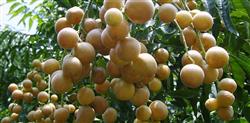
How to fertilize wampee scientifically? Key points of planting and fertilization techniques
How to fertilize wampee scientifically when planting? Please introduce in detail. Wampee fertilization can refer to the following methods: 1. Around Great Cold, apply about 12 kg of fully decomposed chicken manure with a moisture content of 10~20%. The fertilization method is to dig a ring-shaped trench about 20 cm inside and outside the drip line of the canopy, reaching a depth of 30~40 cm, and place one layer of fertilizer and one layer of turf...
-

How to fertilize hybrid rice scientifically?
How to fertilize hybrid rice scientifically? The fertilization principles for hybrid rice should be: organic fertilizer and phosphate fertilizer as base fertilizer, potassium fertilizer mainly as tillering fertilizer, nitrogen fertilizer applied evenly in multiple applications, with special attention to plump panicle and plump grain fertilizer, aiming for large panicles and large grains while ensuring sufficient panicles. (1) Base fertilizer mainly organic fertilizer. According to measurements...
-
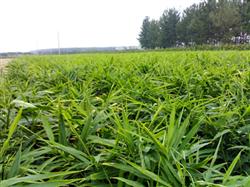
How to fertilize ginger well? A detailed explanation of scientific fertilization methods
How to fertilize ginger well? A detailed introduction: the rhizome of ginger absorbs relatively little nitrogen, phosphorus and potassium during the seedling stage; during the vigorous growth period, phosphorus uptake increases slowly, while demand for nitrogen and potassium rises sharply. In particular, during the early part of the vigorous growth period, potassium requirement is highest, followed by nitrogen fertilizer; during the middle and late parts of the vigorous growth period, nitrogen uptake exceeds...
-
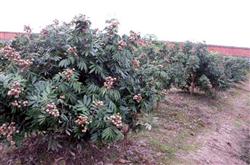
How to fertilize lychee and longan? Key points of scientific fertilization techniques
How should lychee and longan be fertilized? Please give guidance. The fertilization methods for lychee and longan can refer to the following: I. Growth and nutritional characteristics. Lychee and longan both belong to the Sapindaceae family and are subtropical evergreen fruit trees. Their biological characteristics and nutritional characteristics have many similarities. The root system has no natural dormant period throughout the year, and the roots have a very strong absorption capacity.
-
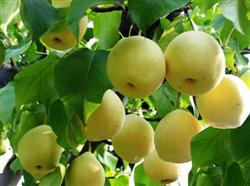
How to fertilize Ya pears scientifically? These methods you need to master
How to fertilize Ya pears scientifically? Please give guidance. Pear tree fertilization is generally divided into two types: base fertilizer and top dressing. The base fertilizer should be applied in early autumn, and the amount of base fertilizer should account for 70%-80% of the annual fertilization amount. Top dressing is best applied 3 times a year. The first is pre-flowering fertilizer, applied in mid-January, with 20 kg of compound fertilizer per mu. The second is fruit-swelling fertilizer, applied in...
-

How to fertilize soybeans? A detailed explanation of scientific fertilization methods
How should soybeans be fertilized? What are the fertilizer requirements of soybeans? The nutrient uptake pattern of soybeans. The growth and development of soybeans is divided into the seedling stage, branching stage, flowering stage, pod-setting stage, seed-filling stage and maturity stage. The whole growth period is 90 to 130 days, and its nutrient uptake pattern is as follows: nitrogen uptake rate. The emergence and branching stages account for 15% of the total nitrogen uptake during the whole growth period...
-
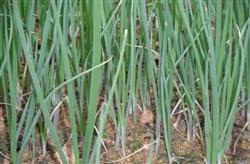
How to scientifically apply topdressing to onions? Key points on timing and methods of fertilization
How to scientifically apply topdressing to onions? Please provide guidance. After onions are planted, the root system grows first, then growth shifts to the aboveground part, and only after the aboveground part has grown fully do they enter the bulb swelling growth stage. According to the growth and development characteristics of onions, doing a good job of topdressing in stages is one of the keys to a high onion yield. Fertilizer for seedling recovery...
-
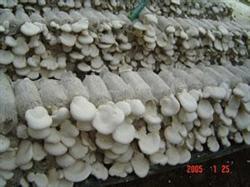
The raw material ratio for white lingzhi mushroom cultivation must be scientific and reasonable
The white lingzhi mushroom (Pleurotus nebrodensis) is an emerging mushroom type developed in recent years. Because its history of development is relatively short, many problems still exist in cultivation techniques, especially since total yield has been difficult to increase. Some growers achieve a biological conversion rate of less than 20% when cultivating white lingzhi mushrooms, and even when prices are relatively high, the economic benefit is still quite ordinary. The author...
条件筛选