How to fertilize peanuts well? Master the scientific fertilization method
How should peanuts be fertilized? Please advise. Peanuts have a relatively strong tolerance to poor soil, and a small amount of fertilizer can produce a considerable yield. But to rapidly increase peanut yield per unit area, scientific fertilization is one of the basic measures. Peanut fertilization should be based mainly on organic fertilizers, with chemical fertilizers as a supplement; base fertilizer as the main application, with topdressing as a supplement; topdressing should focus on seedling fertilizer...
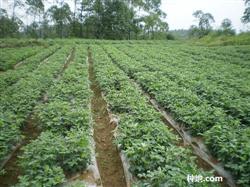 How to fertilize peanuts well? Seeking fertilization methods
The fertilizer requirements of peanuts should be clear on three points: First, the characteristic shared with other crops is that they need not only macronutrients, but also secondary nutrients and micronutrients. These elements are equally important and cannot replace one another; second, what distinguishes peanuts from grain and cotton crops is that their root nodules can fix some nitrogen fertilizer; third, they are very sensitive to elements such as calcium, magnesium, sulfur, molybdenum and boron.
Nitrogen deficiency in peanuts leads to slow vegetative growth, yellow leaves, small leaves, and few and unfilled pods; phosphorus deficiency results in underdeveloped root hairs, few root nodules, reduced nitrogen fixation ability, and delayed maturity with excessive vegetative growth; potassium deficiency causes leaves to turn yellow-green, and in severe cases the plant top withers; sulfur deficiency reduces the protein content of the kernels; magnesium deficiency prevents normal chlorophyll formation, with severe cases showing leaf whitening and chlorosis along the veins; molybdenum deficiency reduces the number of root nodules and branches and causes chlorophyll to age; boron deficiency causes the main stem and lateral branches to be short, the plant to be dwarfed and clustered, and in severe cases the growing point dies.
In order to give full play to the yield-increasing effect of fertilization techniques on peanuts, fertilization measures should be adapted to local conditions and balanced according to the seedlings.
First, attention should be paid to peanut fertilization. From sowing until the formation of root nodules, peanuts rely firstly on the nutrients in the seed kernel to maintain growth, and secondly on absorbing nutrients from the soil. Fertilizer deficiency makes it difficult to grow strong seedlings and also inhibits growth in the middle and late stages.
Second, fertilize according to the soil. Practice shows that the lower the soil fertility, the greater the yield increase from additional fertilizer; medium-fertility soil comes next; on fertile soil, the yield-increasing effect is not very obvious. Therefore, peanut fertilization should add fertilizer on poor-fertility soil.
Third, apply seed fertilizer by mixing. You can mix the peanut seeds used per mu with 0.2 kg of peanut rhizobium inoculant, plus 2.5 to 10 g of ammonium molybdate; you can also mix each kg of seeds with 0.4 to 1 g of boric acid; third, you can first moisten the peanut kernels with rice water, then mix the seeds used per mu with 1.0 to 1.5 kg of gypsum. These seed dressing methods can all supplement fertilizer in time and promote the vigorous growth of peanut seedlings. Each locality can choose and apply them according to local conditions.
Fourth, fertilize according to the seedlings. According to research, the ratio of nitrogen, phosphorus and potassium fertilizer required by peanuts is 1.0:0.18:0.48. Fertilizer demand is relatively low at the seedling stage; at the flowering stage, fertilizer demand accounts for about 25% of the total fertilizer demand; at the pod-setting stage, fertilizer demand accounts for 50% to 60% of the total fertilizer demand. For this reason, in fertilizer application, first, apply base fertilizer generally. Apply about 1500 kg of decomposed organic fertilizer per mu, together with 15 to 20 kg of phosphate fertilizer, and on poor-fertility soil also apply 5 kg of urea; second, before the beginning of flowering, apply 500 to 1000 kg of decomposed organic fertilizer, 4 to 5 kg of urea, and 10 kg of superphosphate per mu, applied in combination with intertillage and earthing up; third, at the early flowering stage, spray 150 mL of Huimanfeng active liquid fertilizer diluted with 50 kg of clean water per mu, which has a significant effect on promoting branching, increasing the number of pods, and raising the rate of full pods; fourth, at the pod-setting stage, spray a 0.2% to 0.3% potassium dihydrogen phosphate and 1% urea solution, which can achieve the effect of supplementing phosphorus and increasing nitrogen.
Click to get more peanut cultivation techniques
Click to get more grain and oil crop cultivation techniques