How to fertilize lychee and longan? Key points of scientific fertilization techniques
How should lychee and longan be fertilized? Please give guidance. The fertilization methods for lychee and longan can refer to the following: I. Growth and nutritional characteristics. Lychee and longan both belong to the Sapindaceae family and are subtropical evergreen fruit trees. Their biological characteristics and nutritional characteristics have many similarities. The root system has no natural dormant period throughout the year, and the roots have a very strong absorption capacity.
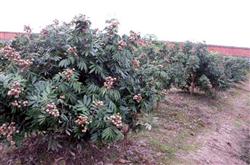
How should lychee and longan be fertilized? Please give guidance.
The fertilization methods for lychee and longan can refer to the following:
I. Growth and nutritional characteristics
Lychee and longan both belong to the Sapindaceae family and are subtropical evergreen fruit trees. Their biological characteristics and nutritional characteristics have many similarities. The root system has no natural dormant period throughout the year, and the roots have a very strong absorption capacity. Both replace their fruiting mother shoots by sending out new shoots, and they must send out new shoots multiple times a year, among which the summer shoots and autumn shoots are the fruiting mother shoots.
Lychee and longan both easily drop flowers and fruit. The female and male flowers of lychee do not bloom at the same time, and the pollination rate is low. Unpollinated female flowers drop successively from the beginning of young fruit development. At the same time, lychee produces a large amount of nectar when flowering. These physiological characteristics cause lychee to consume a large amount of nutrients during the flowering period. For lychee trees with weak tree vigor, a large number of leaves often fall and branches wither after the flowers fade. During fruit development, fruit drop may occur at every stage, and fruit drop is most serious from young fruit development to the size of a mung bean. Fruit drop at this stage is also called physiological fruit drop. Entering the seed development stage, lack of nutrients can cause embryo death and lead to the second stage of fruit drop. In the late stage of fruit development, a large amount of nutrients in the tree are transferred and accumulated in the fruit. If nutrients are insufficient at this time, a third fruit drop will occur before and after harvest. Ensuring nutrient supply at these stages is an important measure for obtaining a bumper harvest.
Some people have measured the nutrient content in leaves and fruits of two lychee varieties, Nuomici and Huaizhi, at their maturity stage. Among them, the leaves of Nuomici contained nitrogen, phosphorus, and potassium nutrients of 1.547%, 0.142%, and 0.431% respectively (N:P2O5:K2O was 1:0.09:0.28), and the fruit contained nitrogen, phosphorus, and potassium nutrients of 2.494%, 0.486%, and 2.226% respectively (N:P2O5:K2O was 1:0.19:0.89). Huaizhi leaves contained nitrogen, phosphorus, and potassium nutrients of 1.345%, 0.124%, and 0.448% respectively (N:P2O5:K2O was 1:0.09:0.33), and the fruit contained nitrogen, phosphorus, and potassium nutrients of 2.459%, 0.549%, and 2.083% respectively (N:P2O5:K2O was 1:0.22:0.85). The two lychee varieties are roughly similar in their absorption of nitrogen, phosphorus, and potassium nutrients, all absorbing the most nitrogen, followed by potassium, and the least phosphorus. The results of measuring nutrient content in shoots and leaves of longan at different growth stages also showed nitrogen > potassium > phosphorus.
II. Fertilization techniques
After lychee and longan enter the fruiting stage, in cultivation management, it is necessary both to strive for a bumper harvest of fruit in the current year and to take into account high yield in the next year and thereafter.
1. Fertilization of lychee.
Lychee usually sprouts from December to January, blooms from February to April, develops fruit from May to June, matures and is harvested from June to July, sends out autumn shoots from August to September, and autumn shoots mature from October to November. According to experience from various places, fertilization of fruiting lychee trees should focus on three key fertilizer applications.
(1) Flower-promoting fertilizer: also called pre-flowering fertilizer. It mainly strengthens tree nutrition before flowering, promotes flower bud differentiation, increases the number of female flowers, and reduces flower drop and the first stage of physiological fruit drop during young fruit development. This fertilizer should preferably be applied 10 to 20 days before flowering. It is generally believed that early and mid-maturing varieties should be fertilized around "Minor Cold" in early January, and late-maturing varieties should be fertilized around "Major Cold" in late January. Usually, 50 to 100 kg of decomposed human manure and urine is used per tree, together with 1 to 1.5 kg of compound fertilizer.
(2) Fruit-strengthening fertilizer: also called fruit-strengthening and fruit-preserving fertilizer. It mainly supplements the nutrient consumption of the tree caused by flowering, promotes fruit development, and reduces the second stage of physiological fruit drop. This fertilizer should preferably be applied after flowering and before the second physiological fruit drop, that is, for early-maturing varieties in early April (Qingming), and for late-maturing varieties around late May (Xiaoman). During this period, nitrogen, phosphorus, and potassium chemical fertilizers should be applied in combination. A 2:1:2 type high-concentration compound fertilizer can be selected, about 2 kg per tree. Spraying a 0.4% borax solution or a mixed solution of 50 mg/kg gibberellin during this period has a good effect on preserving flowers and fruit.
(3) Shoot-promoting fertilizer: also called post-harvest fertilizer. It mainly promotes tree recovery and autumn shoot development, laying the foundation for a bumper harvest the following year, but it must also prevent winter shoots from sprouting. Therefore, fertilization should be timely and appropriate in amount. For early-maturing varieties and robust trees, it should preferably be applied after harvest, while for late-maturing varieties, heavily fruiting trees, and trees with weak vigor, it should preferably be applied 10 to 15 days before harvest. During this period, organic fertilizer and chemical fertilizer should be applied in combination, with 50 to 100 kg of decomposed high-quality organic fertilizer and 1 to 1.5 kg of 1:1:1 type compound fertilizer per tree.
2. Fertilization of longan.
Compared with lychee, longan has a longer production period and bears fruit later. According to the fertilization experience of China's main longan production areas, fruiting longan trees are generally fertilized 4 to 5 times during the annual growth cycle.
(1) Pre-flowering fertilizer: applied in February when new shoots and flower buds sprout, with 0.3 to 0.6 kg of urea and 1 kg of superphosphate per tree, mainly to promote flower panicle differentiation, increase the flower panicle rate, and increase the number of female flowers.
(2) Flower-preserving fertilizer: applied in April at full bloom, with about 1 kg of high-concentration compound fertilizer per tree, mainly to reduce flower drop, improve young fruit setting rate, and promote summer shoot growth.
(3) Fruit-preserving fertilizer: applied in late June after flower drop, with about 1 kg of high-concentration compound fertilizer per tree, mainly to promote young fruit development and strengthen summer shoots, and for new summer shoots to continue growing.
(4) Fruit-strengthening fertilizer: applied at the end of July and the beginning of August, with 1 to 1.5 kg of high-concentration compound fertilizer per tree, mainly to promote young fruit expansion, plumpness, and fullness, and for new summer shoots to continue strengthening.
(5) Tree-strengthening fertilizer: applied around September to October before and after harvest, mainly to supplement the tree's nutrition after harvest, restore tree vigor, make autumn shoots develop robustly, and lay the foundation for fruiting the following year. During this period, organic fertilizer and chemical fertilizer should be applied in combination, with 50 to 100 kg of decomposed organic fertilizer and 1 to 1.5 kg of high-concentration compound fertilizer per tree.
Click to get more longan planting techniques
Get more lychee planting techniques