The raw material ratio for white lingzhi mushroom cultivation must be scientific and reasonable
The white lingzhi mushroom (Pleurotus nebrodensis) is an emerging mushroom type developed in recent years. Because its history of development is relatively short, many problems still exist in cultivation techniques, especially since total yield has been difficult to increase. Some growers achieve a biological conversion rate of less than 20% when cultivating white lingzhi mushrooms, and even when prices are relatively high, the economic benefit is still quite ordinary. The author...
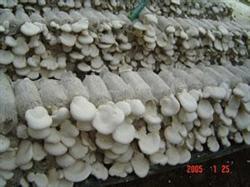
The white lingzhi mushroom (Pleurotus nebrodensis) is an emerging mushroom type developed in recent years. Because its history of development is relatively short, many problems still exist in cultivation techniques, especially since total yield has been difficult to increase. Some growers achieve a biological conversion rate of less than 20% when cultivating white lingzhi mushrooms, and even when prices are relatively high, the economic benefit is still quite ordinary. Based on the author's extensive practical experience in cultivating white lingzhi mushrooms in recent years, the following analysis of the nutritional ratio for white lingzhi mushrooms is provided for reference.
A reasonable nutritional ratio plays a crucial role in the yield of white lingzhi mushrooms. The Shouguang City Edible Fungi Research Institute put in 200,000 bags of material in each of 2002 and 2003, using cottonseed hulls as the main material and adopting a formula with 20% wheat bran and about 8% cornmeal added, and the biological conversion rate reached over 60% in both years; in 2005, pure cottonseed hulls were used to cultivate white lingzhi mushrooms, with 150,000 bags of material put in, and the biological conversion rate was only 20-30%. Therefore, the author provides a detailed introduction to this issue:
The added nutrients should be mainly organic nutrients, with inorganic nutrients as a supplement, which is very helpful for enhancing the post-fruiting vigor of white lingzhi mushrooms. Organic nutrient components are generally based on bran, cornmeal, rice bran, etc., generally added at 20-30%; the amount added should not be too large. If the organic nutrient content is too high, one drawback is that the contamination rate is greatly increased, and another drawback is that it affects the air permeability of the substrate, causing slow mycelial growth and delaying the fruiting season. Inorganic nutrients are generally monopotassium phosphate, magnesium sulfate, etc., generally added at 0.2-0.5%; too much will affect the water absorption capacity of the mycelium.
One point should be emphasized here: to increase the total yield of white lingzhi mushrooms, raising the nutrient content of the substrate is a very important aspect, and another aspect is ensuring that the substrate has a strong water absorption capacity. Currently, conventional cottonseed hulls generally have relatively short cotton lint, and cottonseed hulls with short cotton lint cannot absorb much water. When using this kind of raw material to cultivate white lingzhi mushrooms, during the fruiting period the fruiting bodies cannot receive sufficient water supply, so the marketability and growth specifications of the fruiting bodies will be difficult to guarantee, let alone maintaining a very high yield. For this situation, we can appropriately adjust the formula by adding 30-50% of raw materials with strong water absorption capacity, such as cotton soil lint and corncobs, to the cottonseed hulls. This not only improves the water absorption capacity of the substrate but also saves costs, achieving two benefits at once. When cultivating white lingzhi mushrooms, the suitable moisture content of the raw material should be 60-65%. Specifically, before fermentation of the raw material, the material-to-water ratio can be controlled at 1:1.5-1.6, and before inoculation the material-to-water ratio can be kept at about 1:1.3. Cotton soil lint, formerly waste from cotton textile mills and cotton oil mills, has been well utilized in recent years. The experimental base of the Shouguang City Edible Fungi Research Institute used a main material formula of half cotton hulls plus half soil lint to produce white lingzhi mushrooms in 2005 and achieved very good results, with the highest biological conversion rate reaching over 80%, creating very good economic benefits.
Practice has proven that adding a certain amount of lime to the formula can promote rapid mycelial growth. The amount of lime added can be controlled at 2-5%, so that after fermentation of the substrate is completed, the pH can generally be maintained at around 8-9. It is also acceptable not to add lime, but then mycelial growth will become slow, which will have a relatively large impact on the reasonable arrangement of the fruiting season.
In short, a reasonable substrate formula is a very flexible issue. We should make scientific adjustments according to local resources and try our best to raise the yield and marketability of white lingzhi mushrooms to a level we are satisfied with.