How to fertilize hybrid rice scientifically?
How to fertilize hybrid rice scientifically? The fertilization principles for hybrid rice should be: organic fertilizer and phosphate fertilizer as base fertilizer, potassium fertilizer mainly as tillering fertilizer, nitrogen fertilizer applied evenly in multiple applications, with special attention to plump panicle and plump grain fertilizer, aiming for large panicles and large grains while ensuring sufficient panicles. (1) Base fertilizer mainly organic fertilizer. According to measurements...
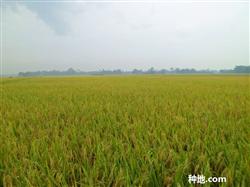
How to fertilize hybrid rice scientifically? Seeking advice
The fertilization principles for hybrid rice should be: organic fertilizer and phosphate fertilizer as base fertilizer, potassium fertilizer mainly as tillering fertilizer, nitrogen fertilizer applied evenly in multiple applications, with special attention to plump panicle and plump grain fertilizer, aiming for large panicles and large grains while ensuring sufficient panicles.
(1) Base fertilizer mainly organic fertilizer
According to measurements, 50%-60% of the nitrogen and 70% of the phosphorus and potassium absorbed by hybrid rice come from the soil. Insufficient fertilization will excessively deplete the soil's potential nutrients and reduce soil fertility. Increasing organic fertilizer application is an important way to maintain and improve soil fertility. Therefore, hybrid rice production should emphasize the accumulation of farmyard manure, develop the breeding industry to apply more barn manure, plant more green manure, promote panicle-stripping harvesting and straw return to the field, etc., so that organic fertilizer accounts for 40% of the total fertilizer applied throughout the season.
(2) Apply tillering fertilizer early and in appropriate amounts
Since hybrid rice has strong root vitality and new roots develop quickly after transplanting, generally early rice can be top-dressed with urea to promote tillering 5 days after transplanting, and late rice 3 days after transplanting. Tillering fertilizer should be applied in split applications. The first application is 6-7.5 kg of urea per mu; about 7 days later, according to the seedling condition, for fields with poor growth, a second tillering fertilizer application of no more than 4 kg of urea per mu; for fields with little organic fertilizer and potassium deficiency, apply 5-7.5 kg of potassium fertilizer per mu.
(3) Apply panicle fertilizer according to seedling condition
Panicle fertilizer can be divided into flower-promoting fertilizer and flower-preserving fertilizer depending on the application period and function. For those with proper early fertilization and balanced seedling growth, the focus should generally be on preserving flowers and increasing grains, applying only flower-preserving fertilizer and not too much, generally about 2.5 kg of urea per mu. If early fertilization is insufficient, the population of seedlings is too small, and individual growth is poor, then both flower-promoting fertilizer and flower-preserving fertilizer can be applied, each time 5 kg of urea per mu. Hybrid rice has a high demand for potassium fertilizer. After sun-drying the field and re-flooding, combined with nitrogen top-dressing, apply about 2.5 kg of potassium fertilizer per mu, which has a significant yield-increasing effect.
(4) Apply grain fertilizer and foliar top-dressing according to seedling condition. For seedlings with excessively pale leaf color before initial heading, broadcast 2-2.5 kg of urea per mu. For fields that turn yellow too early after full heading, apply 2.5-3 kg of urea per mu. For normally growing hybrid rice, only 500-750 kg of urea diluted in 50 kg of water should be sprayed as grain fertilizer.
Since hybrid rice has a relatively high absorption of phosphorus and potassium in the late stage, applying foliar fertilizer in the late stage has a good yield-increasing effect. Spraying 150-200 kg of potassium dihydrogen phosphate diluted in 50 kg of water on poorly growing seedlings 4-6 days before initial heading or 2-3 days after full heading can enhance the plant's resistance to high or low temperatures.
Click to get massive rice planting techniques
Click to get massive grain planting techniques