-
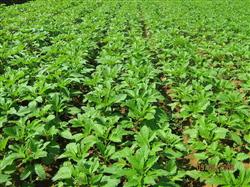
How to fertilize sesame for high yields? Detailed fertilization methods
How to fertilize sesame for high yields? Please provide guidance on the nutrient requirements of high-yielding sesame. Sesame is a fertilizer-loving crop; for every 100 kg of seed produced, it needs to absorb 8-9 kg of pure nitrogen, 3 kg of phosphorus pentoxide, and 7 kg of potassium oxide. At present, sesame yields are generally 40-60 kg per mu, while high-yielding fields generally reach 75-95 kg...
-
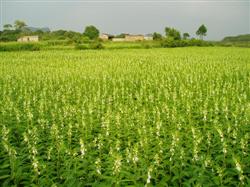
How to fertilize sesame for good results when planting it?
How should sesame be fertilized when planting? Please give guidance. For fertilizing sesame, you can refer to the following methods: Apply seedling fertilizer early. Because sesame seeds are relatively small, and because too much nitrogen fertilizer is often applied as a base fertilizer, the seedlings are prone to excessive vegetative growth and become leggy seedlings. Therefore, for sesame, in combination with early thinning and early final thinning of seedlings, apply a quick-acting fertilizer once early according to seedling condition. Applying seedling fertilizer well is an important measure for sesame to start growing early and grow vigorously. For seedling-stage fertilizer, diluted decomposed human manure or urea is preferable. Generally, after final thinning, apply 2-3 kg of urea per mu as a topdressing. When drought is severe, first relieve the drought and then apply the topdressing, or dilute it with thin human manure and pour it on. For those with weaker seedling vigor, the "special meal" method should also be used to apply a seedling-promoting fertilizer. When applying seedling fertilizer to sesame, also according to the characteristic that sesame has a relatively shallow root system, apply it as shallowly as possible or concentrate it near the roots.
-
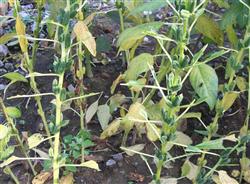
How to prevent and control sesame mosaic virus disease? Detailed control methods
How to prevent and control sesame mosaic virus disease? Please advise. Distribution and damage of sesame mosaic virus disease: It mainly occurs in sesame-producing areas of Henan, Hubei, Jiangxi, Anhui and other provinces. There are two types: common mosaic type and crinkled mosaic type. It is caused by single or mixed infection of Turnip mosaic virus (TuMV) and a spherical virus (CMV)....
-
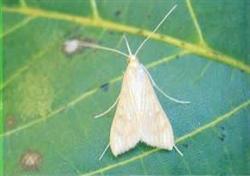
What is the sesame capsule borer? Get to know this sesame pest
What is the sesame capsule borer? Please introduce the sesame capsule borer, which is one of the main pests of sesame. It mainly damages sesame. It commonly occurs in major sesame-producing areas in China such as Henan, Hubei, Anhui and Jiangxi, generally reducing yields by 10%-20%, and by up to 30% in severe cases, causing a marked decline in sesame quality. In response to its occurrence, carefully study...
-
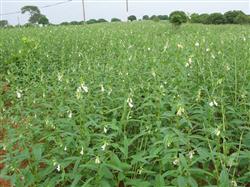
How should micronutrient fertilizers be applied during sesame cultivation?
How should micronutrient fertilizers be applied when growing sesame? Please give guidance. The main trace elements needed during the growth and development of sesame include boron, zinc, manganese, iron and other elements, but the absorption amount differs at different growth stages. During the seedling stage, the absorption rate is slow and the accumulated amount is small; from the flowering stage to the topping stage, the absorption rate is fast and the accumulated amount is large; from topping to mat...
-
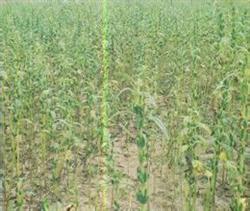
What methods are used to control sesame leaf blight?
What can prevent sesame leaf blight? Please learn about the distribution and damage of sesame leaf blight: It occurs in all sesame-producing areas nationwide. This disease is caused by the fungus Corynespora cassiicola. In addition to harming sesame, it also harms crops such as soybean and straight bean. Symptoms/morphological characteristics: After seedlings are damaged, the leaves and stems die;...
-
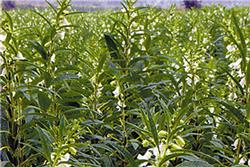
What should you pay attention to when growing sesame? Master these management points
What should you pay attention to when growing sesame? A detailed introduction. Sesame, also known as oil hemp, is rich in protein and a variety of vitamins as well as iron, calcium, sesamol compounds and other substances. It is nutritious and strongly aromatic, and is an indispensable ingredient in making pastries and specialty foods. Sesame oil is an especially rare top-grade edible oil. Sesame is a...
-
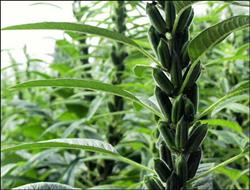
How to grow sesame for higher yields? Practical planting methods shared
What methods can increase sesame yields? Here are methods you can refer to for increasing sesame yields: 1. Spray chlormequat in time. Using it at the sesame seedling stage can make sesame stems and branches thick and strong, lower the capsule-bearing position, increase the number of nodes and capsules, increase grain weight, and raise yields by 35%. The method of use is: at the 2-3 pairs of true leaves stage of sesame, continuously spray...
-
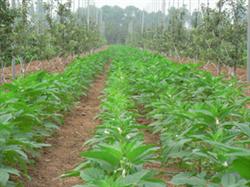
How to grow sesame for high yields? A full breakdown of cultivation techniques
How to grow sesame well? A detailed introduction follows. For sesame cultivation, you can refer to the following methods: 1. Prepare the beds carefully. The furrow width is 33 cm, the bed height is 20 cm, and the bed width is 1-1.2 m. A suitable bed width makes management easier. 2. Sow at the right time. Dig shallow furrows on the bed surface, with a furrow spacing (also the row spacing) of 33 cm. When sowing, because sesame seeds are small...
-
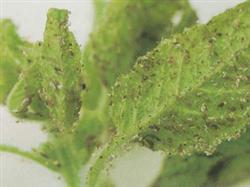
Control Methods for Major Sesame Pests and Diseases
How should the major sesame pests and diseases be controlled? Please give guidance. The major sesame pests and diseases include the following: 1. Sesame hawk moth: before the larvae reach the 3rd instar, when there are an average of 2 larvae per 100 leaves on the plants, pesticide should be applied for control. Commonly used pesticides: 2.5% trichlorfon powder or 5% carbaryl powder sprayed at 1.5-2.5 kg per mu; 90% crystalline trichlorfon or 80%...
条件筛选