What should you pay attention to when growing sesame? Master these management points
What should you pay attention to when growing sesame? A detailed introduction. Sesame, also known as oil hemp, is rich in protein and a variety of vitamins as well as iron, calcium, sesamol compounds and other substances. It is nutritious and strongly aromatic, and is an indispensable ingredient in making pastries and specialty foods. Sesame oil is an especially rare top-grade edible oil. Sesame is a...
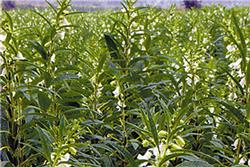
What should you pay attention to when growing sesame? A detailed introduction
Sesame, also known as oil hemp, is rich in protein and a variety of vitamins as well as iron, calcium, sesamol compounds and other substances. It is nutritious and strongly aromatic, and is an indispensable ingredient in making pastries and specialty foods. Sesame oil is an especially rare top-grade edible oil.
Sesame is a warm-loving crop, and July is the best period for autumn sowing of sesame. Sesame is suitable for cultivation on loose-textured, well-drained sandy loam plots. The whole growth period is generally 85~95 days, and the yield per mu is 80~100 kg.
Sesame seeds come in two kinds, black and white. Black sesame has a higher yield than white sesame, but its oil content is not as high as that of white sesame. The sesame varieties currently grown are mainly: Dongzhi No. 8 and Dongzhi No. 10. Both varieties are white sesame, generally yielding around 80 kg per mu, with high-yielding fields reaching more than 100 kg. The whole growth period of both is about 90 days, and the above two varieties were developed by crossbreeding and selection at the Oil Crops Research Institute of the Chinese Academy of Agricultural Sciences. There is also the local farm variety black sesame, whose seeds are jet-black and glossy with a strong aroma, generally yielding around 100 kg per mu, with a whole growth period of about 95 days.
Sesame should be rotated with soybean, corn and peanut, and must not be grown in continuous cropping, so as to help reduce disease.
Sesame seeds are tiny, with a seeding rate of 300 g per mu. Before sowing, the soil should be finely prepared and sufficient base fertilizer applied, generally 20 loads of farmyard manure per mu. For strongly acidic soil, apply 50~100 kg of lime per mu to adjust the soil pH so as to favor normal growth of sesame. Choose a sunny day for sowing to prevent soil crusting after rain. To make sowing uniform, the method of mixing seeds with burnt mud ash is generally used for sowing, that is, mix the seeds into fine soil or burnt mud ash, mix thoroughly, sow in rows, and after sowing tread the soil firm with the feet without covering with soil again.
After emergence, thin the seedlings 2~3 times: carry out the first thinning at the one-true-leaf stage, and set the final stand at the 3~4-true-leaf stage. When thinning, remove the small and keep the large, remove the weak and keep the strong. Final stand density: about 10,000 plants per mu for branching-type varieties, and about 15,000 plants per mu for single-stem-type varieties.
After the final stand is set, cultivate and weed 2~3 times in good time, combining with clearing the furrows and earthing up, to achieve the requirements of loosening the soil, eliminating weeds and preventing lodging. For sesame, apply flower-bud fertilizer well at the budding stage, generally applying 10 kg of urea per mu diluted in water, and at full bloom carry out foliar topdressing with 0.3% concentration potassium dihydrogen phosphate, which has a good effect on increasing grain weight and oil content and raising yield.
The main diseases of sesame are: damping-off, anthracnose and powdery mildew. When they occur, they can be controlled with the pesticides carbendazim, thiophanate-methyl and mancozeb. The main insect pests are cutworms, aphids, noctuid moths and others. When they occur, they can be controlled with the pesticides chlorpyrifos and imidacloprid.
When the sesame capsules turn from green to yellow, it indicates that the seeds have matured and it can be harvested. At harvest, cut the stems 5 cm above the ground, tie them into bundles, set up every 3 bundles as a tripod, and stand them upright to sun-dry. When most of the capsules have split, thresh them, then sun-dry again; generally three rounds are enough to thresh them clean.
Click to get more sesame growing techniques
Click to get more food crop growing techniques