What methods are used to control sesame leaf blight?
What can prevent sesame leaf blight? Please learn about the distribution and damage of sesame leaf blight: It occurs in all sesame-producing areas nationwide. This disease is caused by the fungus Corynespora cassiicola. In addition to harming sesame, it also harms crops such as soybean and straight bean. Symptoms/morphological characteristics: After seedlings are damaged, the leaves and stems die;...
What can prevent sesame leaf blight? Please learn about
Distribution and damage of sesame leaf blight:
It occurs in all sesame-producing areas nationwide. This disease is caused by the fungus Corynespora cassiicola. In addition to harming sesame, it also harms crops such as soybean and straight bean.
Symptoms/morphological characteristics:
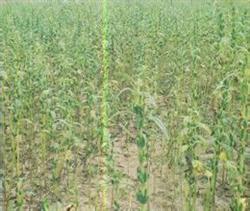
After seedlings are damaged, the leaves and stems die; initially, small dot-like brown lesions appear on damaged leaves, later changing to light brown angular spots, or irregular large spots, with indistinct concentric rings and brown mold, namely the pathogen's conidiophores and conidia; lesions on stems are brown, spindle-shaped or strip-shaped, with a sunken center; lesions on capsules are reddish-brown or purple, slightly sunken.
Disease occurrence pattern:
The pathogen overwinters as conidia and mycelium on seeds or diseased plant residues. Mycelium on seeds can survive for more than 2 years, and conidia on diseased residues still have a %% survival rate after one year. Conidia spread by wind and rain, causing primary infection and multiple secondary infections. The optimum temperature for pathogen growth is 27-30°C. When plants grow weakly and field humidity is high, the disease is more severe.
Control methods:
1. Agricultural measures: Remove diseased plant residues from the field and plow the soil deeply; avoid planting sesame in low-lying land; select seeds from disease-free fields; strengthen cultivation management, practice rational close planting, increase application of organic fertilizer and phosphorus-potassium fertilizer, and clear ditches for drainage to reduce field humidity. 2. Chemical control: In the early stage of disease, spray with 40% carbendazim suspension concentrate at 700 times dilution, or 25% carbendazim wettable powder at 500 times dilution, or 70% mancozeb wettable powder at 600 times dilution, or 70% thiophanate-methyl wettable powder at 700 times dilution, and other agents for spray control, preferably spraying once each at the flowering stage and before topping.
Click to get more sesame planting techniques
Click to get more food crop planting techniques