Control Methods for Major Sesame Pests and Diseases
How should the major sesame pests and diseases be controlled? Please give guidance. The major sesame pests and diseases include the following: 1. Sesame hawk moth: before the larvae reach the 3rd instar, when there are an average of 2 larvae per 100 leaves on the plants, pesticide should be applied for control. Commonly used pesticides: 2.5% trichlorfon powder or 5% carbaryl powder sprayed at 1.5-2.5 kg per mu; 90% crystalline trichlorfon or 80%...
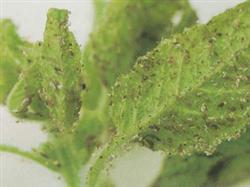
How should the major sesame pests and diseases be controlled? Please give guidance.
The major sesame pests and diseases include the following:
1. Sesame hawk moth: before the larvae reach the 3rd instar, when there are an average of 2 larvae per 100 leaves on the plants, pesticide should be applied for control. Commonly used pesticides: 2.5% trichlorfon powder or 5% carbaryl powder sprayed at 1.5-2.5 kg per mu; 90% crystalline trichlorfon or 80% dichlorvos emulsifiable concentrate at 2000 times dilution as a spray.
2. Cutworm: ① Use sugar-vinegar liquid to trap and kill adults. Set up sugar-vinegar basins in the field, basin depth 3 cm, diameter about 25 cm, the sugar-vinegar liquid in the basin has the following proportions: 1 part white liquor, 2 parts water, 3 parts sugar, 4 parts vinegar, 5 g of 90% crystalline trichlorfon; this can trap and kill some adults. ② Poison bait trapping. Mix 0.5 kg of 90% crystalline trichlorfon with 2.5-5 kg of water and chopped fresh vegetable leaves to make a poison bait, place it at certain intervals between crop rows in the evening to trap and kill larvae. ③ Spraying. Before the larvae reach the 3rd instar, use 2.5% deltamethrin emulsifiable concentrate or 20% fenvalerate emulsifiable concentrate at 1500-3000 times dilution or 50% phoxim emulsifiable concentrate at 1000 times dilution as a spray.
3. Aphids: when 10% of plants have aphids, during the seedling stage when the average number of aphids per 100 plants is about 150, and during the mature plant stage when the average number of aphids per 100 plants is 500-1000, apply pesticide for control. Commonly used pesticides: 2.5% deltamethrin emulsifiable concentrate or 20% fenvalerate emulsifiable concentrate at 8000 times dilution as a spray.
4. Stem spot blight, Fusarium wilt, and damping-off: for stem spot blight, use 70% thiophanate-methyl wettable powder at 600 times dilution to drench plants, 200-250 ml of solution per plant; alternatively, use 1:1:150 Bordeaux mixture or 0.5 degree lime sulfur mixture for spray control before and after sesame topping. For Fusarium wilt, use 50% carbendazim wettable powder or 70% thiophanate-methyl wettable powder at 600-800 times dilution to irrigate diseased plants, 250 ml per plant, once every 10 days, for 2-3 consecutive times. For damping-off, use 20% tolclofos-methyl emulsifiable concentrate at 800 times dilution or 50% fenaminosulf technical powder at 800-1000 times dilution as a spray for control.
5. Phytophthora blight: at the early stage of disease occurrence, use 1:1:100 Bordeaux mixture or 0.1% copper sulfate solution or 64% oxadixyl wettable powder at 800 times dilution or 58% metalaxyl-mancozeb wettable powder at 800 times dilution as a spray for control.
6. Bacterial wilt: in acidic soil, appropriately increase the application of quicklime and plant ash to adjust the soil pH value. When the disease occurs sporadically, pull out the diseased plants and disinfect the diseased holes with quicklime. Before the peak onset period, use 50% DT bactericide or 70% DTM wettable powder at 500 times dilution as a spray, or use 10% shuangxiaoling aqueous solution at 400 times dilution to drench plants, 250 ml per plant, once every 7 days, for 2-3 consecutive times.
Click to get more sesame cultivation techniques
Click to get more food crop cultivation techniques