-
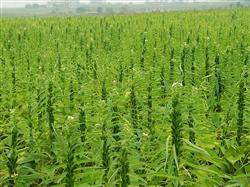
How to fertilize sesame for high yields? These key tips you need to know
To achieve high quality and high yields in sesame, scientific and rational fertilization is key. Production practice has proven that fertilizing sesame depends mainly on getting the timing and method right: the seedling fertilizer should be "early," the bud fertilizer should be "clever," and the flower fertilizer should be "heavy." The specific methods are discussed below for reference. Applying seedling fertilizer early: because sesame seeds are relatively small, plus...
-
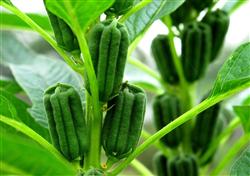
High-yield fertilization techniques for sesame: focus on three key topdressings
Double-stem cultivation involves removing the growing tip of the main stem during the sesame seedling stage and using the axillary buds at the base of the stem to promote the growth of 2 stems similar to the original main stem, turning one plant with one stem into one plant with two stems. This can greatly increase the number of pods and thereby raise yield. Generally, it increases sesame income by about 10 kg per mu. Therefore, double-stem cultivation is a new...
-
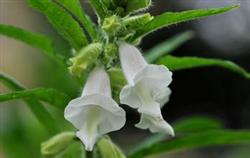
Clever methods of using growth regulators to promote the recovery of sesame
During the flowering and capsule-setting stage of sesame, vegetative growth and reproductive growth proceed together, and the following key points should be mastered in field management. Reasonable topdressing: topdressing at the flowering stage can promote flower bud differentiation in sesame. Methods such as broadcasting nitrogen fertilizer and foliar spraying of phosphorus-potassium fertilizer and boron fertilizer can be used. For fields with good soil fertility retention and supply capacity, applying urea once at the early flowering stage is sufficient,...
-
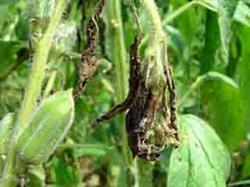
How should bacterial wilt in sesame be prevented and controlled?
I. Symptom expression Sesame bacterial wilt occurs relatively early. In the early stage of the disease, the roots turn brown, and the top of the plant wilts and droops. Afterward, dark green patches appear on the stem and gradually deepen and turn black. The leaves wilt and droop progressively from top to bottom. Diseased plants are shorter than healthy plants. The vascular bundles of the roots and stems turn brown, and finally the pith becomes hollow. Bacterial fluid oozes out both inside and outside the stem. The leaf vascular bundles are also affected, with dark green streaks on the veins. After the capsules are infected, water-soaked lesions appear and gradually develop into dark brown streaks of uneven thickness.
-
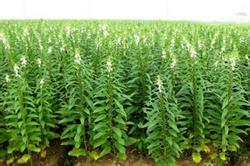
Why Are Sesame Plants Afraid of Continuous Cropping? An Analysis of the Causes of Continuous Cropping Harm
1. The key lies in timely topping. Usually, spring sesame retains the first pair of true leaves, and summer sesame retains the second pair of true leaves. Experiments have shown that this is the best time for topping, inducing a double-stem rate of 100%. The specific timing is: when the second pair of true leaves of spring sesame is half-unfolded, and when the third pair of true leaves of summer sesame is half-unfolded, with an interval of about one week...
-
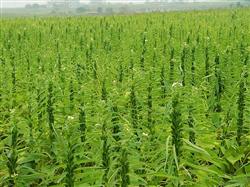
A Complete Analysis of the Key Technical Points for Sesame Cultivation and Management
Most farmers believe that sesame is a low-yielding, drought-tolerant crop that requires only extensive management. As a result, for many years the yield of spring sesame has been less than 150 kg per mu, and the yield of summer sesame or intercropped sesame has been below 100 kg per mu. Experiments have proven that as long as good seed is combined with good methods and cultivation measures are improved, sesame yields can be increased by more than 20%. 1. Applying...
-
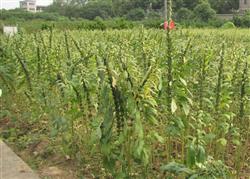
How to fertilize sesame? A detailed explanation of scientific fertilization methods
Sesame, also known as oil sesame, is rich in protein and various vitamins as well as iron, calcium, sesamol compounds and other substances. It is nutritious and strongly aromatic, and is an indispensable ingredient in making pastries and specialty foods. Sesame oil is an even more rare top-grade edible oil. Sesame is a warm-loving crop, and July is the best period for autumn sowing of sesame. Sesame...
-

Twin sons both admitted to 985 universities at the same time, the truth behind it is touching
During this period, Mrs. Wang became a celebrity in the parent circle. Her twin sons both received admission letters from prestigious 985 universities at the same time. The older brother Xiaopeng was admitted to Beijing Normal University, and the younger brother Xiaoyu was admitted to Beijing Foreign Studies University. Xiaopeng's admission...
-
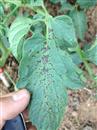
Which fungicides are effective for controlling tomato sesame leaf spot
★Symptoms: Tomato sesame leaf spot, also known as brown spot. It mainly infects leaves, and also infects petioles, fruit stalks and fruits. On leaves, grayish-brown round or nearly round spots 1-10 mm in diameter with distinct edges first appear; the diseased parts become thin and sunken, with a glossy appearance, especially obvious on the underside of the leaf, which distinguishes it from other leaf spot diseases. Large spots sometimes show concentric rings, and under humid...
-
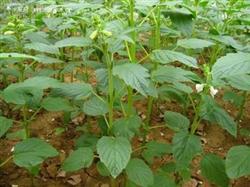
What pests and diseases occur in the early stage of summer sesame planting?
What pests and diseases occur in the early stage of summer sesame planting? Please give guidance. For diseases at the seedling stage of summer sesame, the focus is on prevention. Before rain or after farming operations, spray 70% mancozeb 800x solution or 50% carbendazim 800x solution to protect the leaves and prevent sesame stem spot blight, Fusarium wilt, Phytophthora blight, etc. Aphids and plant bugs mainly...
条件筛选