Clever methods of using growth regulators to promote the recovery of sesame
During the flowering and capsule-setting stage of sesame, vegetative growth and reproductive growth proceed together, and the following key points should be mastered in field management. Reasonable topdressing: topdressing at the flowering stage can promote flower bud differentiation in sesame. Methods such as broadcasting nitrogen fertilizer and foliar spraying of phosphorus-potassium fertilizer and boron fertilizer can be used. For fields with good soil fertility retention and supply capacity, applying urea once at the early flowering stage is sufficient,...
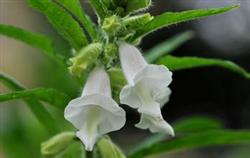 Because the groundwater level in some sesame-producing areas is too high, recent heavy rainfall has caused excessive water accumulation in sesame fields, resulting in wilting of sesame plants, stagnation of growth and development, flower and capsule shedding, and even death of some plants, which has affected sesame production in our province. In view of the current disaster situation of sesame in our province, the following measures can be taken:
Seize the opportunity and drain the standing water in the field as soon as possible. According to the field terrain, dig drainage ditches for gravity drainage. In low-lying areas, a "waterproof wall" should be built around the perimeter, and pumps should be used for mechanical drainage to ensure that surface standing water and perched water in the plough layer are discharged from the field within 24 hours.
Intertill to loosen the soil and reduce moisture. According to weather conditions, carry out intertilling and soil loosening in a timely manner to reduce soil moisture, reduce moisture and increase rooting. Intertilling should not be too deep, so as not to injure too many roots and affect the recovery growth of sesame. In addition, combine intertilling with hilling soil to bury roots and prevent lodging, so that with sufficient water and fertilizer, root recovery growth is favored.
Topdress in a timely manner. In plots affected by waterlogging, soil nutrients are severely lost, so topdressing must be carried out in time to supplement nutrients. Generally, 7-8 kg of urea is topdressed per mu. The types of topdressing are mainly nitrogen and potassium fertilizers, combined with a certain amount of phosphate fertilizer. The topdressing method is preferably hole application or furrow application. Along with root topdressing, foliar spraying can be carried out. After the standing water in the field is drained, spray 30 kg per mu of a 1%-2% urea solution and a 0.2%-0.4% potassium dihydrogen phosphate solution or a 5% plant ash solution, and at the same time spray 40% carbendazim suspension concentrate at 700 times dilution and 40% omethoate at 1000-1500 times dilution to prevent diseases and insect pests in sesame after the disaster, and spray again after 5-7 days.
Use of growth regulators. Experiments have proved that growth regulators can effectively alleviate waterlogging damage in sesame. Ethephon: in addition to its ripening effect, ethephon also promotes seedling growth. In terms of resistance to waterlogging damage, the proliferation of adventitious roots and the formation of aerenchyma in the root cortex under flooded conditions both require the participation of ethephon. Cytokinin: experiments by the Provincial Academy of Agricultural Sciences show that after applying cytokinin, the photosynthetic rate of sesame increases slightly, which can reduce the loss from waterlogging damage in sesame, and chlormequat has a similar effect. Therefore, after waterlogging occurs in the middle and late stages of sesame growth, foliar spraying of 50×10-6 to 200×10-6 cytokinin and other growth-promoting growth regulators can alleviate waterlogging damage and increase yield. In waterlogging-prone sesame areas, in order to resist waterlogging damage, 100×10-6 to 200×10-6 ethephon, vigor rooting agent, Yemianbao, etc. can be sprayed at the sesame seedling stage together with disease prevention to improve the root structure of sesame and enhance the resistance and repair ability of sesame under adverse conditions such as disease and waterlogging.