How to fertilize sesame for high yields? These key tips you need to know
To achieve high quality and high yields in sesame, scientific and rational fertilization is key. Production practice has proven that fertilizing sesame depends mainly on getting the timing and method right: the seedling fertilizer should be "early," the bud fertilizer should be "clever," and the flower fertilizer should be "heavy." The specific methods are discussed below for reference. Applying seedling fertilizer early: because sesame seeds are relatively small, plus...
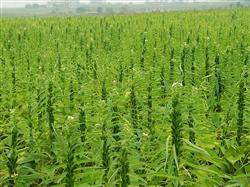
To achieve high quality and high yields in sesame, scientific and rational fertilization is key. Production practice has proven that fertilizing sesame depends mainly on getting the timing and method right: the seedling fertilizer should be "early," the bud fertilizer should be "clever," and the flower fertilizer should be "heavy." The specific methods are discussed below for reference.
Applying seedling fertilizer early: because sesame seeds are relatively small, and because excessive nitrogen is often applied as a base fertilizer, the seedlings tend to grow excessively and form leggy seedlings. Therefore, sesame should be combined with early thinning and early final thinning of seedlings, and based on seedling condition, one early application of seedling fertilizer consisting mainly of quick-acting fertilizer should be made. Applying seedling fertilizer well is an important measure for early vigorous growth of sesame. For the seedling-stage fertilizer, diluted decomposed human manure or urea is preferable; generally, after final thinning, apply 2-3 kg of urea per mu as a top dressing. When drought is severe, drought relief should come first, then the top dressing, or apply diluted human manure as irrigation. For seedlings with poorer vigor, the "special meal" method should also be used, applying a top dressing to boost seedling growth. When top-dressing sesame with seedling fertilizer, because sesame has a relatively shallow root system, it should be applied as shallowly as possible or concentrated near the roots.
Applying bud fertilizer cleverly: the budding stage of sesame coincides with the flower bud differentiation period, when both vegetative growth and reproductive growth of the plant are vigorous at the same time. Therefore, applying bud fertilizer well plays a decisive role in high sesame yields. Bud-stage fertilizer is generally based on nitrogen fertilizer, supplemented by phosphorus and potassium fertilizers. When applying, for drilled sesame, open a furrow about 10 cm from the sesame plants and apply in a band or in spots, placing it into a 10 cm deep soil layer to aid root absorption, then cover with soil after application; for broadcast sesame, mix decomposed cake fertilizer or granular urea thoroughly into finely crumbled soil and broadcast, then immediately carry out intertillage and loosening of the soil to cover the fertilizer. In dry weather, water should be sprayed after application to fully develop the fertilizer effect. The drenching method can also be used, that is, mix 4-6 kg of urea per mu with 200 kg of water and pour it over the base of the sesame plants. In addition, in boron-deficient regions and boron-deficient soils, boron fertilizer should also be added as appropriate.
Applying flower fertilizer heavily: sesame grows fastest once it enters the flowering stage, and the nutrients absorbed during this period account for 70%-80% of the entire growth period. To meet the needs of plant growth and development, make sesame grow vigorously, accumulate more photosynthetic products, increase the number of flowers and capsules, maintain steady growth in the later stage without premature aging, and make the grains plump and full, flower fertilizer must be applied heavily. At the same time, during the flowering and podding stage, lateral roots have already begun to form in large numbers, the absorptive capacity of the root system increases, the growth rate of the plant accelerates, and the demand for nutrients also rises significantly. Therefore, a heavy application of flowering and podding fertilizer should be made; generally, mix 5-8 kg of urea per mu with 200 kg of water and pour it over the base of the sesame plants, or apply composted cake fertilizer, human manure, and the like. In addition, from the beginning of flowering to full bloom, foliar top dressing can be carried out by choosing a sunny afternoon and spraying a 0.3% potassium dihydrogen phosphate solution on both the front and back of the leaves, with an interval of 5-6 days each time, for 2-3 consecutive sprays.