-
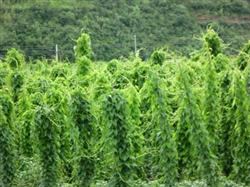
Fertilizing Chinese Yam Requires Care: Analysis of the Characteristics of Two Types of Fertilization
Chinese yam is a crop of the Dioscoreaceae family and a vegetable much loved by people. It not only has high nutritional value and a unique flavor, but can also be used as medicine. Due to increased market demand, the planting area of Chinese yam has continued to expand in recent years. Farmer friends often call the hotline to ask about fertilization issues in the cultivation of Tiegun Chinese yam. Below is a list of the current two...
-
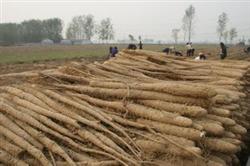
Detailed Explanation of Fertilizer Requirements and Fertilization Techniques for High-Yield Chinese Yam
Fertilizer requirements. Chinese yam has a long growth period and a high fertilizer demand, and it especially favors organic fertilizers with long-lasting effects. Because tuber formation is accompanied by the accumulation of substances such as starch, the demand for phosphorus and potassium is relatively large. In the early growth stage of Chinese yam, because temperatures are low and organic nutrients are released slowly, an appropriate amount of quick-acting nitrogen fertilizer should be supplied to promote...
-
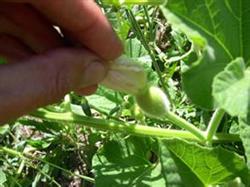
What are the fertilizer requirements for melon cultivation?
Based on the fruiting habits of melons, there is no pollen on the tip of the female flower, and pollen is only found around the corolla. It is necessary to manually remove the corolla and shake out the pollen, then use a brush to pick up a little of the shaken-out pollen and apply it to the stigma of the female flower. However, note that manual pollination must be done on a sunny day with no dew, and the brush must be kept clean, otherwise pollination will not suc...
-
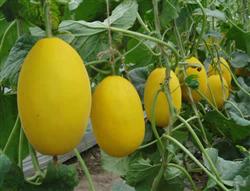
Pruning melon vines in summer requires care: mastering the correct method is key
Muskmelon and watermelon seedlings are sensitive to environmental conditions during the seedling stage. Therefore, when raising melon seedlings under protective cultivation in spring, corresponding measures must be taken according to the characteristics of climate change. 1. Prolonged overcast and low temperatures. Due to insufficient light, the photosynthetic capacity of melon seedlings is weak, nutrient absorption from fertilizer is poor, growth is slow, leaf color is pale, cotyledons easily fall off, and seedlings easily become stunted and...
-
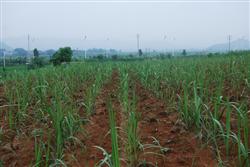
A Detailed Guide to the Nutrient Requirements and Fertilization Methods of Sugarcane
1. Using Phosphate Fertilizer. Phosphate fertilizer must be fully pulverized and thoroughly mixed and composted with garbage fertilizer or farmyard manure before application. In recent years, many sugarcane farmers have spread phosphate fertilizer directly into the furrows. This approach results in a phosphate fertilizer utilization rate of less than 10%, with more than 90% being fixed by the soil into unavailable phosphorus and wasted. The author suggests: apply 30-... of phosphate fertilizer per mu.
-
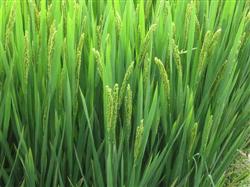
Detailed Explanation of Fertilizer Requirements at Each Growth Stage of Rice
Nitrogen absorption pattern: Rice is very sensitive to nitrogen nutrition and it is the most important factor determining rice quality. Throughout its life, rice maintains a relatively high nitrogen concentration in its tissues, which is a nutritional and physiological trait required for high-yielding rice. Rice has two obvious peaks in nitrogen absorption: one is at the tillering stage, that is, 2 weeks after transplanting...
-
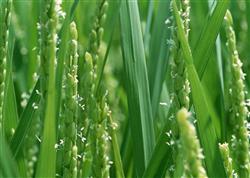
Fertilizer Requirements and Key Fertilization Techniques for Rice at Different Growth Stages
I. Fertilizer Requirements of Rice. Nitrogen, phosphorus, and potassium are the nutrient elements that rice requires in relatively large amounts while soils are relatively deficient in them. Generally, for every 100 kg of rice grain produced, about 1.6-1.9 kg of nitrogen, 0.8-1.3 kg of phosphorus, and 1.8-3.8 kg of potassium are absorbed, with a ratio of approximately 1:0.5:1.3. Nitrogen uptake is highest from the greening stage to the tillering stage...
-
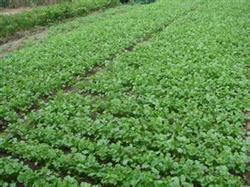
Delaying the harvest of cilantro requires careful attention: mastering these three points is key
Cilantro, also known as coriander, originated along the Mediterranean coast and is cultivated throughout both northern and southern China. Its leaves have a distinctive aroma and are the main edible part, while the seeds are an even better seasoning. Cilantro is a cool-season vegetable, and its traditional growing seasons have always been winter and spring. When grown out of season in summer and autumn, although yields are lower, market prices are high, making it a high...
-
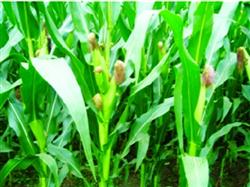
Planting spring corn requires good seed plus good methods
Fresh-eating type corn is generally divided into sweet corn and waxy corn; it has a unique flavor, is rich in nutrients, has a large market capacity, high yield and good returns. When grown as spring corn, it takes about 90 days from sowing to fresh ear harvest and does not affect the planting of hybrid late rice. To grow spring fresh-eating type corn well, the following points should mainly be grasped: first, choose...
-
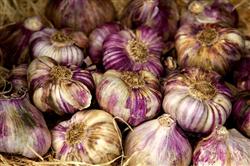
What are the characteristics of garlic's fertilizer requirements?
What are garlic's fertilizer requirements? Please explain that garlic is one of the vegetables that needs more fertilizer and is relatively tolerant of fertilizer. The dynamics of nutrient absorption by garlic at different growth stages increase with the increase in plant growth. From sowing to the emergence of the primary leaves above the ground is the germination stage, and the characteristic of this stage is that the root system...
条件筛选