Detailed Explanation of Fertilizer Requirements at Each Growth Stage of Rice
Nitrogen absorption pattern: Rice is very sensitive to nitrogen nutrition and it is the most important factor determining rice quality. Throughout its life, rice maintains a relatively high nitrogen concentration in its tissues, which is a nutritional and physiological trait required for high-yielding rice. Rice has two obvious peaks in nitrogen absorption: one is at the tillering stage, that is, 2 weeks after transplanting...
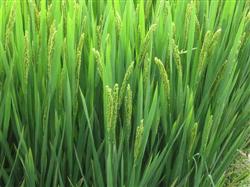
Nitrogen absorption pattern: Rice is very sensitive to nitrogen nutrition and it is the most important factor determining rice quality. Throughout its life, rice maintains a relatively high nitrogen concentration in its tissues, which is a nutritional and physiological trait required for high-yielding rice. Rice has two obvious peaks in nitrogen absorption: one is at the tillering stage, that is, 2 weeks after transplanting; the second is 7~8 weeks after transplanting, when insufficient nitrogen supply often causes degeneration of spikelets, which is unfavorable for high yield.
Phosphorus absorption pattern: Rice absorbs far less phosphorus than nitrogen, on average about half the amount of nitrogen, but it still needs to absorb a relatively large amount of phosphorus in the later growth period. Rice needs phosphorus at all growth stages, and its absorption pattern is similar to that of nitrogen nutrition. The greatest absorption occurs at the seedling stage and tillering stage, with the absorption peak around 3 weeks after transplanting. At this time, the amount accumulated in the rice plant accounts for about 54% of the total phosphorus over the whole growth period. At the peak tillering stage, the content of phosphorus pentoxide per 1 gram of dry matter is highest, about 2.4 mg. If phosphorus nutrition is insufficient at this time, it affects the number of rice tillers and the accumulation of dry matter in both aboveground and underground parts. The phosphorus absorbed by rice at the seedling stage can be repeatedly transferred from senescent organs to new organs during later growth. By the time the rice grains ripen yellow, about 60%~80% of the phosphorus is transferred and concentrated in the grains, while most of the phosphorus absorbed after heading remains in the roots.
Potassium absorption pattern: Potassium absorption is higher than nitrogen, indicating that rice requires more potassium, but before heading and flowering, its potassium absorption is basically complete. The amount of potassium absorbed by seedlings is not high, and potassium content in the plant between 0.5%~1.5% does not affect normal tillering. The potassium absorption peak is from the peak tillering stage to the jointing stage, when the potassium content in stems and leaves remains above 2%. At the booting stage, if the potassium content in stems and leaves is less than 1.2%, the number of spikelets will decrease significantly. From the heading stage to the harvest stage, potassium in stems and leaves does not concentrate into the grains as nitrogen and phosphorus do, and its content remains between 1.2%~2%.