A Detailed Guide to the Nutrient Requirements and Fertilization Methods of Sugarcane
1. Using Phosphate Fertilizer. Phosphate fertilizer must be fully pulverized and thoroughly mixed and composted with garbage fertilizer or farmyard manure before application. In recent years, many sugarcane farmers have spread phosphate fertilizer directly into the furrows. This approach results in a phosphate fertilizer utilization rate of less than 10%, with more than 90% being fixed by the soil into unavailable phosphorus and wasted. The author suggests: apply 30-... of phosphate fertilizer per mu.
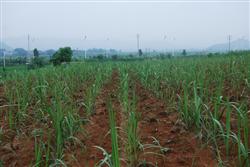 Sugarcane has a long growth period and high biological yield, making it an economic crop with relatively large fertilizer requirements. According to research, each ton of millable sugarcane needs to absorb the following nutrients from the soil: nitrogen (N) 1.5-2 kg, phosphorus (P2O5) 1-1.5 kg, potassium oxide (K2O) 2-2.5 kg, calcium oxide (CaO) 0.5-0.75 kg.
The characteristics of sugarcane's fertilizer requirements are mainly shown as:
1. Large amount of fertilizer absorbed
Sugarcane has a long growth period and high yield, and consumes more nutrients than other crops. Research shows that for spring-planted sugarcane with a growth period of 10-11 months, the aboveground part of a 5-ton-per-mu millable sugarcane crop absorbs nitrogen (N) 8.10-11.53 kg, phosphorus (P2O5) 4.10-8.85 kg, and potassium (K2O) 10.03-13.65 kg.
2. Uneven nutrient uptake
The pattern of nutrient uptake in sugarcane is roughly "little at both ends, much in the middle." At the seedling stage, fertilizer is needed urgently but the amount absorbed is relatively small, with slightly more demand for nitrogen, followed by phosphorus and potassium; at the tillering stage, the amount of fertilizer needed gradually increases, and the absorption of the three major elements accounts for about 10%-20% of the whole period; entering the elongation stage, the absorption of the three major elements increases greatly, accounting for more than 50% of the whole period. This coincides with the season of high temperature, abundant rain, and strong light, when sugarcane has the highest utilization rate of light energy and nutrients, making it a key fertilization period; after entering the maturity stage, sugarcane's fertilizer requirement gradually decreases, but it still absorbs a considerable amount of fertilizer, among which nitrogen absorption is relatively greater, accounting for 30%-40% of the whole period.
3. Mobility of nitrogen, phosphorus, and potassium nutrients within plant tissues
The three major elements absorbed in the early growth stage of sugarcane can be stored in tender tissues. As the plant ages, before the withered old leaves lose their physiological function, they can transfer the nutrients within them to fresh leaves, growing tips, and stems for use in the vegetative growth of these tissues.
According to the nutritional requirements and characteristics of sugarcane, high-yield cultivation fertilization should follow the principles of "combining nutrition with growth requirements, combining organic fertilizer with inorganic fertilizer, and combining slow-release fertilizer with quick-acting fertilizer."
(1) Attach importance to the application of organic fertilizer and create conditions to widely develop organic sources
Organic matter is one of the main indicators for evaluating sugarcane soil fertility. Generally speaking, the more soil organic matter, the higher the fertility. In sugarcane cultivation, composted manure, rotted filter mud, and the like are all good organic fertilizers. Organic fertilizer is suitable as a base fertilizer, generally 1500 kg per mu, evenly applied on both sides of the seed cane or on top of the seed cane, and then chemical fertilizer is applied on top of the composted manure and covered with soil. In sugarcane areas with the conditions, green manure crops and leguminous crops should be actively intercropped in sugarcane fields, and during the hilling-up and topdressing of sugarcane, they should be pressed into the soil as green manure together with chemical fertilizers.
(2) According to the characteristics of each growth stage of sugarcane, apply nitrogen, phosphorus, and potassium fertilizers in combination, apply sufficient base fertilizer, emphasize the stem-promoting fertilizer, and supplement with tail-strengthening fertilizer
Apply sufficient base fertilizer. When planting sugarcane, mix 20%-30% of the nitrogen fertilizer, 60%-80% of the phosphorus fertilizer, 60%-80% of the potassium fertilizer (if the amount is small, all as base fertilizer), and silicon fertilizer for the whole growth period as base fertilizer, apply it on both sides of the seed cane or on top of the seed cane, and then cover with soil.
Apply heavy stem-promoting fertilizer. At the end of May and the beginning of June, when the rainy season arrives and sugarcane begins to joint, use more than 60% of the nitrogen fertilizer and 20%-40% of the phosphorus fertilizer for the whole growth period, mix them evenly and apply them at the base of the sugarcane roots, then carry out heavy hilling-up.
Supplement with tail-strengthening fertilizer. Sugarcane has a long growth cycle and a large fertilizer requirement, and is prone to fertilizer deficiency in the later stage. To ensure no premature senescence in the later stage and to provide nutrition for the ratoon cane buds the following year, tail-strengthening fertilizer should be supplemented in time in mid-to-late August, generally using quick-acting nitrogen fertilizer.