-
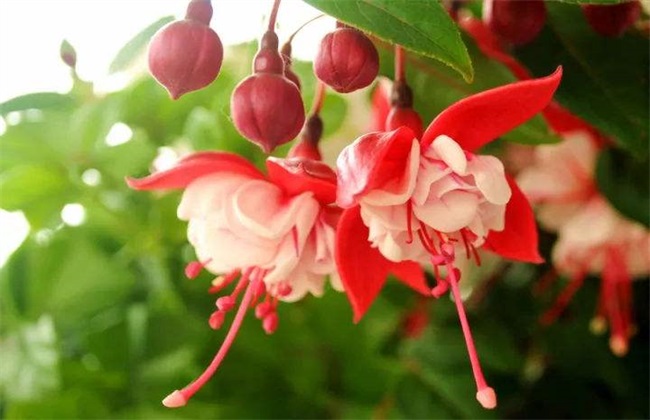
What are the growing environment requirements for the lantern flower?
The growing environment of the lantern flower
-
-
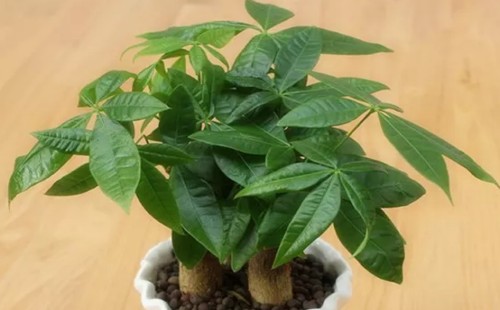
Growing environment requirements and selection methods for the money tree
A potted money tree is beautiful, but we also need to create a suitable growing environment for it. Only when the money tree grows in a comfortable environment can it keep its branches and trunk strong, stay evergreen through all four seasons, and show off its charming presence. And in order to create
-
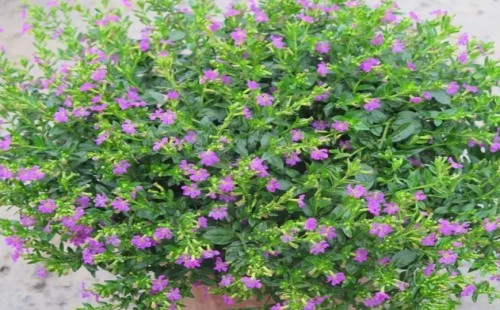
Growing environment requirements and planting environment selection for baby's breath
Baby's breath is a perennial herbaceous plant. Because it has many stems and branches, it also blooms abundantly, as numerous and beautiful as the stars in the night sky, which is why it is called baby's breath. The rhizomes of this plant can be used as medicine, and when grown in pots it has extremely high ornamental value.
-

Cultivation requirements for tulip bulbs after 5°C low-temperature treatment
1. Carefully remove the brown outer skin wrapped around the roots before planting. 2. Plant the bulbs in slightly moist soil at the specified number of bulbs per sq m and the correct depth. 3. Provide the recommended temperature conditions at bulb depth and at plant height in the greenhouse. 4. The relative humidity in the greenhouse must never exceed 80%. 5. Keep the soil in the greenhouse at the optimal moisture content. 6. Regularly check the plants, temperature and relative humidity; always use annually calibrated testing equipment. Bulb peeling
-
Detailed Explanation of the Fertilizer Requirement Patterns of Lilies Throughout the Growing Period
Understanding the fertilizer requirement patterns of lilies at each growth stage is very beneficial for rational fertilization and promoting high yields. The patterns of lily demand for the three major nutrients: 1. Nitrogen fertilizer: The nitrogen absorption rate of lilies varies at different growth stages. At emergence, the nitrogen absorption rate is 3.5537 probit units, and the cumulative nitrogen absorption percentage is 7.4%, equivalent to 0.201 kg of nitrogen absorbed per mu. This indicates that during the seedling stage, in addition to receiving nutrients from the mother bulb, the plant also needs to absorb a certain amount of nitrogen from the soil. 2. Phosphate fertilizer: At emergence, the phosphorus
-
What are the growing environment requirements for primroses?
They prefer a cool summer and warm winter climate and a humid, well-ventilated environment. They require plenty of sunlight, with medium day length being ideal. They are not cold-tolerant, not tolerant of high temperatures, and sensitive to direct strong sunlight; they are not shade-tolerant, slightly drought-tolerant, and tolerant of moisture and fertilizer. They grow best in loose, fertile, well-drained sandy loam rich in humus. Light and temperature: preferring cool conditions and avoiding high temperatures are the basic temperature requirements for primroses. The suitable growing temperature is 20°C during the day and 5-10°C at night. They can grow well at 12-22°C. When the temperature is too high, the plants grow slowly, while at lower
-
What are the cultivation technique requirements for oleander?
1. Site selection and land preparation: choose a warm, humid climate environment, a sunny spot, well-drained, sandy loam soil. 2. Propagation methods: oleander propagation methods are simple, with a very high survival rate; commonly used are cuttings, layering and division, water rooting, etc. (1) Cutting method: the cutting method can use either hardwood or softwood cuttings. Hardwood cuttings are done in early spring together with pruning of the seedlings; cut branches 15-20cm long, tie every 20 together, immerse in clean water at 20°C, with 1/3 immersed in the water, change the water frequently; after about 8 days the immersed part of the branches turns white and the top becomes
-
What are the growing environment requirements of the yew (Taxus)?
The yew is suitable for planting in both northern and southern regions. It is shade-loving, drought-tolerant and cold-resistant, and requires a soil pH of 5.5 to 7.0. It prefers a cool, humid climate and can withstand low temperatures below minus 30°C, showing strong cold resistance; its optimum temperature is 20°C to 25°C, and it is a shade-tolerant tree species. It likes moisture but fears waterlogging, and is suited to being planted in loose, moist, well-drained sandy loam.
条件筛选