Fertilizing Chinese Yam Requires Care: Analysis of the Characteristics of Two Types of Fertilization
Chinese yam is a crop of the Dioscoreaceae family and a vegetable much loved by people. It not only has high nutritional value and a unique flavor, but can also be used as medicine. Due to increased market demand, the planting area of Chinese yam has continued to expand in recent years. Farmer friends often call the hotline to ask about fertilization issues in the cultivation of Tiegun Chinese yam. Below is a list of the current two...
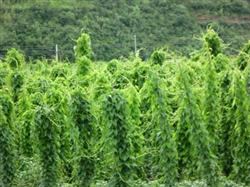
Chinese yam is a crop of the Dioscoreaceae family and a vegetable much loved by people. It not only has high nutritional value and a unique flavor, but can also be used as medicine. Due to increased market demand, the planting area of Chinese yam has continued to expand in recent years. Farmer friends often call the hotline to ask about fertilization issues in the cultivation of Tiegun Chinese yam. Below is an analysis of the characteristics of two different types of fertilization in current Chinese yam production, for growers' reference.
The first type: In places such as Hebei and Henan, some farmers have grown Chinese yam continuously for many years and can achieve a yield level of more than 4,000 kg per mu. Its characteristic is that it is based mainly on organic fertilizer, supplemented by an appropriate amount of chemical fertilizer. First, before planting, deep plow the land and sun the clods, and apply sufficient base fertilizer. Apply 5 cubic meters of decomposed organic fertilizer per mu, and mix in 25 kg of ordinary calcium superphosphate and 10 kg of potassium sulfate, so that the 30 cm deep soil layer is loose and fertile. For more than one month just after planting, control water and do not topdress. When the vines grow to 30-40 cm long, according to the growth of the seedlings, topdress a small amount of nitrogen fertilizer as appropriate and give one light watering. The first nitrogen fertilizer and water cannot be used freely; if used too much, it will promote aboveground vines and delay underground rhizome growth, causing "runaway vines" and resulting in difficulty in later management and reduced yield. The second topdressing should wait until after the vines are on the trellis and the growth advantage of the vines has basically formed, then topdress nitrogen fertilizer once more, such as applying 15-20 kg/mu of urea, or applying 30 kg/mu of ammonium bicarbonate. This time it is for the need to promote stem, leaf and root growth during the aboveground growth transition period. The third topdressing is in the middle stage of tuber expansion, adding 10-15 kg/mu of urea. These latter two topdressings are both in the rainy season, when soil moisture is relatively good and fertilizer effects are obvious. Last year, agricultural science extension workers in Wen County, Henan Province, suggested that at the second topdressing, in addition to applying 15 kg/mu of urea, 10 kg of potassium fertilizer should also be added, and the effect was quite good. This set of experience in fertilizing Chinese yam has been widely cited locally.
The key to this type, with large amounts of organic fertilizer and a moderate amount of chemical fertilizer, is to grasp the techniques for using chemical fertilizer. In the middle growth stage, through 2-3 topdressings of nitrogen and potassium fertilizer, obtain high Chinese yam yield steadily and safely. The key technique for topdressing nitrogen fertilizer is to grasp the timing of nitrogen topdressing well, especially the timing of the first nitrogen topdressing and the amount of nitrogen fertilizer used. It must be used just right, not excessively. Otherwise, the problem of "runaway vines" will occur. At present, with the expansion of the planting area of Tiegun Chinese yam, in new production areas where the amount of organic fertilizer applied is not large and chemical fertilizer supply is the main source, the issue of balanced fertilization for Tiegun Chinese yam has become even more prominent.
The second type: Under conditions where there is not enough organic fertilizer, the proportion of chemical fertilizer in Chinese yam fertilization is relatively large. The key technical points of balanced fertilization should note the following:
The base fertilizer for Chinese yam should be applied deeply below 25-30 cm. The type of base fertilizer should combine organic fertilizer with chemical fertilizer, and soil loosening and clod sunning should be arranged. The chemical fertilizer in the base fertilizer should be mainly phosphorus and potassium, with nitrogen fertilizer as a supplement and following the principle of stable nitrogen application. Generally, in the base fertilizer, nitrogen should not use nitrate form but only ammonium or amide.
The topdressing for Chinese yam should be mainly quick-acting nitrogen fertilizer, with an appropriate combination of potassium fertilizer. For nitrogen, some nitrate and ammonium composite types can be used, either solid or liquid.
For the topdressing period, Chinese yam is characterized by mainly growing vines in the early growth stage and mainly growing roots in the later stage. In terms of topdressing timing, nitrogen and water should be controlled in the early stage, timely and appropriate topdressing and irrigation should be done in the middle stage, and nitrogen and potassium fertilizer should be combined for topdressing during the tuber expansion stage. The number of topdressings is 2-3 times, namely applying fertilizer for strong vines, appropriately applying nitrogen and potassium fertilizer at the transition stage, and applying nitrogen fertilizer at the tuber expansion stage.