-

How to prevent and control stem splitting in celtuce? These methods must be remembered
Prevention and control of stem splitting in celtuce
-
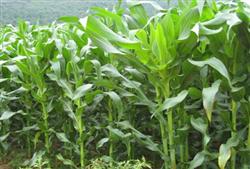
Want high yields from spring-planted corn? Remember these seven criteria when choosing seed
At sowing, apply 30-40 kg of compound fertilizer per mu; the fertilizer should be placed between two rows or two corn plants, at a depth of more than 10 cm, and covered with soil after application. At the 3-leaf stage, water once with dilute manure water, 1500-2000 kg per mu. After thinning at the 5-leaf stage, depending on the amount of base fertilizer and the corn's growth, appropriately apply a top dressing to promote...
-
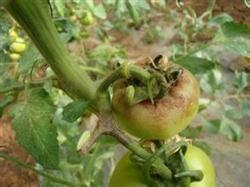
How to identify tomato late blight? These symptoms must be remembered
Late blight: All growth stages and leaves, stems, and fruits can be affected, with leaves and green fruits suffering the most severe damage. In seedlings, the disease generally starts with dark green water-soaked lesions on the leaves, then spreads to the stem, with dark brown rot near the petiole; as the disease progresses, the base of the young stem becomes water-soaked and constricted, and the plant wilts and collapses. In the adult plant stage, the disease starts from...
-
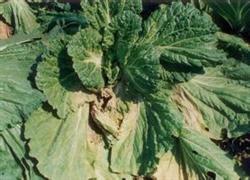
How to prevent and control Chinese cabbage virus disease? These medication guidelines must be remembered
Agricultural control 1. Choose disease-resistant varieties and avoid continuous cropping. Planting experience has proven that varieties with green stems and green leaves are generally relatively resistant to disease. Do not plant near other cruciferous crops and do not practice continuous cropping with cruciferous crops, which can effectively avoid the occurrence and spread of the disease; 2. Sow at the appropriate time but later, and cover to lower the temperature. According to planting experience, appropriately...
-
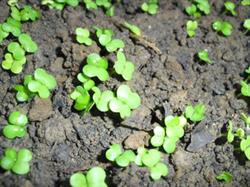
How to manage napa cabbage? Remember these three key points
Indoor seedling raising. The whole growth period requires 90 to 100 days, of which the seedling period is 30 days. During the seedling period, the required temperature is between 15°C and 28°C. Sow seedlings in early February; seedling raising requires geothermal heating facilities. Seedling containers can be low tubes or plastic pots, or nutrient squares can be cut. Keep the sowing spacing at 8 cm, sowing 2 to 3 seeds per pot or per hole...
-
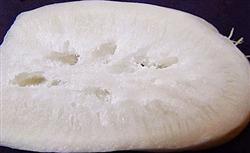
How to prevent hollow radishes? Remember these three tips
Hollow radishes affect the yield, quality and economic returns of the radish crop. But there are ways to effectively prevent hollow radishes. Pay attention to balanced water supply: during the growth and development stages of radishes, the soil moisture content is generally required to be 60%-80%, especially during the root expansion stage of the radish. Insufficient soil water supply or alternating drought and waterlogging can very...
-
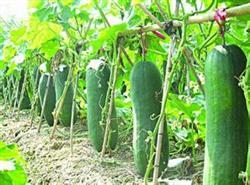
How to store winter melon in a cellar to keep it fresh? Remember these six key points
First, choose excellent varieties and adopt a matching set of scientific cultivation techniques. Give full play to the characteristics of excellent varieties, improve the plant's own stress resistance, and reduce the various drawbacks caused by the application of chemical fertilizers and pesticides. Second, apply organic fertilizer and inorganic fertilizer in combination. Under conditions within your capacity, apply excellent...
-
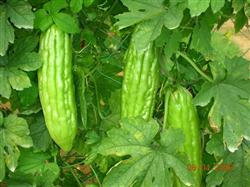
Remember these four key points for high-yield spring bitter melon cultivation
Bitter melon fruit is rich in vitamin C, higher than tomatoes, and contains a glycoside that gives it a distinctive bitter taste, making it one of the popular health vegetables. Growing spring bitter melon means mild diseases, low costs, high yields, and good returns. The high-yield cultivation techniques for spring bitter melon mainly include the following four key points: select good varieties, raise seedlings at the right time. Spring planting...
-

How to harvest garlic scapes? Remember these four tips
In recent years, many scape farmers have changed the old cultivation method of growing green garlic and digging up green garlic for market into the cultivation method of harvesting garlic scapes and digging up garlic bulbs for market. Among them, many farmers, because they do not know how to harvest garlic scapes scientifically, either end up with poor-quality garlic scapes and low yields, or with small garlic bulbs and heavy yield reductions, and cannot achieve the best results in increasing production and income. To ensure harvesting high-quality, high-yield garlic scapes while also getting a bumper harvest of garlic bulbs, I will introduce to everyone the four "secrets" of scientifically harvesting garlic scapes. 1. Choose the right harvest time when the "scape tip" curves nearly a full circle. Garlic scapes must be harvested at the right time. Harvesting too early will
-
How to manage garlic under plastic mulch after it turns green again? Remember these key points
1. Topdressing and watering. From late February to early March, temperatures rise and garlic under plastic mulch begins to turn green again. Because plastic mulch has a heat-preserving and moisture-retaining effect on the soil, generally, when garlic under plastic mulch has been watered thoroughly before winter for overwintering, it should not be watered early in spring, to prevent the soil temperature from dropping. If there is a spring drought and the soil lacks water, water once in early to mid-March. Remove the mulch in April, weed, loosen the soil, apply topdressing, and water. Apply 15-20 kg of urea or 30-40 kg of ammonium bicarbonate and 10-15 kg of potassium sulfate per mu. After fertilizing, irrigate once thoroughly. Appropriately control watering in the later stage. Keep the field
条件筛选