How to manage napa cabbage? Remember these three key points
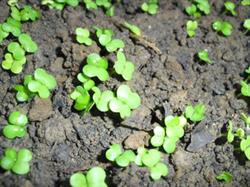
Indoor seedling raising. The whole growth period requires 90 to 100 days, of which the seedling period is 30 days. During the seedling period, the required temperature is between 15°C and 28°C. Sow seedlings in early February; seedling raising requires geothermal heating facilities. Seedling containers can be low tubes or plastic pots, or nutrient squares can be cut. Keep the sowing spacing at 8 cm, sowing 2 to 3 seeds per pot or per hole...
 Timely topdressing. Napa cabbage uses leaves as its product, and it is very sensitive to the requirements for nitrogen, phosphorus and potassium. In production, not only should base fertilizer be applied well, but topdressing should also be carried out according to different growth stages. Topdressing during the growth period is mostly based on quick-acting nitrogen fertilizer, such as ammonium sulfate, ammonium bicarbonate, ammonium phosphate, urea, etc. The timing of topdressing must be well controlled. Generally, it is applied in 4 rounds: at the seedling stage, the rosette stage, the early heading stage and the mid-heading stage. At the seedling stage, apply 5-10 kg of ammonium sulfate per mu; at the rosette stage, apply 1000-1250 kg of decomposed farmyard manure, 15 kg of ammonium bicarbonate or 10 kg of ammonium sulfate per mu; at the early heading stage, apply 25 kg of ammonium bicarbonate or 15-20 kg of ammonium sulfate per mu; at the mid-heading stage, apply 1000-1250 kg of diluted manure liquid, 10-15 kg of ammonium carbonate or a 1% urea solution per mu.
Pests and diseases must be controlled together. Vegetable growers attach great importance to the prevention and control of the three major diseases of napa cabbage, but often neglect the prevention and control of insect pests. In fact, the occurrence and spread of many diseases are inextricably linked to pests. Aphids are the chief culprit in spreading viral diseases and can cause napa cabbage to wither and die; soft rot pathogens are mainly transmitted through insects, rainwater and irrigation water, infecting napa cabbage through wounds. After pests cause damage, they create wounds, which facilitates pathogen invasion and disease. Effectively controlling cabbage caterpillars, striped flea beetles and underground pests and reducing pest wounds can effectively reduce the occurrence of napa cabbage soft rot. Therefore, pest control is also an important measure for disease control.
Binding should be delayed. Delaying binding can prevent napa cabbage from frost damage, promote a solid heart, and also make harvesting easier. However, binding should not be done too early, because if binding is done too early, the photosynthetic efficiency of the outer leaves is greatly reduced, hindering the normal growth of napa cabbage and being unfavorable for the filling of the head. Generally, 10-15 days before harvest, stop watering, lift the rosette leaves, wrap them around the head, and then use soaked sweet potato vines or cereal straw to tie the leaves at 3-5 cm from the top of the head, so that the head becomes firmer and continues to grow.