-

How to manage kiwifruit in early spring? These key points must be remembered
Prevent pests and diseases early. Before budding and during the sprouting stage, use 100-150 times diluted barium polysulfide to spray the trees for pest control, or use 3 to 5 degree lime sulfur mixture to kill insect eggs and overwintering pathogens. Apply sprouting fertilizer early. For large fruiting trees, apply 1.5-2 jin of compound fertilizer per tree; for small trees, apply 0.5-1 jin per tree. Set up support posts early and tie...
-
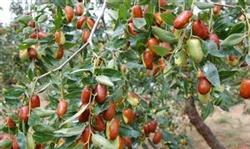
How to get more fruit set on jujube trees? Remember these three tips
1. Rationalized control. Before flowering (around early May), apply 0.5-0.75 kg of urea per large tree and 0.25 kg per young fruiting tree; after flowering, during the young fruit development stage (mid-to-late June), apply a nitrogen, phosphorus, and potassium compound fertilizer once more, about 0.75 kg per tree. At the early full-bloom stage, spray a 10-50 ppm gibberellin solution or at the full-bloom stage...
-
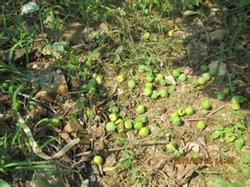
How to prevent flower and fruit drop in persimmon trees? Remember these seven key words
Peel: Girdling the trunk or main branches of vigorous trees not only promotes flower bud differentiation and earlier fruiting, but also reduces physiological fruit drop and advances fruit ripening. Girdling is generally carried out at the initial flowering stage and completed by full bloom, with an incision width of 0.3-0.5 mm. After girdling, wrap the incision with plastic (11395,70.00,0.62%) strips...
-
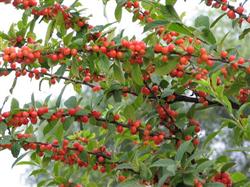
How to manage cherry trees in spring? Remember these three measures
The first fruit of early spring, cherries are in their blooming period. To manage cherry trees well in spring, pay attention to the following three measures: 1. Pay attention to balanced fertilization. Cherry trees, like other plants, need large amounts of mineral elements during growth and development, such as nitrogen, phosphorus, potassium, calcium, magnesium, iron, boron, zinc, etc. Without these...
-
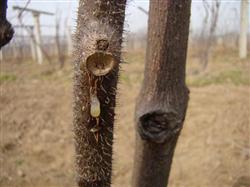
How to prevent and control kiwifruit bacterial canker in autumn? Remember these key points
Kiwifruit bacterial canker is the most serious disease affecting kiwifruit. As the weather turns cooler, temperatures drop and rainy days increase, favorable conditions are created for the occurrence and infection of this disease. Prevention and control of kiwifruit bacterial canker should be carried out early. The technical key points are as follows: Strengthen cultivation management. In autumn, increase the application of organic fertilizer, apply medium and trace element fertilizers in a balanced way...
-
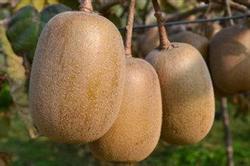
How to store kiwifruit? Remember these key points for keeping it fresh
Precooling: Where a precooling room is available, cold air at a flow rate of 0.75 liters/second?kilogram can be supplied, lowering the fruit temperature from 25°C-30°C to 3°C-4°C over 8-10 hours, and then it is moved into the cold storage. Where no precooling facility is available, the fruit can be placed in a cool, ventilated spot and precooled overnight, then sent into the cold storage early the next morning, and then lowered to...
-
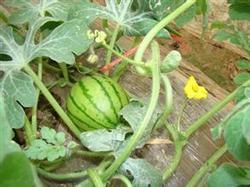
How to manage watermelon after flowering? Remember these three key measures
Hand-pollination. If the flowering and fruiting period of watermelon falls in a cold and rainy season, fruit setting becomes rather difficult. On one hand, cold and rainy weather is unfavorable for the activity of pollinating insects such as bees; on the other hand, heavy rain easily washes away the pollen on the stigma of female flowers or causes the pollen to burst and lose its germination capacity, making it difficult to complete fertilization...
-

How to manage pomegranate trees in autumn and winter? Remember these key points
Key points for autumn and winter management of pomegranate trees
-

How do fig trees overwinter safely? Remember these cold and frost protection methods
Safe overwintering methods for figs
-
Lessons to Remember After Losing Out by Not Applying Organic Fertilizer to Jujube Trees
This year, the selling prices of jujubes varied greatly. The price differences were mainly due to differences in sweetness and crispness, and apart from varietal characteristics, the main reason for the differences in sweetness and crispness was the different types of fertilizer applied. Currently, it is the second root development period for jujube trees. The first root growth peak occurs from late May to early June after new shoots stop growing, and the second root growth peak occurs from after fruit harvest to early November. From surveys of jujube growers, many farmers are only accustomed to fertilizing fruit trees in spring,
条件筛选