-

How can the leaves of a bonsai banyan be reduced in size to enhance its ornamental effect?
The roots and trunk of a bonsai banyan have extremely high ornamental value; it is only the leaves that are slightly too large. The leaves are about 3 cm wide and about 4 cm long, with an average area of 12.3 sq cm per leaf, roughly 4 times larger than the average leaf area of Ficus elastica (Indian rubber tree) at 3.5 sq cm. By this ratio, the leaves of the Chinese banyan are on the large side.
-

Tomato growing techniques matter: doing this can reduce flower and fruit drop
The tomatoes grown by a young man surnamed Huang in the village often suffered from flower and fruit drop, and he did not understand what was causing it, so later he went to find the village's skilled grower, Uncle Zhang,...
-

Why do continuous and alternating soybean cropping reduce yields? Cause analysis and countermeasures
With China's accession to the WTO and the opening-up policies of the grain market, the problem of continuous and alternating soybean cropping has become increasingly serious, and the yield reduction increases as the number of consecutive cropping years rises. According to surveys and research, alternating cropping reduces yield by 6.1%, one year of continuous cropping by 9.9%, two years of continuous cropping by 13.8%, and three years of continuous cropping by 19.0%. Moreover, in continuous and alternating cropping soybeans, the 100-seed weight decreases, the rate of diseased seeds and insect-damaged seeds increases, and commercial quality drops significantly. With long-term continuous cropping of more than 3 years, the protein content of soybeans increases markedly while the fat content decreases markedly. According to research by scientific research departments
-
Early prevention and control of soybean diseases: seize the opportunity to reduce yield losses
To achieve high yields in soybean, the main challenge is to properly manage the four aspects of "seed, water, fertilizer, and light." The "deep-narrow-dense" cultivation technique is a comprehensive high-yield supporting cultivation model formed on the basis of this principle. It takes the selection of dwarf varieties as the breakthrough point, uses air-suction seeders and general-purpose machines as the carrier, and combines "deep" (i.e., deep loosening, deep fertilization, and layered fertilization), "narrow" (i.e., narrow rows), and "dense" (i.e., increased planting density) into a comprehensive high-yield supporting technique. It is a cultivation technique that uses large seeders as the carrier. "Seed" means variety,
-
Spraying cotton with fertilizer boosts yield and reduces pests and diseases
Spraying nitrogen fertilizer: Urea has the effect of destroying insect chitin. When cotton aphids (especially summer aphids) occur, mix urea, laundry detergent and water in a ratio of 4:1:400 to prepare a "wash-urea mixture" and spray it, which has a clear killing effect. Spraying phosphorus fertilizer: During the adult occurrence period of cotton bollworm, using 1%-2% superphosphate leachate as a foliar spray fertilizer can convert oxalic acid into calcium oxalate and cause it to lose its attraction to cotton bollworm. The residual effect of each phosphorus spray is generally 2-3 days. Spraying potassium fertilizer: Use 10 kg of plant ash, add 50 kg of water, soak
-
What to do about cotton bud and boll shedding? Scientific fertilization can reduce it
The incoordination between the vegetative growth (growth of roots, stems and leaves) and reproductive growth (growth of buds, bolls and lint) of cotton causes an imbalance in the supply, transport and distribution of photosynthetic products within the cotton plant, which is an important cause of cotton bud and boll shedding. Through comprehensive measures centered on fertilization, controlling cotton growth is an important means of reducing cotton bud and boll shedding. Practice has proved that controlling stem and leaf growth in the early stage of cotton, building a good high-yield framework in the middle stage so that it grows steadily, and preventing premature senescence in the late stage are effective ways to reduce shedding of middle and lower buds and bolls. Therefore, in addition to rational close planting and strengthened water
-
How to reduce cotton square and boll shedding? Proper management is key
There are three main causes of cotton square and boll shedding: First, physiological shedding, which is also the main cause of shedding. Due to the interaction between meteorological conditions and nutritional conditions, the metabolism within the cotton plant is disrupted, nutrition is insufficient, and physiological shedding of squares and bolls occurs. Second, unfavorable meteorological conditions aggravate disease and pest damage. Pests such as cotton aphids and red spider mites bite and feed on leaves, reducing the photosynthetic capacity of the leaves, causing nutritional deficiency in squares and bolls and increasing shedding. Excessive spraying, overly high pesticide concentration, and too-short spraying intervals and other pesticide damage will also increase
-
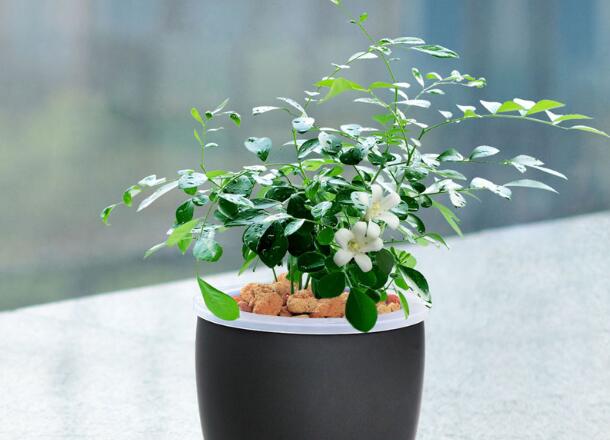
How does Orange Jessamine get through the winter? Reduce watering, ensure light, and prune appropriately
Everyone has probably heard of Orange Jessamine (Murraya paniculata). It lives up to its name: when it blooms, its fragrance can drift nine li away. Of course, that is a bit of an exaggeration, but it does not stop us from growing it. However, in the care that spans all four seasons, Orange Jessamine needs special attention in winter, because problems of all kinds can crop up if you are not careful
-
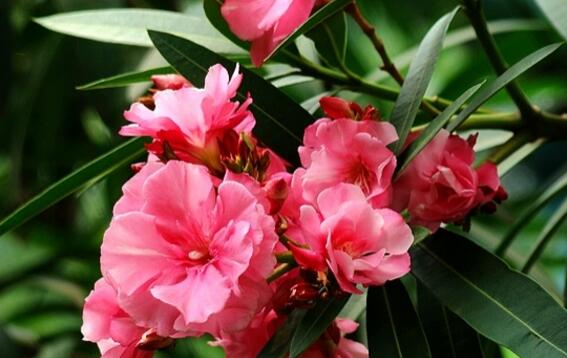
How to water oleander? Water only when dry, and when you do, soak it thoroughly; reduce watering in winter.
As a highly ornamental plant, oleander is very poisonous, but its flowers and leaves are both very attractive, so many people keep it at home. Oleander is highly adaptable and has low demands for water and fertilizer, but if you want it to look better, watering is key. So how do you water oleander?
-
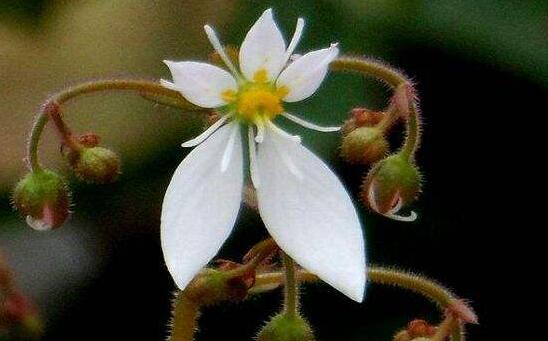
Does Saxifraga stolonifera die after blooming? After flowering, reduce watering and stop fertilizing
Recently, quite a few readers shared photos of Saxifraga stolonifera in bloom with us. From these photos, you can see that the flowers of Saxifraga stolonifera are very pretty with their alternating yellow and white, but many people worry that Saxifraga stolonifera will gradually die after blooming
条件筛选