How to water oleander? Water only when dry, and when you do, soak it thoroughly; reduce watering in winter.
As a highly ornamental plant, oleander is very poisonous, but its flowers and leaves are both very attractive, so many people keep it at home. Oleander is highly adaptable and has low demands for water and fertilizer, but if you want it to look better, watering is key. So how do you water oleander? Below, the editor introduces the watering methods for oleander.
1. How to water oleander: water only when dry
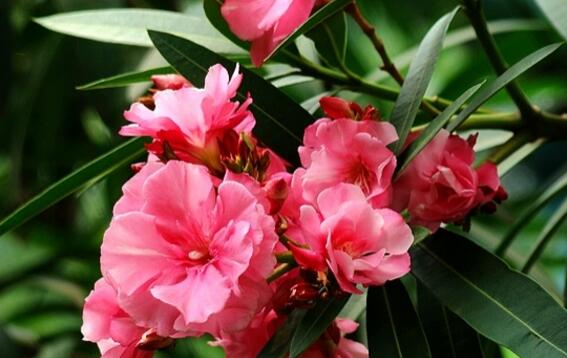
In our guide to growing oleander, we mentioned that oleander likes a moist environment, so watering is very important. However, you should not water too much, because this can cause oleander leaves to turn yellow, so mastering the correct watering method is important. As for how to water oleander, we only need to master an 8-character principle: water only when dry, and when you do, soak it thoroughly.
1. Water only when dry
Oleander is a neutral plant, and it should be watered only when dry, meaning you water after the oleander has dried out completely. As for how to judge whether oleander needs watering, the editor has prepared 2 methods: one is looking, and the other is tapping:
① Look: Look at the potting soil with your eyes. If the soil turns white and cracks appear at the edge of the potting soil, this is a sign that the potting soil is dry, and at this point you need to water; if the potting soil is dark brown with no cracks, it means the potting soil is still very moist and does not need watering.
② Tap: Pick up the flower pot and tap or knock on the pot wall with your fingers. If the sound is crisp, it means the potting soil is already dry and we need to water; if the sound after tapping is dull, it means the soil is still very moist and does not need watering.
2. When you water, soak it thoroughly
For how to water oleander, besides watering only when dry, you also need to master the principle of soaking it thoroughly when watering. This means that when watering oleander, water thoroughly in one go and do not stop midway. Note: Oleander is a moisture-loving plant, and we would rather let it be wet than let it dry out.
For how to water oleander, logically it is enough to master the 8-character principle, but if you search online, you will find that very few people can achieve this, and most can only manage "not letting it die of drought and not letting it drown." So, to help everyone grow oleander better, let us continue to look at the four-season watering methods for oleander.
2. How to water oleander in winter / four-season watering methods
After winter arrives, the temperature drops sharply, and water evaporation also slows down. So at this time, when watering oleander, you should reduce the amount of water. Even if you do water, pay attention to the timing, and it is best to do it at noon, because at other times the temperature is too low, which will cause oleander to enter a dormant state.
Spring and autumn: In these two seasons, the temperature is relatively suitable, and this is the period when oleander grows best, so you should water a bit more. Watering time: in the morning or afternoon.
Summer: In summer, the temperature rises very high, and at this time water evaporates very quickly. To keep the potting soil moist, you should water oleander more. However, if the temperature is too high, oleander will enter dormancy, and then you should water less. Watering time: morning or evening, as the temperature is not high at these two times.
Oleander Nerium indicum Mill Oleander illustrated guide: how to grow oleander / how to propagate oleander
Oleander profileOleander Nerium indicum Mill
Oleander growing methods and precautions: an introduction to oleander
Oleander is native to India, Iran and Afghanistan, and has a long history of cultivation in our country, spread across urban and rural areas north and south. Oleander likes sufficient light and warm, humid climate conditions. Its flower colors come in red and white.
Morphological characteristics of oleander
Evergreen large shrub, up to 5 m tall, hairless. Leaves in whorls of 3 to 4, opposite on the lower part of the branches, narrowly lanceolate, entire, leathery, 11 to 15 cm long and 2 to 2.5 cm wide, lighter green beneath; lateral veins flat, densely arranged and parallel. It blooms in summer, with peach-red or white flowers in terminal cymes; stems upright and smooth, with typical three-forked branching. Leaves in whorls of three, rarely in whorls of four or opposite in pairs, linear-lanceolate to oblong-lanceolate, entire, leathery, glossy on the surface, with pinnate lateral veins lying flat. Cymes terminal, calyx upright, corolla funnel-shaped, in red, yellow and white, single, semi-double or double, fragrant, with long cylindrical follicles. Flowering period May to October, fruiting period December to January of the following year.
Common cultivated varieties include: white-flowered oleander, with white single flowers; double-flowered oleander, with red double flowers; pale yellow oleander, with pale yellow single flowers. The entire oleander plant is highly poisonous.
The original name of oleander should be "Jiazi peach," and legend says it bears fruit once every 60 years. Because the fruit of Jiazi peach is extremely rare, some places mistakenly call it "oleander." However, some places still retain the name Jiazi peach. Because its leaves resemble bamboo and its flowers resemble peach blossoms, it got its name.
Ecological habits of oleander
Native to Iran, India and other countries and regions. It is now widely planted in subtropical and tropical regions. Introduction into China began in the 15th century, and it is cultivated in all provinces and regions. It likes light and a warm, humid climate, is not cold-tolerant, dislikes waterlogging, and tolerates a certain degree of air dryness. It is suitable for fertile neutral soil with good drainage, and can also adapt to slightly acidic and slightly alkaline soil.
Oleander is native to Iran, likes light, and likes a warm, humid climate; it is not cold-tolerant; it is strongly drought-tolerant, has low soil requirements, and can also grow in alkaline soil. It is now widely planted and cultivated in tropical and subtropical regions. The stem bark fiber is an excellent blended textile raw material, and it can also be used to extract cardiac stimulants; the roots and bark contain cardiac glycosides, phthalein-type crystalline substances and a small amount of essential oil; the stems and leaves can be made into insecticide. Its stems, leaves and flowers are all poisonous, and the milky white sap it secretes contains a toxic substance called oleandrin, which causes poisoning if eaten by mistake. Evergreen upright large shrub, up to 5 m tall, containing watery sap, hairless. Leaves in whorls of 3 to 4, opposite on the lower part of the branches, narrowly lanceolate, 1 cm long and 2 cm wide. The leaves grow in a very interesting way. The leaves form a small group, and the main vein on the leaf runs straight from the base to the leaf tip, with many branch veins emerging and arranged neatly in horizontal rows. It is mainly a glycoside formed from oleandrigenin and oleandrose. The stem bark fiber is an excellent blended textile raw material; the leaves and stem bark are highly poisonous. The leaves of oleander grow in a very interesting way. Three leaves form a small group.
Cultivation techniques for oleander
For oleander management, three points must be done well:
It must be pruned in a timely manner. The upper branches of oleander have the characteristic of dividing from one into three, and shaping can be done by pruning as needed. If you need a three-fork, nine-top shape, you can cut off part of the top of the three forks, and it will divide into nine tops. If you need nine tops and eighteen branches, you can keep six branches and cut from the top leaf axils, and eighteen branches will grow. Pruning time should be after each flowering. In the north, the flowering period of oleander is from April to October. Spent flowers should be removed in time to ensure concentrated nutrients. Generally, pruning is done in four rounds: first, after Grain Rain in spring; second, during July and August; third, during October; and fourth, winter pruning. If you want it to bloom indoors, move it indoors to a sunny spot at about 15°C. Prune immediately after flowering, otherwise there will be few and small flowers, or even no flowers. Through pruning, the branches are evenly distributed, the flowers are large and vivid, and the tree shape is beautiful.
The roots must be thinned in time. The fine capillary roots of oleander grow quickly. A three-year-old oleander planted in a pot with a diameter of 20 cm can fill the pot with roots by July of that year, forming a ball that hinders the penetration of water and fertilizer and affects growth. If the roots are not thinned in time, symptoms such as wilting, leaf drop and death may occur. The best time for root thinning is from early August to late September. At this time the roots are dormant, making it a good opportunity for root thinning. Root thinning method: use a sharp trowel to cut away the surrounding yellow fibrous roots; then use a three-pronged hook to loosen along the main root. Remove about half or one third of the yellow fibrous roots, then replant in the pot. After root thinning, place it in the shade and water thoroughly to keep the potting soil moist. Keep it shaded for about 14 days, then move it to a sunny place. For field-planted oleander, in mid-September, you should also cut the yellow fibrous roots around the main trunk. After cutting the roots, water and apply dilute liquid fertilizer.
Fertilizing and watering must be done in a timely manner. Oleander is a flowering plant that likes fertilizer and water and likes neutral or slightly acidic soil.
Fertilizing: Maintain about 20% organic mixed fertilizer in the potting soil. If using chicken manure, 15% is enough. Fertilizing time: once before Qingming, once after the Autumn Equinox. Method: dig a ring-shaped trench at the edge of the pot, apply fertilizer, then cover with soil. After fertilizing at Qingming, apply topdressing of water-fermented soybean cake water about every ten days; after fertilizing at the Autumn Equinox, apply topdressing of soybean cake water or peanut cake water, or tenfold chicken manure liquid, about every ten days. If these fertilizers are unavailable, you can use decomposed human urine, more than seven days old, diluted with water five to seven times, pour it along the edge of the pot, then water thoroughly. For fertilizers containing a lot of nitrogen, the principle is dilute, light, little and frequent, and strictly prevent burning the roots. Proper watering is the key to managing oleander well. Improper watering in winter and summer can cause leaf drop, flower drop, and even death. In spring, water once a day; in summer, water once each morning and evening, keeping the potting soil moisture at about 50%. The leaves should be sprayed with water frequently. If it is too dry, it easily drops leaves and wilts. In winter, water less, but the potting soil moisture should be kept at about 40%. The leaves should often be washed with clean water to remove dust. If you want it to bloom in winter, keep the room temperature above 15°C; if you do not want it to bloom in winter, lower the room temperature to 7 to 9°C and place it in a bright place indoors without direct sunlight. In the north, field-planted oleander in winter needs to be wrapped with straw mats to prevent freezing and cold, and the cold protection should be removed around Qingming. Although oleander is easy to manage, you still cannot be careless.
Oleander is highly adaptable, and cultivation and management are relatively easy, whether field-planted or potted, and both are relatively extensive. In field planting locations, transplanting should be done in spring, and heavy pruning should be carried out when transplanting. Pay attention to protection in winter. The branches and leaves are easily damaged by scale insects, so attention should be paid to control.
For potted oleander, in addition to requiring good drainage, sufficient fertility is also needed. In spring, shaping and pruning are needed when it sprouts. For leggy branches and weak slender branches in the plant, you can cut them off from the base, and for overly dense inner branches, part of them should also be thinned. At the same time, apply wound-healing antiseptic film to the pruning cuts to protect the wounds, so that the branches are evenly distributed and the tree shape remains full. After 1 to 2 years, repot once, and repotting should be done after pruning. Summer is the period of vigorous growth and flowering for oleander, and it needs a lot of water. In addition to watering once each morning and evening every day, if the potting soil looks too dry, add another spraying to prevent tender branches from wilting and to avoid affecting flower longevity. After September, reduce watering to inhibit continued growth of the plant, make the branch tissues mature, and increase nutrient accumulation, so as to help it overwinter safely. The overwintering temperature needs to be maintained at 8 to 10 °C; when the temperature is below 0°C, oleander will drop its leaves. Oleander is a fertilizer-loving plant, and in pots, in addition to applying sufficient base fertilizer, fertilizer should be topdressed once a month during the growing period.
Propagation methods for oleander
Mainly by cuttings, but also by division and layering. Cuttings can be done in both spring and summer. Soak the base of the cuttings in clean water for about 10 days, keeping the soaking water fresh, so they root earlier after planting and the survival rate is also high. The specific method is: in spring, cut 1- to 2-year-old branches into 15 to 20 cm stem sections, tie about 20 into a bundle, soak in clean water with the submerged depth at 1/3 of the stem section, change the water at the same temperature once every 1 to 2 days, and keep the temperature at 20 to 25 °C. When adventitious roots are found at the soaked part, they can be planted as cuttings. When planting, make holes in the cutting medium with bamboo chopsticks to avoid damaging the adventitious roots. Because the old stem base of oleander has a very strong ability to sprout suckers and often sends out a large number of tender branches, these branches can be fully used for summer softwood cuttings. Select semi-lignified cuttings, keep the top 3 small leaves, insert them into the substrate, and pay attention to timely shading and water management; the survival rate is also very high. For layering propagation, first notch or girdle the part to be buried, bury it in soil, and after about 2 months it can be cut from the parent plant and transplanted with soil the following year.
Disease control of oleander
In the spring and summer growing seasons, the terminal buds are easily harmed by aphids.
Oleander is also known as red-flowered oleander, willow-leaf peach, and half-year red. It belongs to the Apocynaceae family and the genus Nerium.
Brown spot disease
Brown spot disease is an important disease on oleander, occurring commonly in all regions and causing serious damage. It mainly harms leaves. At first, small purplish-red spots appear at the leaf tip or leaf margin, and after expansion they form round, semicircular to irregular brown lesions. The lesions have concentric rings. Later, the center fades to white, and the red-brown edge is relatively wide. When humidity is high, a gray-brown mold layer can grow on both sides of the lesions, namely the pathogen's conidiophores and conidia.
Control methods
(1) Agricultural control.
Plant at a reasonable density, and avoid planting too densely; manage fertilizer and water scientifically and cultivate strong seedlings; remove diseased leaves and burn them centrally to reduce sources of inoculum.
(2) Chemical control.
At the early stage of disease, spray 50% benomyl wettable powder at 1000 times dilution, or 25% carbendazim wettable powder at 600 times dilution, or 36% thiophanate-methyl suspension concentrate at 500 times dilution.
Commonly used agents: benomyl, carbendazim, thiophanate-methyl.
Medicinal or dietary therapeutic value of oleander
The medical information and health dietary therapy information on Huahua Network is for reference only and cannot be used as a basis for diagnosis or medical treatment. Any health problems should be consulted with professional medical personnel, and any disease treatment should follow a doctor's advice.
Ultimate flower-protecting mission: To love yourself, start from reality and carefully follow a doctor's advice. For illness, do not be careless, do not delay, do not give up hope, face it bravely, warm the silent world with love, and care for the flower field in your heart with your heart.
Medicinal value
Oleander is the leaf of the Apocynaceae plant oleander NeriumindicumMill. cvPaihua. This product belongs to cardiotonic traditional Chinese medicine. Bitter in taste, cold in nature, toxic, and enters the heart meridian. Its main functions are strengthening the heart and promoting diuresis, resolving phlegm and relieving asthma, relieving pain, and removing blood stasis. In modern clinical use, this drug is used to treat heart failure, wheezing and cough, epilepsy, traumatic injuries, amenorrhea, and alopecia areata. This product is toxic; for internal use as a decoction, the dosage is 0.3 to 0.9 g.
Pharmacological effects
1) Cardiotonic effect: The leaves, stems, bark, wood and flowers of oleander all have relatively significant cardiotonic effects, with the leaves being the strongest. The oleandrin C contained in the alcohol extract of its leaves has a cardiac glycoside-like effect on the hearts and electrocardiograms of experimental animals. It can enhance myocardial fiber contractility, prolong the refractory period, inhibit cardiac conduction, and stimulate the vagus nerve to further reduce cardiac conduction function. Its effective dose strengthens myocardial contraction in experimental animals and increases contraction amplitude while blood pressure rises accordingly; near poisoning, blood pressure begins to fall and heart rhythm becomes disordered. It is a delayed-action cardiac glycoside, stronger than digitalis and weaker than strophanthin.
2) Diuretic effect: The infusion and alcohol extract show a diuretic effect in experimental animals, but weaker than digitalis.
3) Sedative effect: The decoction and alcohol extract of oleander have a sedative effect on experimental mice, manifested as reduced spontaneous activity, drowsiness, and prolonged barbiturate sleep time, but with no anticonvulsant effect. Its sedative effect appears after changes in heart rhythm.
4) Insecticidal effect: Its bark water extract and gum have insecticidal and molluscicidal effects. When the water extract and ethanol extract of oleander leaves were separated and refined, their toxicity to Lymnaea snails was 14 times greater than the standard molluscicide niclosamide, and also superior to the molluscicides formothion and phorate.
5) Other effects: Oleandrin C has a relatively strong emetic effect and is relatively stable to heat. At small doses it inhibits uterine contraction and dilates blood vessels; at large doses it increases uterine muscle tension and contracts vascular smooth muscle. In addition, the leaves have an inhibitory effect on Ehrlich ascites carcinoma in mice.
6) In vivo reaction process: The absorbed substances of oleander are absorbed relatively quickly in the stomach and intestines. After oral administration in experimental cats, about 50% was absorbed within 3 hours. The oral absorption rate of oleandrin C measured in pigeons was 53%, about twice as high as digitalis and digoxin, so the effect appears rapidly, but the cumulative effect is relatively obvious. The accumulation rate in pigeons was 37%, between strophanthidin and digitoxin. 56.3% was eliminated in 3 days, and excretion was complete only after 15 days. Animal experiments also showed that oral oleandrin C requires 2 times the intravenous dose to produce the same effect.
Clinical application research
It is mainly used to treat heart failure, with varying usage and dosage. Generally, fresh leaves that are neither old nor tender are wiped clean, dried at low temperature or sun-dried, ground into powder and sieved, put into capsules or made into tablets, each tablet containing 0.05 g of crude drug. Administration is divided into rapid administration and slow administration. The former is 0.2 to 0.6 g, taken in 2 to 3 doses, with further dosing on the 2nd and 3rd days according to symptoms and heart rhythm changes, and after therapeutic effect appears, switched to a maintenance dose. 0.05 to 0.1 g per day, stopping the drug after 1 week or after symptoms disappear. Reports from various sources state that the digitalizing dose of oleander ranges from 150 to 800 mg (mostly around 200 mg). Some believe that the digitalizing dose of oleander is equivalent to 0.5 to 1 old leaf, which can be completed within 1 to 4 days (generally 2 to 3 days), then maintained at 50 to 100 mg per day by the slow method, once daily as the maintenance dose. Because leaves vary in age, and the climate and time of collection and processing methods all affect the content of cardiac glycosides, the clinical dosage also differs, making it difficult to unify the specifications. In treating heart failure caused by various heart diseases with oleander, most people consider the therapeutic effect satisfactory. Its action is faster than digitalis and its cumulative effect is smaller. Generally, therapeutic effect occurs 12 to 72 hours after medication. The patient's symptoms and signs all improve. This is manifested as slowed heart rhythm, increased urine output, reduced or improved edema, reduced liver size, disappearance or reduction of coughing, wheezing, chest tightness, cyanosis, and reduced or disappeared lung rales. Some patients with atrial fibrillation can restore sinus rhythm, and most heart failure can be controlled in about 1 week, with a general effective rate above 90% [1]. For heart failure complicated by angina pectoris, oleander treatment is even better. According to literature records, oleander has the effect of relieving coronary artery spasm. It should be noted that it is ineffective for active rheumatic heart disease and may be harmful to myocarditis, so it should be used with caution.
"Huangjia glycoside" (an intravenous injection extracted from the kernel of the seed of yellow oleander) and oleander capsules were used in combination to treat 21 patients with heart failure, achieving significant therapeutic effects. In 19 patients, the oral oleander dose was at minimum 0.4 g and at maximum 1.6 g, with a general average of 0.4 to 0.9 g, which could effectively increase urine output, eliminate systemic edema, and reduce venous pressure. Medication continued until symptoms disappeared, then switched to a maintenance dose. Among the 21 patients, only 2 had general gastrointestinal and arrhythmic adverse reactions after oral oleander, and after stopping the drug and potassium supplementation, they quickly returned to normal.
After using oleander, the most common reaction is vomiting. Some believe that unlike digitalis overdose vomiting, it may merely be an adverse reaction. In some patients who continued medication after vomiting, the gastrointestinal symptoms instead gradually lessened.
In short, this product contains multiple cardiac glycosides, and its cardiotonic effect is relatively strong. Clinically, oral overdose of oleander leaf decoction can cause death. Those who take effective doses and develop toxic reactions account for about 30%, and this is greatly related to the patient's tolerance and sensitivity, so clinical medication should closely observe the condition, including electrocardiogram observation, to ensure safety.
Toxicity
Oleander is one of the most poisonous plants, containing multiple toxins, some of which are even fatal. Its toxicity is extremely high, and there have been reports of small amounts causing death or near death. Among them, the largest amount of toxins are the cardiac glycosides oleandrin and neriine. Cardiac glycosides are natural plant or animal toxins that have both positive and toxic effects on the heart. These toxins can be found in all parts of oleander, with the highest concentration in the sap, and can cause numbness on the skin. Scientists believe that there are still many unknown harmful substances in oleander. In addition, there is rosagenin in the bark of oleander, which can cause effects like strychnine. The entire plant, including its sap, is toxic, and other parts also have adverse effects. The toxicity of oleander persists after drying, and the smoke produced by burning oleander is also highly toxic. Even a small amount, or 10 to 20 leaves, can cause adverse effects in adults, and a single leaf can kill an infant. For animals, as little as 0.5 mg of oleander per kilogram of body weight can be fatal. Most animals have adverse or fatal reactions to oleander.
According to the report of the Toxic Exposure Surveillance System of the American Association of Poison Control Centers, there were 847 oleander poisoning incidents in the United States in 2002. In India, there have been many cases of suicide by eating oleander. In Hong Kong, China, there have been cases of death caused by using oleander branches when cooking food or stirring porridge.
In Taiwan, China, there was also a tragic case in which someone used oleander branches as chopsticks, swallowed the toxic sap, and was poisoned.
Uses and purposes of oleander
The stem bark fiber is an excellent blended textile raw material, and it can also be used to extract cardiotonic agents; the roots and bark contain cardiac glycosides, phthalein-type crystalline substances and a small amount of essential oil; the stems and leaves can be made into insecticide. Its stems, leaves and flowers are all poisonous. The milky white sap it secretes contains a toxic substance called oleandrin, which causes poisoning if eaten by mistake. The leaves and stem bark are highly toxic, and when used as medicine in decoction or ground into powder, they should be used with caution. It can strengthen the heart and promote diuresis, relieve asthma and relieve pain. It is suitable for heart failure, wheezing and cough, epilepsy, and swelling and pain from traumatic injuries. It can also be made into insecticide, and accidental ingestion by humans or livestock can be fatal.
Oleander has strong resistance to toxic gases such as sulfur dioxide and chlorine, and has a strong adsorption capacity for dust and soot, so it is known as the "green vacuum cleaner." It is commonly seen in parks, factories and mines, and roadside greening. It is often cultivated as an ornamental plant in gardens around the world.
Properties
Oleander is bitter, cold, and highly toxic.
Its flowers resemble peach blossoms, and its leaves resemble bamboo. For three seasons a year, it remains evergreen and never fades. From spring to summer to autumn, flowers bloom and fall in succession. Facing the spring breeze, braving heavy rain, and enduring the scorching sun, it puts forth vivid blooms and vies in beauty.
The ancestors of oleander are in India, Iran and Afghanistan. It is a low shrub, with many branches on the main trunk and branches, and the smallest branchlets are green.
The leaves of oleander grow in a very interesting way. Three leaves form a small group, surrounding the branch and growing outward from the same place. The leaves of oleander are long lanceolate, and the leaf edges are extremely smooth. The main vein on the leaf runs straight from the petiole to the leaf tip, while many branch veins emerge from the main vein and are arranged neatly in horizontal rows.
There is also a thin layer of "wax" on the leaves of oleander. This layer of wax can preserve water and heat for the leaves, enabling the plant to resist severe cold. Therefore, oleander is not afraid of cold, and in winter it still remains green.
The flowers of oleander are fragrant. The flowers are concentrated at the tips of the branches, and gathered together they look like an open umbrella. The shape of oleander flowers is like a funnel, with overlapping petals, in red, yellow and white. Among them, red is its natural color, while "white" and "yellow" are new varieties created through long-term artificial breeding. Loosen the potting soil in time, remove flowers promptly after they fade, and in summer there are occasionally aphids and red spider mites, which can be eliminated with general pesticides.
Potted cultivation
Potted oleander: Oleander is also known as willow-leaf peach and half-year red. It is an evergreen large shrub of the Apocynaceae family and the genus Nerium. In pots it is often pruned into a small tree form, with a plant height of 2 to 3 m. The stems are upright and smooth, old branches gray-brown, young branches green, with strong branching ability, mostly growing in a three-forked pattern. Leaves lanceolate, in whorls of 3, thickly leathery, with short petioles, 10 to 25 cm long, acute at the apex, wedge-shaped at the base, dark green on the surface, light green on the back, with an obvious midrib and entire margins; petioles and inflorescence stalks are purplish-red, and there is a small amount of milky sap in the branches and leaves. Cymes terminal, corolla pink to deep red, corolla funnel-shaped, 5-lobed, wrinkled on the petals, mostly double or semi-double, with a relatively faint special fragrance, fruit oblong, flowering period June to October. Common cultivated varieties also include white-flowered oleander, with white flowers. Variegated oleander, with markings on the leaf surface and red flowers. Pale yellow oleander, with pale yellow flowers. In the same genus there is also European oleander, also known as large red oleander, native to the Mediterranean coast, with purplish-brown branches and larger leaves, elliptical-lanceolate. The flowers are large, the inflorescences dense, deep red, double, and with relatively high ornamental value.
Oleander likes sufficient light and warm, humid climate conditions. It is also slightly cold-tolerant and can overwinter outdoors in warm temperate regions without dropping leaves. For household potted plants in the Beijing area, the branches can be tied together and put in a bag and placed in a windproof, sunny place to overwinter. Oleander is robust by nature, tolerant of barrenness and drought, and has low soil requirements, but for potting it is still best to use loose, fertile ordinary culture soil with strong permeability, and avoid long-term wetness and waterlogging in the pot. It has strong resistance to smoke, dust and various harmful gases.
Oleander is mainly propagated by cuttings. In April, in combination with shaping and pruning, cut sturdy branches about 15 cm long as cuttings. Dozens can be tied into a bundle and soaked in clean water in a shallow basin, with the water depth reaching 1/3 of the cuttings. Seal the shallow basin tightly with a plastic bag and place it in high-temperature sunlight for exposure. After two weeks, roots will form; take them out and plant them separately in small tube pots or seedling bags with ordinary culture soil for care. When the cuttings survive and sprout, select one strong bud to develop into a new plant and remove the rest. When the new plant grows to 20 cm tall, repot into a tube pot with an inner diameter of 20 cm, fill the potting soil up to the base of the new plant, that is, bury the original cutting in the soil, so that it forms a rhizome and produces a large number of fibrous roots, promoting vigorous growth of the new plant. The following spring, set the trunk and carry out shaping and pruning to develop a full, strong plant with three forks and nine tops.
The base of old oleander plants often sends out many tender shoots in clusters. When they grow to 10 cm long, they can be broken off with a heel and inserted into fully decomposed culture soil, shaded and kept moist; the survival rate is also very high.
Oleander is robust by nature, and cultivation and management are relatively extensive. For potting, repot and change the soil once every 2 years, and a small amount of long-acting fertilizer such as feather, hoof and horn meal can be placed at the bottom of the pot. During the growing period, apply 1 to 2 liquid fertilizer applications as appropriate according to growth. Oleander is tolerant of pruning and has strong sprouting ability. Aged plants can be renewed and pruned in spring in combination with repotting and soil changing, cutting all branches from the base to encourage new branches to sprout and rejuvenate. Generally, plants should also be pruned moderately in spring to maintain a symmetrical plant shape and strong tree vigor.
In summer, potted plants should be watered and sprayed frequently to keep the potting soil and environment moist, but never allow long-term wetness and water accumulation. Oleander also has another characteristic: as long as there is one instance of drought and dehydration or excessive water and waterlogging, the lower leaves of the plant will quickly all turn yellow and fall off, so watering must be timely and appropriate. After heavy pruning in early spring, pay attention to restricting water to prevent root infection and rot. Loosen the potting soil in time, remove flowers promptly after they fade, and in summer there are occasionally aphids and red spider mites, which can be eliminated with general pesticides.
Its leaves resemble bamboo, and its flowers resemble peach blossoms, so it is also called the "green vacuum cleaner."
Potted methods
Oleander is also known as willow-leaf peach and half-year red. It is an evergreen large shrub of the Apocynaceae family and the genus Nerium. In pots it is often pruned into a small tree form, with a plant height of 2 to 3 m. The stems are upright and smooth, old branches gray-brown, young branches green, with strong branching ability, mostly growing in a three-forked pattern. Leaves lanceolate, in whorls of 3, thickly leathery, with short petioles, 10 to 25 cm long, acute at the apex, wedge-shaped at the base, dark green on the surface, light green on the back, with an obvious midrib and entire margins; petioles and inflorescence stalks are purplish-red, and there is a small amount of milky sap in the branches and leaves. Cymes terminal, corolla pink to deep red, corolla funnel-shaped, 5-lobed, wrinkled on the petals, mostly double or semi-double, with a relatively faint special fragrance, fruit oblong, flowering period June to October. Common cultivated varieties also include white-flowered oleander, with white flowers. Variegated oleander, with markings on the leaf surface and red flowers. Pale yellow oleander, with pale yellow flowers. In the same genus there is also European oleander, also known as large red oleander, native to the Mediterranean coast, with purplish-brown branches and larger leaves, elliptical-lanceolate. The flowers are large, the inflorescences dense, deep red, double, and with relatively high ornamental value.
Oleander is native to India, Iran and Afghanistan, and has a long history of cultivation in our country, spread across urban and rural areas north and south. It likes sufficient light and warm, humid climate conditions. It is also slightly cold-tolerant and can overwinter outdoors in warm temperate regions without dropping leaves. For household potted plants in the Beijing area, the branches can be tied together and put in a bag and placed in a windproof, sunny place to overwinter. Oleander is robust by nature, tolerant of barrenness and drought, and has low soil requirements, but for potting it is still best to use loose, fertile ordinary culture soil with strong permeability, and avoid long-term wetness and waterlogging in the pot. It has strong resistance to smoke, dust and various harmful gases.
Oleander is mainly propagated by cuttings. In April, in combination with shaping and pruning, cut sturdy branches about 15 cm long as cuttings. Dozens can be tied into a bundle and soaked in clean water in a shallow basin, with the water depth reaching 1/3 of the cuttings. Seal the shallow basin tightly with a plastic bag and place it in high-temperature sunlight for exposure. After two weeks, roots will form; take them out and plant them separately in small tube pots or seedling bags with ordinary culture soil for care. When the cuttings survive and sprout, select one strong bud to develop into a new plant and remove the rest. When the new plant grows to 20 cm tall, repot into a tube pot with an inner diameter of 20 cm, fill the potting soil up to the base of the new plant, that is, bury the original cutting in the soil, so that it forms a rhizome and produces a large number of fibrous roots, promoting vigorous growth of the new plant. The following spring, set the trunk and carry out shaping and pruning to develop a full, strong plant with three forks and nine tops.
The base of old oleander plants often sends out many tender shoots in clusters. When they grow to 10 cm long, they can be broken off with a heel and inserted into fully decomposed culture soil, shaded and kept moist; the survival rate is also very high.
Oleander is robust by nature, and cultivation and management are relatively extensive. For potting, repot and change the soil once every 2 years, and a small amount of long-acting fertilizer such as feather, hoof and horn meal can be placed at the bottom of the pot. During the growing period, apply 1 to 2 liquid fertilizer applications as appropriate according to growth. Oleander is tolerant of pruning and has strong sprouting ability. Aged plants can be renewed and pruned in spring in combination with repotting and soil changing, cutting all branches from the base to encourage new branches to sprout and rejuvenate. Generally, plants should also be pruned moderately in spring to maintain a symmetrical plant shape and strong tree vigor.
In summer, potted plants should be watered and sprayed frequently to keep the potting soil and environment moist, but never allow long-term wetness and water accumulation. Oleander also has another characteristic: as long as there is one instance of drought and dehydration or excessive water and waterlogging, the lower leaves of the plant will quickly all turn yellow and fall off, so watering must be timely and appropriate. After heavy pruning in early spring, pay attention to restricting water to prevent root infection and rot. Loosen the potting soil in time, remove flowers promptly after they fade, and in summer there are occasionally aphids and red spider mites, which can be eliminated with general pesticides.
Ornamental value: The leaves of oleander are like willow and resemble bamboo, and the red flowers are brilliant, even more beautiful than peach blossoms. The corolla is pink to deep red or white, with a special fragrance, and the flowering period is June to October. It is a famous ornamental flower.
Industrial raw material: The seeds of oleander contain 58.5% oil and can be pressed to make lubricating oil.
Textile raw material: The stem bark fiber of oleander is an excellent blended textile raw material.
Medicinal value: Modern medical research has proven that oleander leaves contain various substances such as oleandrin and glycosides, and the flowers contain components such as digitalis glycosides, aglycones and peach glycosides. They have significant cardiotonic, diuretic, diaphoretic, emetic and analgesic effects, similar to digitalis, and belong to the slow-acting cardiac glycoside drugs. Clinical reports show that the water decoction of oleander is suitable for heart failure caused by various causes and has achieved good results. Oleander is bitter and cold, and toxic. It can be used to treat heart disease, heart failure, and amenorrhea, and can also be used for traumatic injuries, blood stasis, swelling and pain, and other conditions.
Nature, flavor and meridian entry: bitter, cold, toxic. Enters the heart, lung and kidney meridians.
Textual research: ① Lingnan Caoyao Lu: "Bitter in taste, greatly cold in nature." ② Guangxi Medicinal Plant Illustrated Record: "Slightly bitter, highly toxic." ③ Nanning City Drug Record: "Bitter and pungent, neutral, slightly toxic." ④ Yunnan Chinese Herbal Medicine: "Pungent, warm, extremely toxic."
Efficacy classification: water-draining and dampness-permeating medicine
Efficacy and indications: strengthens the heart and promotes diuresis, resolves phlegm and relieves asthma, relieves pain, disperses blood stasis and relieves pain. Treats heart disease, heart failure, wheezing and cough, epilepsy, traumatic injuries with swelling and pain, and amenorrhea.
Usage and dosage: Internal use: decoction, 0.5 to 1.5 grams; ground into powder, 0.25 to 0.5 grams. External use: pound and apply.
Medication contraindications: Pregnant women should not take it. It should not be taken in large amounts or over a long period; overdose causes poisoning.
Medication combinations: 1. With honey-fried licorice, mainly treats palpitations due to decline of heart and kidney yang and water evil insulting the heart. 2. With cassia twig, enhances the effects of activating blood and removing stasis, and unblocking meridians and relieving pain. 3. With ephedra, relieves asthma and cough, and promotes diuresis and reduces swelling.
Environmental value: Oleander has the ability to resist smoke, resist dust, resist toxic substances, purify air and protect the environment. The leaves of oleander are toxic to humans and have strong resistance to harmful gases such as sulfur dioxide, carbon dioxide, hydrogen fluoride and chlorine. According to measurements, potted oleander at 40 m from a pollution source suffers only mild damage, and at 170 m it is basically unharmed and can still bloom normally. The sulfur content in its leaves is more than 7 times higher than that of unpolluted plants. Even if oleander is covered with dust all over, it can still grow vigorously, and people call it the "environmental guard."
Landscape uses of oleander
Ornamental value: The leaves of oleander are like willow and resemble bamboo, and the red flowers are brilliant, even more beautiful than peach blossoms. The corolla is pink to deep red or white, with a special fragrance, and the flowering period is June to October. It is a famous ornamental flower.
Environmental value: Oleander has the ability to resist smoke, resist dust, resist toxic substances, purify air and protect the environment. The leaves of oleander are toxic to humans and have strong resistance to harmful gases such as sulfur dioxide, carbon dioxide, hydrogen fluoride and chlorine. According to measurements, potted oleander at 40 m from a pollution source suffers only mild damage, and at 170 m it is basically unharmed and can still bloom normally. The sulfur content in its leaves is more than 7 times higher than that of unpolluted plants. Even if oleander is covered with dust all over, it can still grow vigorously, and people call it the "environmental guard."
Cultural background of oleander: the legend of oleander
According to legend, in ancient times, a beautiful girl named Tao fell in love with a strong-willed young hired laborer named Zhu. Because of her father's prejudice about family status, Zhu was beaten to death. After Zhu died, Tao also died for her beloved. When their souls reached heaven, Heaven was moved by their true love and promised to grant them one request. Tao said that all her life she had loved the purity of peach blossoms, while Zhu hoped to retain his toughness like bamboo. Thus, in this world there came to be a plant with leaves like bamboo and flowers like peach blossoms: oleander.
At that time, oleander flowers were pure white, a very pure white. A princess fell in love with her own retainer. Because of her family's opposition, the fragile princess chose to die with her beloved. She had always naively believed that her lover would absolutely stay with her forever, but she only thought so out of her own simplicity. Her retainer did not truly love her, and had only played this role for his own interests. The sorrowful princess committed suicide beneath the oleander. Only her own blood soaked the flowers, and from then on oleander bore pink and snow-white flowers. Having entrusted her life wrongly, the princess kept resenting underground, and the resentment generated poisonous sap that spread along the roots and stems of oleander, blooming in the world gorgeously and warily. Many years later, that household slave passed by the princess's grave and was attracted by the oleander, which had the spirit of bamboo in its leaves and the beauty of peach blossoms in its flowers, and was intoxicated by the red and white flowers. He bent down to smell them and died of poisoning.
Flower language of oleander
Peach-colored oleander: curse, beware of danger; yellow oleander flower language: profound friendship.
Yellow oleander is a special variety among oleanders. The leaves of yellow oleander are like willow and resemble bamboo, and the yellow flowers are brilliant, even more beautiful than peach blossoms. The corolla is pink-yellow to deep yellow or white, with a special fragrance, and the flowering period is June to October. It is a famous ornamental flower.
Oleander pictures
Introduction to oleander propagation methods
Many flower lovers who like oleander often grow oleander as potted plants, and the propagation methods for oleander are also relatively simple. Propagation methods such as cuttings and layering have a very high survival rate.
Oleander
I. Cutting method
The cutting method can use either hardwood cuttings or softwood cuttings. Hardwood cuttings are carried out in early spring together with seedling pruning. Cut branches 15-20 cm long, tie every 20 together, immerse them in 20°C clean water, with 1/3 of the length immersed in the water, change the water frequently, and after about 8 days, when the immersed part of the branches turns white and the top becomes sticky, take them out and insert them into the seedbed. Alternatively, soak the branches in water for 30-40 days, and after rooting, insert them into a sand bed, provide shade, and they will root easily. In addition, soak the cuttings in a 0.1% potassium permanganate solution, or treat them with 0.001%-0.002% indolebutyric acid for 24 h, then insert them into a sand seedbed and give them a certain temperature. At 16-18°C, they will root in 20 days. Softwood cuttings are better done in late spring and early summer during the plum rain season. Softwood cuttings can be water cuttings or sand cuttings, or first water cuttings and then sand cuttings. Pay attention to shading, change the water frequently, keep it moist, and keep the water temperature above 18°C; they will root in half a month. After one month, move them into the seedbed to continue growing, and after 2 years they will bloom.
II. Layering propagation method
Layering propagation is divided into two types: air layering and ground layering, carried out in March-April. Air layering mostly uses potted plants. They will root after 30-40 days. Ground layering is mostly carried out in the rainy summer. Take branches on the mother plant that are close to the ground, make a ring cut in the bark, and bury them in the soil. For softwood layering, water only after 3-4 days, keeping it moist. If it encounters the rainy season, they will root 7 days after layering. After rooting, cut off half, and in autumn cut off all, then carry out autumn planting or spring planting.
III. Seed propagation
Seeds are sown in late spring, and at a temperature of 18-21°C they germinate quickly. If large-scale propagation is not needed, division propagation is better.
IV. Transplanting
Transplanting can be done in spring or autumn. Transplanting in autumn and winter requires a soil ball. If large-scale propagation is needed, division propagation is better. In the transplanting site, before planting, apply more pig manure, beans and other fertilizers, because oleander has a very strong ability to absorb fertilizer. For transplanting, plant one plant at a spacing of 1 cm-100 cm between rows and plants. After transplanting, water thoroughly the first time. If transplanting in summer, besides bringing a soil ball, also appropriately thin branches and cut leaves. In order to reduce leaf surface sprouting, when transplanting, appropriately prune branches with a messy tree shape and all leaves (both soil-ball transplanting and bare-root seedlings should be pruned).