-
What is the usual concentration for foliar fertilization? Understand it in one article
Which fertilizers can be used for foliar fertilization? What concentration is suitable? Experienced netizens are also asked to help introduce the fertilizers often used for crop foliar spraying (root-outside topdressing), including manganese sulfate, zinc sulfate, rice vinegar, ammonium molybdate, potassium dihydrogen phosphate, urea, copper sulfate, plant ash, superphosphate and borax. The above fertilizers used as...
-
What concentration of foliar fertilizer is appropriate? Master the correct mixing ratio
What concentration of foliar fertilizer is appropriate? I hope experienced readers can help explain. Foliar fertilizer is an effective way to quickly supplement nutrients, relieve physiological diseases caused by a lack of nutrient elements in crops, promote healthy crop growth and increase yield. However, if the concentration of foliar fertilizer is not mastered correctly, it often causes crop damage, so growers...
-
What types of fertilizer registration certificates are there? A detailed classification guide
What fertilizer registration certificates are there? What are the differences? We ask knowledgeable readers to help explain. Fertilizer registration certificates are generally divided into temporary registration certificates, formal registration, and filing registration. Zhongdi Network provides a detailed introduction below for readers' reference. Introduction to temporary fertilizer registration certificates: A temporary registration certificate is for fertilizer products that, after field trials...
-

What happens after applying high-concentration phosphate fertilizer?
What happens when high-concentration phosphate fertilizer is applied? Please explain that the main component of ordinary superphosphate is monocalcium phosphate, and the fertilizer contains 14%-18% phosphorus; the secondary component is calcium sulfate, accounting for about 50%. Therefore, applying ordinary superphosphate not only provides crops with phosphorus nutrition, but also allows crops to obtain sulfur nutrition. However, superphosphate...
-
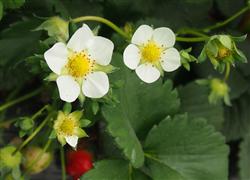
Rational application methods and technical key points for potassium fertilizer
Strawberries bloom and bear fruit continuously, with many flowers and a large fruit load, and a long flowering and fruiting period, so they consume a lot of phosphorus and potassium fertilizer. Once phosphorus is deficient and potassium is low during the flowering and fruiting period, cold resistance will decrease, few flowers will form, flower buds will be weak, and flowering and fruiting will be affected. Not only will the fruit-setting rate be low and the fruit prone to deformities, but the coloring will also be poor, the sugar content will drop, and the taste will be bland, ...
-

Rational fertilization is the key to improving the efficiency of fertilizer savings and use
During the growth of crops, one of the most commonly used measures by farmers to increase yields is to apply more fertilizer. As the farming proverb says: "A crop is like a flower; it all depends on fertilizer to thrive," and another saying goes: "Clever planting is not as good as effective fertilization." Both show that farmers attach great importance to applying fertilizer when growing crops. When choosing fertilizers, some...
-
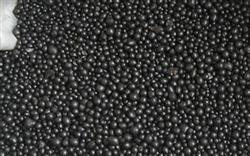
The application of organic fertilizer should be done in moderation; more is not always better
Biological organic compound fertilizers, which combine organic fertilizers with inorganic fertilizers and come with various microorganisms or high-energy compounds, have been launched on the market and are very popular among farmers, with fairly obvious effects. First, they can improve the physical and chemical properties of the soil, enhance water and fertilizer retention performance, and increase the ability to supply fertilizer continuously; second, they can significantly inhibit cotton, melon...
-
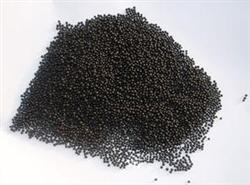
What are the common preparation methods for foliar fertilizers?
To produce pollution-free vegetables, in addition to selecting excellent varieties, practicing health-promoting cultivation, vigorously applying biological pesticides and rationally using chemical fertilizers, there are also many requirements for the soil conditions of the planting site and the fertilization methods. First, producing pollution-free vegetables requires pollution-free soil. As farmland for producing pollution-free vegetables, there must be good...
-
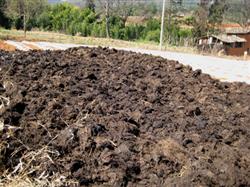
Apply organic fertilizer in moderation, and never apply it blindly in excess.
Composting with microbial agents, compared with traditional composting, has the characteristics of being convenient to ferment, saving labor and time, having low cost, and providing high fertilizer efficiency. The specific method is to use roadsides, field edges and abandoned pits and ponds, add water, urea and microbial agents to wheat and corn straw in a certain proportion, pile them layer by layer, then seal them tightly with soil or mud for decomposition...
-
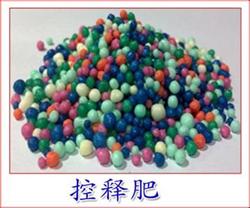
Fertilizer is not a case of the more the better; rational fertilization is more important
In a broad sense, China has a history of more than 10 years of slow and controlled release fertilizer production. However, among those currently promoted and applied with relative success are only the urease inhibitor stabilized nitrogen fertilizer from the Shenyang Institute of Applied Ecology, Chinese Academy of Sciences, the fertilizer-coated fertilizer type slow release fertilizer using a patent from the School of Engineering of Zhengzhou University, the slow release rice fertilizer from the Soil and Fertilizer Institute of the Guangdong Academy of Agricultural Sciences, and Shanghai Han...
条件筛选